
Reviewed · HISTORICAL TOURS
Chur old town tour: discover 11,000 years of history
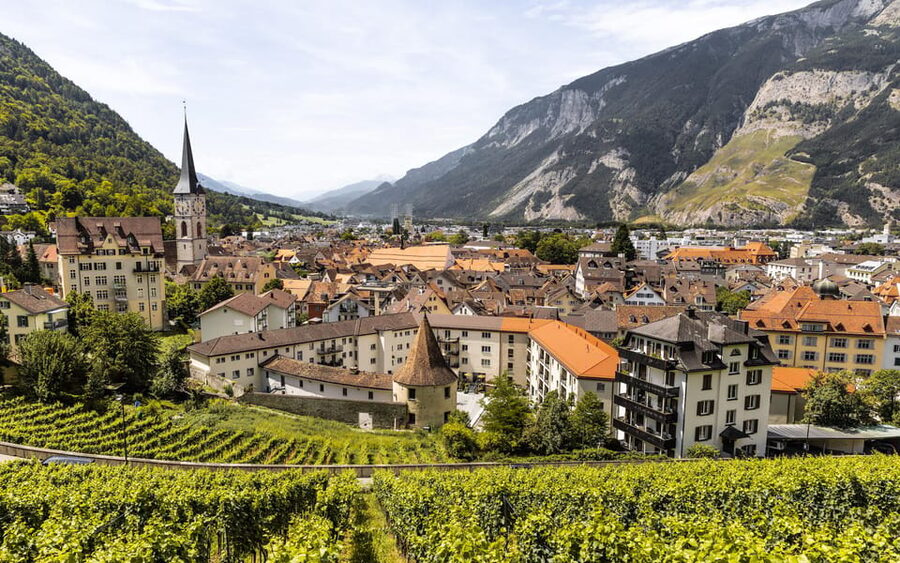
Chur old town has one of those rare “time travel” vibes. You start in a lively little center and, on foot, you slowly peel back the layers to see how a settlement can last 11,000 years. I especially love the stop at St. Martin’s Church and the way the tour makes the main landmarks feel connected, not random. The other highlight for me is the mix of grand buildings and smaller street corners, like patrician houses and the Bishop’s Court, so you get both wow and context. One drawback to plan for: it is a walking tour, so you will want comfortable shoes and a bit of stamina for 2 hours.
You’ll finish near the historic city wall on Ochsenplatz, which is a nice “wrap it up” moment. Just know the guide is German-only, so if your German is limited, you may still follow the big-picture story, but the details will be harder. If you want maximum value, come with a little curiosity and be ready to look closely at stone, dates, and symbols.
Key highlights I’d build your day around
- 11,000 years of Chur’s story told in a practical walking route
- St. Martin’s Church as a landmark pause with memorable moments
- Cathedral of St. Mary’s Assumption for strong architecture and meaning
- Arcas and the upper gate for the feel of old defenses and civic life
- End at Ochsenplatz so you leave with a clear sense of where the old city “closed in”
- 2 hours that moves at a human pace, not a rushed sprint
Chur old town: how a 2-hour walk can cover 11,000 years
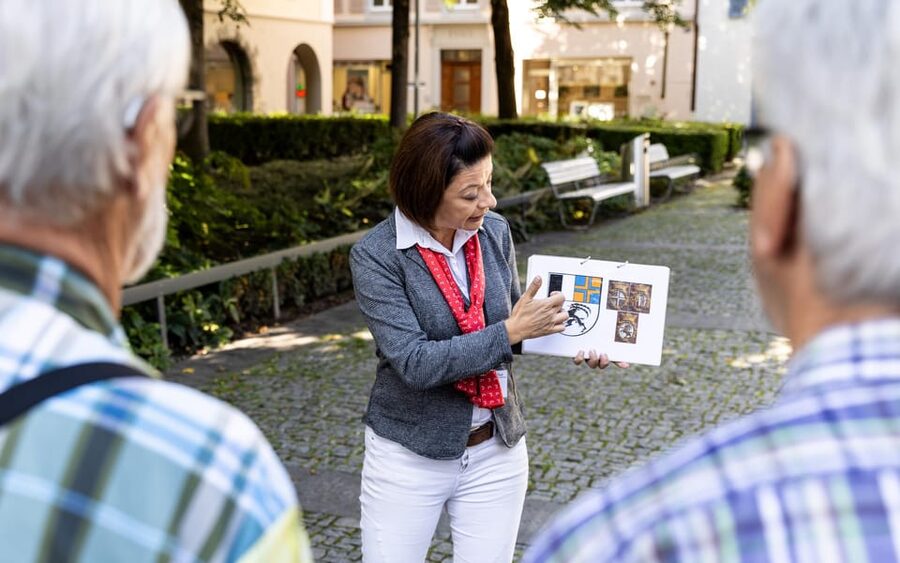
Chur is famous for being the oldest city in Switzerland, and this tour is built around that idea in the best way possible. Instead of trying to cram history into a museum lecture, you walk the historic center and let the buildings do the talking. You get to see the layers, then you get the story behind what you’re looking at.
The structure also matters for your experience. You will not just “see sites.” You will hear anecdotes that connect Chur’s past to the streets you stand on today. That is how history stops feeling abstract. It becomes something you can point at.
The price is about $26 per person, and the duration is 2 hours. For a guided walk in Switzerland, that is a solid value if you like meaning, not just photos. If you are the type who loves context, the guide’s job is to turn stone and dates into a narrative you can carry with you.
One more practical note I like: the route ends at Ochsenplatz near the historic city wall. That gives you a clean finish point, not an awkward dispersal in the middle of nowhere.
More historical tours in Chur:
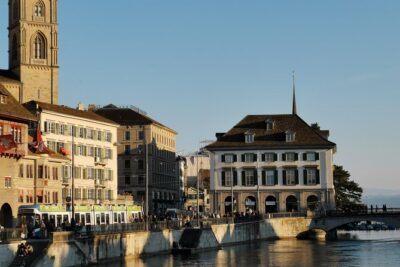
- Zürich Historic District Tour
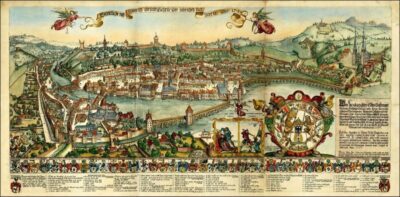
★ 5.0 · 206 reviews - Lucerne: 1-Hour Historical Tour with Night Watchman
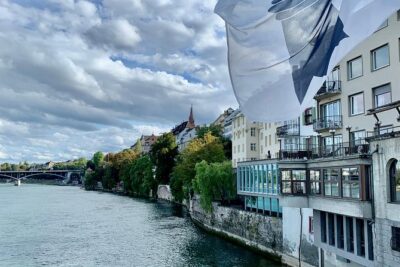
★ 5.0 · 122 reviews - Basel Historical Old Town Tour
★ 4.0 · 99 reviews
Meeting point at Tourist Information, Bahnhofstrasse 32
Your tour starts at the Tourist Information in Chur, located at Bahnhofstrasse 32. This is helpful because it is a straightforward, public place to orient yourself. If you arrive a little early, you can check local maps or the immediate area before the group gathers.
Timing matters on a guided walk. Even if you are not rushing, you should plan to be on time because you are joining a group flow. Guides cannot always slow down when everyone has different language and arrival times.
If you are using public transport, Chur’s central location makes it easier to slot this into a day. And because the meeting point is at a tourism hub, you are not stuck hunting for a tiny door in an alley.
The heart of the walk: Chur’s old streets and patrician houses
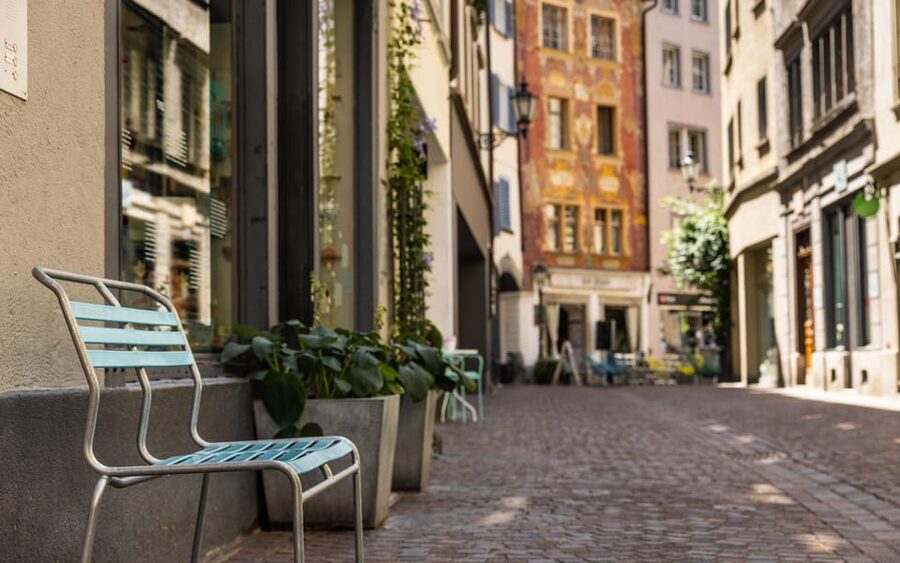
Right away, the guide takes you into the “lived-in” side of old Chur. This is not a theme park. You will walk through a lively center with winding streets, and you will get that sense that the past is still part of daily life.
I like this part because it trains your eye. You start to notice how buildings reflect wealth and civic power. The tour highlights patrician houses, which you can often spot by their prominent facades and their place in the urban fabric. The point is not to memorize names. The point is to understand how people once lived with authority right on the street.
You will also hear about institutions tied to power and governance, like the town hall and the Bishop’s Court. That is important because Chur was not just a settlement with buildings. It was an organized place where decisions were made, and those decisions shaped the town you see now.
Church of St. Martin: the stop that turns scenery into story
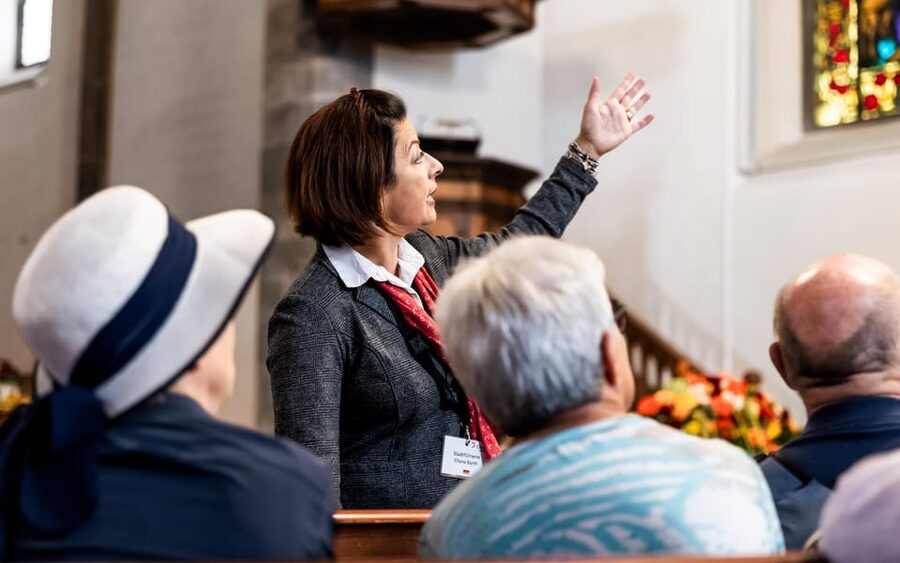
The Church of St. Martin is one of the tour’s main anchors, and it is a smart choice. Landmarks like this church are easier to recognize from far away, so your brain says: we are in the right place. Then the guide does the real work, turning that location into a chapter of Chur’s longer timeline.
What I like about this stop is how it encourages a pause. You are not expected to speed through. You get a moment to look, listen, and connect the architecture to the town’s identity.
There is also a memorable possibility on this tour. On at least one recent guided walk, the guide demonstrated the organ during the St. Martin stop. That kind of small, human touch makes the church feel more alive, and it gives you something you cannot get from a quick photo.
Even if you do not get an organ moment, the stop itself is worth it. Churches in old European towns are not just religious buildings. They are social landmarks, records in stone, and places where the community marked major moments.
Cathedral of St. Mary’s Assumption: big presence, clear meaning
After St. Martin, you continue into another architectural heavyweight: the Cathedral of St. Mary’s Assumption. This is where the tour broadens from one landmark to a larger idea of civic and spiritual life.
I find cathedral stops useful because they help you understand scale. A church can look impressive in isolation, but when you place it within a route like this, you can see how the old city structured itself around key institutions.
Also, if you are the kind of person who likes symbolism, cathedrals reward attention. Watch for how the building’s form, ornament, and setting communicate importance. Your guide should help translate what you see into why it mattered in Chur’s story.
Arcas and the upper gate: seeing Chur’s boundaries
Next comes a shift in atmosphere. Instead of only focusing on civic and sacred buildings, you start to feel the town’s edges. That is where stops like Arcas and the upper gate become very valuable.
Gates and defensive areas are not just “old entrances.” They are a physical reminder that towns had limits, rules, and security concerns. When you learn how people once thought about who could enter and how the town could protect itself, you start to read the city differently.
This is one of the tour’s strengths: it helps you understand Chur as a system. You see where power lived, where community gathered, and where the town “closed in.” That makes the old town feel coherent, not random.
Even the route choices between landmarks matter here. The walking flow helps you transition from one theme to the next: faith, governance, then fortification and boundary.
Town hall and Bishop’s Court: the “who ran the place” moment
You will also pass by or learn about important seats of local authority, including the town hall and the Bishop’s Court. This part of the walk can be dry if a tour treats it like a school assignment. In a good guided walk, it is the opposite. You start to understand who had influence, how decisions traveled, and why certain buildings ended up where they did.
This is also where anecdotes help. A quick story can make “institution” feel human again. You are no longer just looking at a facade. You are imagining negotiations, visitors, and day-to-day administration in a town that has been around for longer than most of us can comfortably picture.
If you want Chur to make sense beyond pretty streets, this is the segment that does it.
Ending at Ochsenplatz: the city wall finale
The walking tour ends at the historic city wall on Ochsenplatz. I like this finish because it is visual and spatial. A city wall is the kind of feature that gives you a clear sense of boundaries. It is also a natural place to reflect on everything you just heard.
By the time you reach the wall, the 11,000-year story clicks into place. You realize that history is not only about old buildings. It is about how a town organized itself to survive, govern, and function.
Ochsenplatz also gives you an easy place to continue exploring on your own after the tour ends. You can look around and decide what you want to linger over, rather than being dropped in the middle of a maze.
Who this tour is best for, and who should skip it
This tour works best for you if you want guided context and you enjoy walking through a real town center. It is also a good pick if you like landmark clusters, churches, and the civic story behind architecture.
It might be less ideal if:
- you prefer audio-only self-guided exploring, where you can stop and start freely
- you need a guaranteed non-walking experience
- you do not read or speak German and want a lot of fine detail (the guide speaks German during the live tour)
A note on language: since the tour is in German, your level matters. If you understand some German, you will pick up the main beats more easily. If not, you can still enjoy the route and the landmarks, but the finer stories will be harder to catch.
Practical tips so you get the most out of the 2 hours
Comfort matters on a walking tour. The only explicit recommendation is to wear comfortable shoes, and I agree with that 100 percent. Old town streets often have uneven pavement and tight turns, and it adds up over time.
Also, keep your phone ready for reference, not nonstop scrolling. You will see several landmark stops, and it helps to take notes as you go so the story sticks after the tour.
Finally, choose your pace with the group in mind. If you try to “win” the route, you miss the point. The best value here is the guide’s explanations at specific sites, like the church stops and the gate area.
Price and value: what you pay, and what you get
At $26 per person for 2 hours, you are paying for a guided narrative plus access to a structured route through key sites. In Switzerland, that is a fair deal when the guide actively shapes what you experience, rather than just pointing and moving on.
The high satisfaction score of 4.6 out of 5 (based on 9 reviews) lines up with what makes walking tours like this work: people want the walk to feel informative without becoming boring. The best sign is that the tour is designed around major landmarks and also smaller street-level details like patrician houses and civic institutions.
If you enjoy history that has faces, buildings, and stories attached to places you can stand in, this price feels earned.
Should you book the Chur old town tour?
Book it if you want a guided way to understand why Chur feels special. The mix of St. Martin, the cathedral, Arcas, the upper gate, and a clear ending at the city wall gives you a complete picture in just 2 hours.
Skip it if you want total language accessibility, or if you prefer to wander without structure. Because the tour is German-only, your enjoyment depends on whether you can follow the guide’s explanations.
For most people, though, this is the kind of tour that helps a small city punch above its weight. You will walk away with Chur not just as scenery, but as a place with a long, understandable story.
FAQ
How long is the Chur old town walking tour?
The guided tour lasts 2 hours.
Where does the tour start?
The meeting point is Tourist Information Chur, Bahnhofstrasse 32.
Which landmarks will we see?
The tour highlights include Church of St. Martin, Cathedral of St. Mary’s Assumption, Arcas, and the Upper gate.
What language is the tour in?
The live guided tour is in German.
Where does the tour end?
The walk ends at the historic city wall on Ochsenplatz.
Is there free cancellation?
Yes. You can cancel up to 24 hours in advance for a full refund.
Recently reviewed around Chur
- Chur: Private Express Walk with a Local in 90 minutes★ 4.9 · 4 reviews
- Chur: Altstadtführung★ 5.0 · 11 reviews
- Chur: Crimes city tour★ 5.0 · 5 reviews
Historical Tours, compared.
Highlights of Geneva: Dark History Quest Experience
Read our review →
Chocolate, Art, and History walking tour of Zurich
Read our review →
Lucerne Small-Group Walking Tour: History, Culture & Hidden Gems
Read our review →Browse the lists this tour appears in