
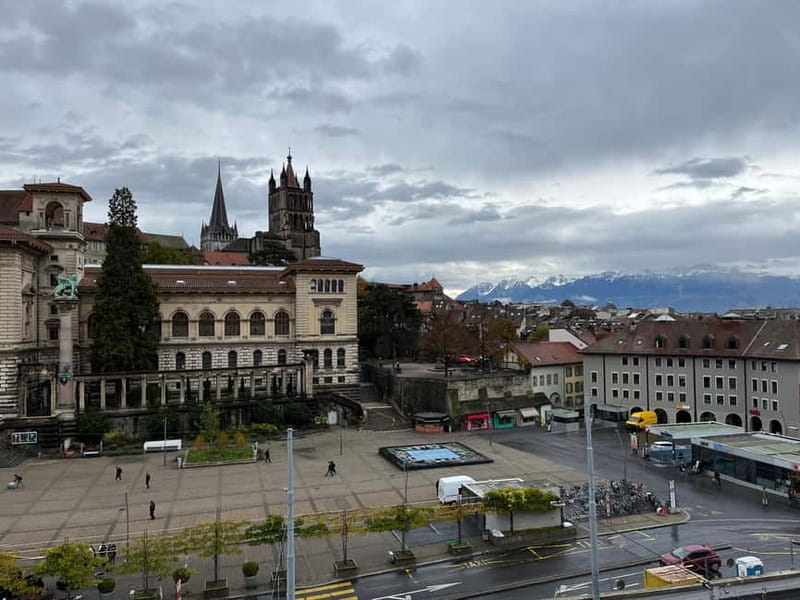
Reviewed · LAUSANNE TOURS
Discover Lausanne’s highlights with a local guide (EN)
This tour is interesting because it moves through Lausanne like a living puzzle, with Kilian Megret translating the city’s layout as you walk. I like that his explanations are practical, especially when he uses historical images to show how the area used to function, not just what it looks like now. I also like the warmth and flexibility, because you set the pace and he shapes the stories around what you care about.
The only real consideration is physical: the route includes cobbled streets plus some uphill paths, downhill sections, and stairs, so it is not a good fit for wheelchair users or people with mobility impairments.
Key things that make this tour worth your time
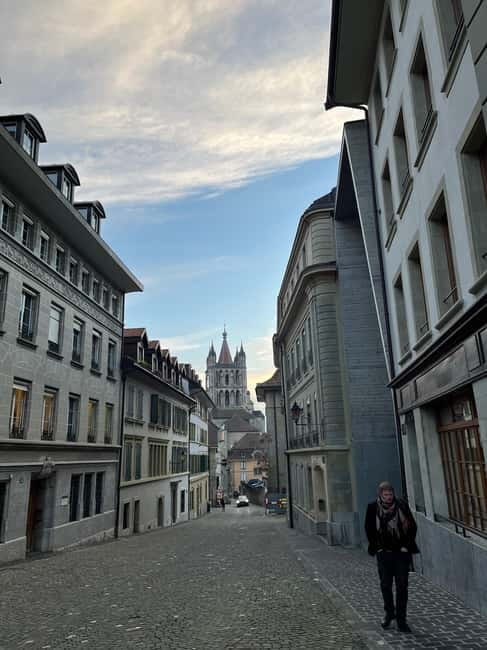
- A real local, Kilian Megret, a long-time resident who speaks English, French, and German
- Small group energy, usually around 2 to 6 people, with a maximum of 10
- Cathedral viewpoints and city power stories, connected to how Lausanne grew
- Urban planning and movement insights, including how Lausanne’s transportation and infrastructure work
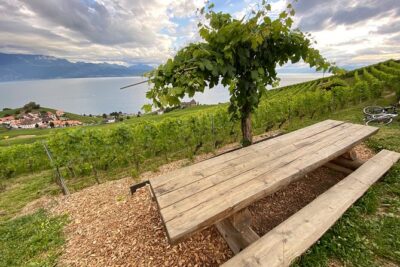
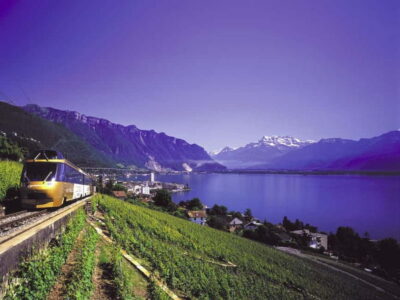
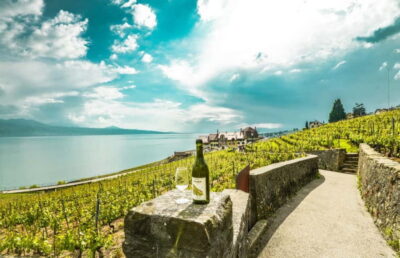
- Tailored follow-up ideas, from lake walks at Ouchy to UNESCO terraced vineyards in Lavaux
Meeting at St-François: where your walk actually starts
You’ll meet in the heart of the action, at 2 place St-François, right in front of Starbucks. It’s a central spot, easy to reach on foot from much of the city center. If you’re using public transport, the area is served by buses to Lausanne, St-François station, which is convenient when you’re juggling luggage or jet lag.
Why I like this meeting point: it keeps things low-stress. You’re not hunting for a remote corner, and you can arrive, get oriented, and start walking right away.
Also, your guide is easy to spot. Kilian may wear a straw hat, and he can send you a photo on WhatsApp beforehand so you recognize him quickly. That small detail matters when you’re trying to start on time, especially if you’re traveling solo.
A few more Lausanne days worth comparing
- The Olympic Museum Entrance Ticket in Lausanne
★ 4.5 · 211 reviews - Lausanne: 3-Hour Riviera and Lavaux Region Cruise
★ 4.2 · 185 reviews - Lausanne: The Olympic Museum Entry Ticket
★ 4.7 · 123 reviews
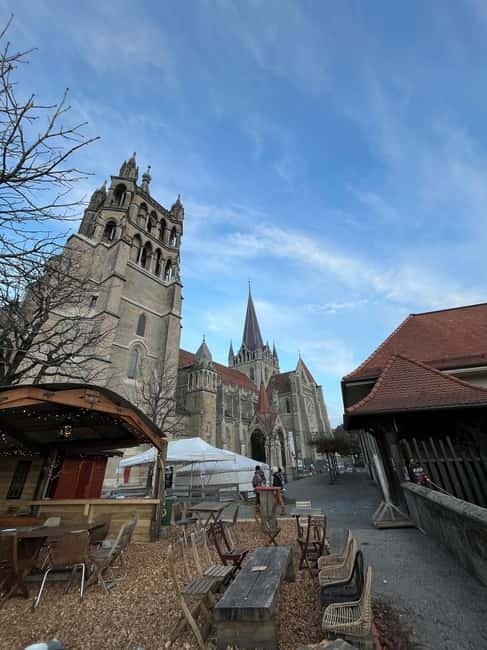
Lausanne Cathedral: Gothic views plus why this site matters
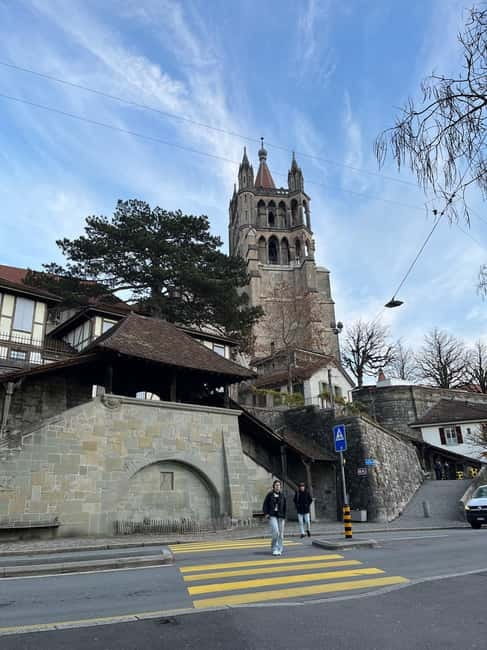
One of the main reasons to take this walk is Lausanne Cathedral, a Gothic landmark that’s also a story machine. You’ll spend time with a guided visit there, with enough pacing to take photos and actually look around. The guide connects the building to how Lausanne developed, including the role of the church and the cathedral’s central position.
The payoff is not only the architecture. You’ll get viewpoint time, and the guide helps you understand what you’re seeing from above, like how the old city grid relates to the hills and routes that shape daily movement.
A neat touch from Kilian’s style is how he uses historical visuals to explain changes over time. In one example, he explained how waterways and flows used to shape parts of the city, and that kind of context turns a “pretty square” into a map you can mentally carry with you.
Moving through medieval streets: Rue du Bourg and Rue du Rotillon
After the cathedral area, the walk carries you into lanes where Lausanne feels older and more human-scale. Expect time on streets such as Rue du Bourg and Rue du Rotillon, which connect charming medieval street character with everyday life.
This is where you start noticing how the city works at walking speed. The streets are narrow and angled, and the guide’s job is to help you read them, not just walk past them. You’ll get explanations tied to why certain areas became commercial or central, and how different eras left traces you can still see.
If you love getting the “why” behind a place, this is a good section. If you’re only interested in the most famous photos, you might move through it faster, but the guide is used to adjusting to your interests.
St-Maire Castle and the Parliament: power on a hillside
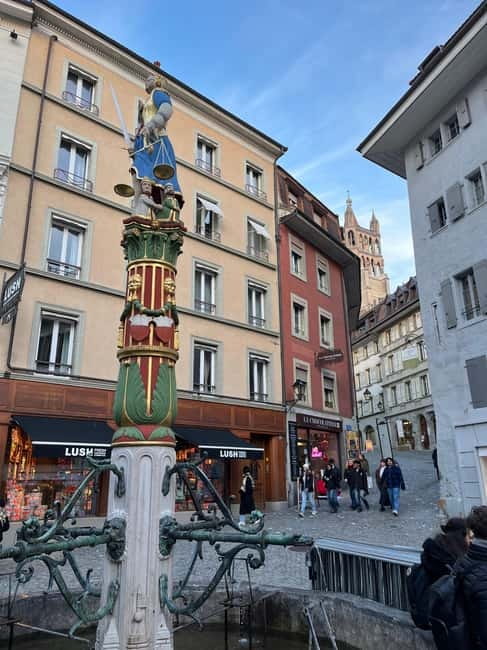
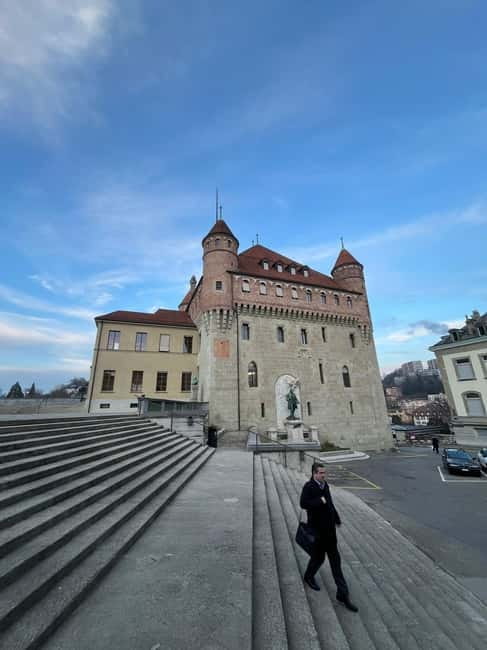
Next comes a strong shift in tone, from medieval street life to St-Maire Castle and the area tied to the Parliament. This is historic governance territory, and Kilian explains it in a way that feels relevant rather than museum-still.
You’re not just looking at buildings here. You’re learning how Lausanne organized authority and public life, and how those institutions relate to the geography. Being on foot matters, because you can feel the slope and understand how routes would have worked long before cars and transit schedules.
One practical note: this section may include some stairs or uneven ground. It’s manageable for most people with a normal walking level, but it’s worth wearing comfortable shoes with solid grip. If you feel your legs getting tired, tell the guide early so the pace can be adjusted.
A different kind of day out of Lausanne:
- From Lausanne: Glacier 3000 Experience Tour
★ 4.6 · 96 reviews - Vine Stories: Lavaux & Lutry wine walk
★ 5.0 · 67 reviews - From Lausanne: Gruyères Tour with Train, Chocolate & Cheese
★ 4.9 · 46 reviews - From Lausanne: Montreux, Chaplin, and Chillon Castle Tour
★ 4.7 · 43 reviews
Palais de Rumine: a science palace stop that breaks the church-only pattern
Then you’ll head toward Palais de Rumine, a palace-style building connected to sciences. It’s a smart balance within the route, because you’re not only stacking your morning or afternoon with churches and castles.
The guided time here helps you understand why the palace exists where it does and how it fits into Lausanne’s civic identity. Even if you skip museum interiors during this type of walk, the exterior and setting still tell a story about what the city values and how it invests in public knowledge.
This is also a good place to slow down and catch your breath. With a 2 to 3 hour overall timing, you want short, meaningful pauses rather than long museum detours that can scramble your day.
Palud Square and Town Hall: the civic heart with a famous clock
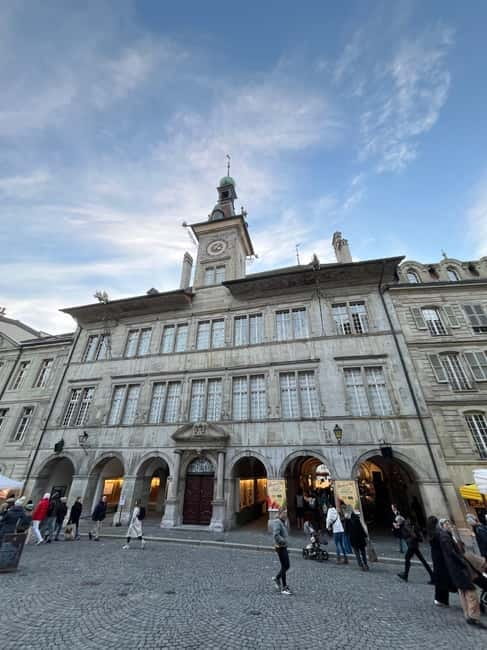
At Palud Square, you’ll reach the civic center, including the Town Hall area and its famous clock. This is a “people notice” moment. You can watch daily rhythms, see how the space pulls crowds in different directions, and learn why this square functions like a hub.
What makes this stop valuable is how the guide ties the architecture to human movement. You’re learning how Lausanne organizes public space so that it feels intuitive once you’ve walked it once.
Also, this is the kind of spot where a camera helps, but your best photos come when you look up and around. The guide’s job is to keep you from missing the visual logic of the square.
Flon and Pont Bessières: modern Lausanne, explained at walking pace
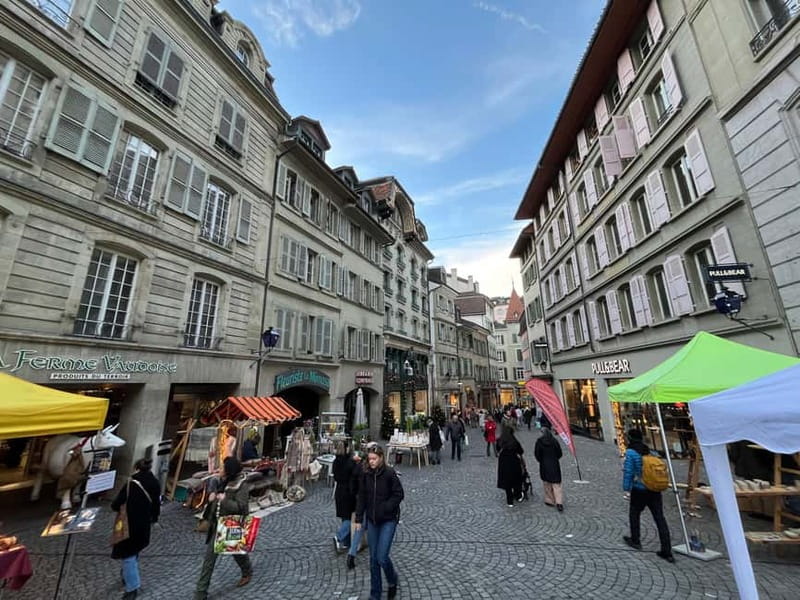
Next you’ll move through the Flon district and across Pont Bessières, a more 20th-century feel to the city story. This part of the tour is where Lausanne stops being “old town postcard” and starts showing how it handles change.
Flon is known for modern architecture, street art, and a lively street scene. The value here is not only the visuals. Kilian helps you understand how the city connects levels and routes, and how the urban design makes sense when you’re actually on foot.
Pont Bessières adds a great viewpoint moment. Even if you only look briefly, the bridge gives you a mental shortcut for navigation later, because it shows how the city’s flow links neighborhoods.
If you’re a transit nerd, this section will probably make you happy. In at least one guided experience, Kilian’s focus on traffic guidance and mobility made Lausanne feel surprisingly easy to map in your head.
Montbenon Hill and the lake view direction
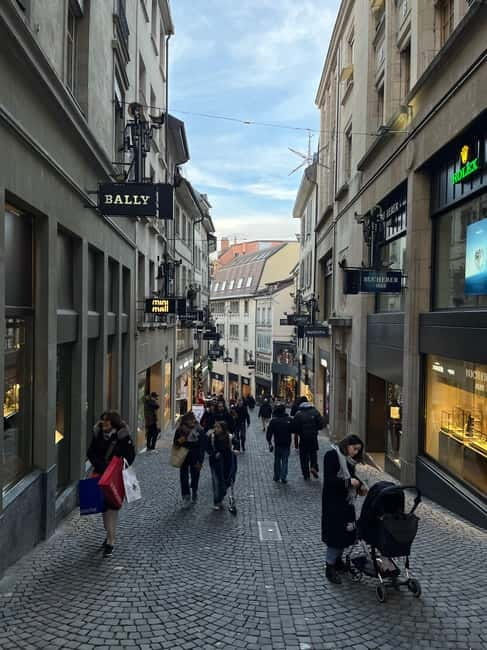
The route continues toward Montbenon Hill, a leisure area with park space and strong views toward the lake. It’s a satisfying change of scenery from squares and streets, because you can look outward instead of only around.
Depending on the season and the exact route that day, this is also where people may want a warm break. In one guided outing, the group ended up near Casino de Montbenon to warm up and eat, which shows you how the guide can work with real weather and comfort needs.
After Montbenon, your walk finishes at Passerelle Lucy-Dutoit, 1003 Lausanne. That ending spot is useful because it leaves you positioned for more walking and easy sightseeing nearby.
Tailored tips after the tour: what to do next in Lausanne and beyond
One of the strongest reasons I’d book this tour is the follow-up list of ideas that are tailored to you. You don’t just leave with vague suggestions. Kilian shares practical next steps, including where to go for views, how to spend extra time, and what matches the kind of day you want.
You may get recommendations such as:
- Ouchy lakeside promenade for lake and Alpine views
- Olympic Museum and Park if you want a theme that connects sports and Swiss culture
- Sauvabelin Tower for panoramic views from a wooden tower
- Hermitage Foundation for art and gardens in a historic mansion
- Lavaux Vineyards (UNESCO) for the dramatic terrace scenery and wine country atmosphere
Even if you don’t do all of these, having a shortlist prevents the usual problem, where you waste your remaining hours trying to decide.
Price and value: is $65 worth 2.5 hours?
At $65 per person for about 2.5 hours, the value comes from three things that matter in real life.
First, it’s a small group experience, typically 2 to 6 people, sometimes fewer, with a max of 10. That means you’re more likely to get conversation, questions answered, and explanations that land for your pace.
Second, the tour includes guided coverage of key landmarks without locking you into museum entry fees. You’re not paying extra for attractions you might skip, and you get the context so that if you later choose to enter a site, you’ll understand what you’re looking at.
Third, Kilian’s background as an engineer shows up in how he talks about infrastructure, architecture, and urban development. That sort of framing is rare on casual city walks, and it makes the city feel easier to navigate after the tour.
The downside on value is simply time. This is not a full-day Lausanne deep grind. If you want a long list of museums and paid attractions, you’ll likely need to add those separately.
Pacing and logistics: what the walk feels like day to day
This is a walking tour through medieval streets and mixed-elevation areas. Expect moderate effort, with some uphill sections, downhill stretches, and stairs. It can be adapted to a certain extent, but the route is still built for getting around on foot through older streets and city geometry.
It runs in all weather except extreme events. That means you should dress for rain or cool wind if it’s likely. Bring a reusable water bottle, because the fountains and casual hydration are part of how you’ll keep comfortable during a city walk.
The comfort rule is simple: wear shoes you’ve already tested. Cobblestones and small gradients punish sketchy soles quickly.
In terms of language, Kilian speaks English, French, and German. English is the main option, with French and German on request. If you’re booking late, it’s smart to check that your preferred language is available for your specific departure.
Who this tour fits best, and who should skip it
This tour fits you if you:
- like history, but also care about how a city functions today
- enjoy stories and anecdotes tied to specific places
- want a small-group walk with a guide who can answer questions in real time
- want practical follow-up ideas for the rest of your day, not just a list of sights
You might want to choose a different format if you:
- use a wheelchair or have significant mobility impairments, because the tour is not suitable for that
- have difficulty with stairs and uneven cobblestones
Families can also work, especially since Kilian’s relaxed, easygoing style has landed well with kids in at least one group experience. If you have younger travelers, just plan for slightly slower pauses for photos and snacks.
Should you book Kilian’s Lausanne highlights walk?
I’d book it if you want the fastest path to understanding Lausanne without turning your day into a check-list sprint. The combination of small-group warmth, cathedral and civic core context, and Kilian’s ability to explain infrastructure and mobility makes this more than a sightseeing stroll.
Skip it only if you need step-free access or you’re looking for a museum-heavy afternoon with paid entrances. This walk is built around outdoor movement, guided stops, and leaving you ready to explore on your own afterward.
If you’re spending just a short time in Vaud and want to feel oriented quickly, this is a solid way to get your bearings fast.
FAQ
Where is the meeting point?
Meet at 2 place St-François in Lausanne, right in front of Starbucks, near St-François church.
How long is the tour?
The tour lasts about 2 to 3 hours, with a typical duration of around 2.5 hours.
What group size should I expect?
It is a small group, usually 2 to 5 participants, with a maximum of 10. Average group size is often around 2 to 6.
What languages are available?
The guide speaks English, French, and German. English is the main language, and French or German can be available on request.
Is food included?
Food and drinks are not included. You can use water fountains for free water, and there may be optional time for a coffee break.
Are museum entrance fees included?
No. Entrance fees to museums or paid attractions are not planned during the walk.
Will the tour run in bad weather?
The tour runs in all weather conditions except in case of extreme events.
Is the tour suitable for wheelchair users?
No. It is not suitable for people with mobility impairments or wheelchair users.
What should I bring?
Bring comfortable walking shoes, a camera or smartphone, weather-appropriate clothing, and a reusable water bottle.
Recently reviewed around Lausanne
- Medieval Lausanne: A Self-Guided Audio Tour★ 3.5 · 3 reviews
- Explore Lausanne in 60 minutes with a Local★ 4.0 · 3 reviews
- Guided Walking Tour in Lausanne★ 5.0 · 3 reviews
- Historic Lausanne: Exclusive Private Tour with a Local Expert★ 4.0 · 5 reviews
- Chillon Castle & Chaplin’s world Tour with cruise from Lausanne★ 4.5 · 6 reviews
- Lausanne Foxtrail Citi★ 4.5 · 7 reviews
- Day Tour to Zermatt Matterhorn and Glacier Paradise from Lausanne★ 4.5 · 8 reviews
- Explore Lausanne in 60 minutes with a Local★ 3.0 · 8 reviews
Lausanne Tours, compared.

Day Tour to Zermatt, Matterhorn & Glacier Paradise
Read our review →Browse the lists this tour appears in