
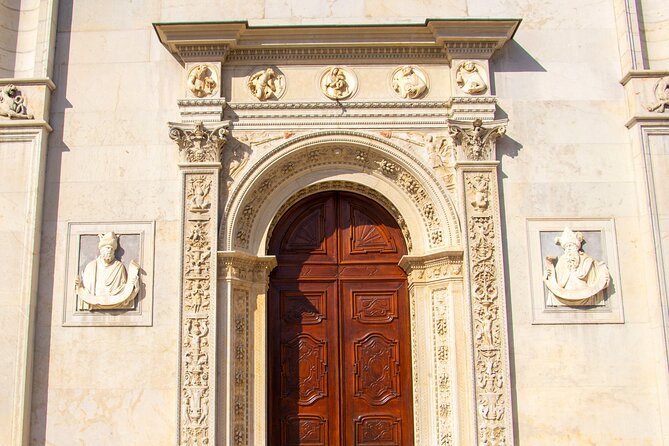
Reviewed · LUGANO TOURS
Explore Lugano’s Art and Culture with a Local
Lugano’s art and culture can feel spread out, which is exactly why this small-group walk works so well. I love how Parco Ciani turns art into something you experience while moving, and I also love the shock of detail inside the 1912 Central Post Office. In about 1.5 hours, you get a clear sense of the city without feeling like you crammed too much in.
The one possible drawback is time. This is a strolling route, so if you want to linger for a long museum-style visit, you’ll likely want to plan extra time before or after. The flip side is that guides like Tej and Florane tend to give practical, get-your-bearings advice so you can keep exploring after the tour.
Key highlights
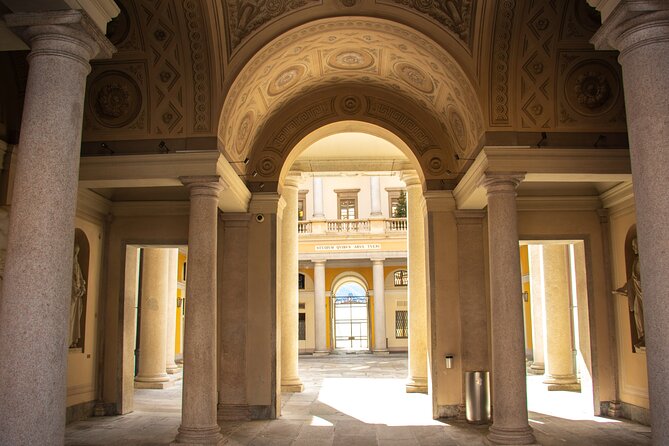
- Parco Ciani with Villa Ciani: art, statues, and old trees in one calm walking circuit
- Central Post Office (1912): architecture and design tied to Swiss history and a named architect, Theodor Gohl
- Old-meets-new streets: Via Pessina and Via Nassa mix everyday life with stylish shopping
- Renaissance fresco stop: Bernardino Luini’s Passion and Crucifixion shown as a highlight for art lovers
- Lugano Arte e Cultura (LAC): a major arts hub where the walk ends, with plenty to do right after
- Small group format: up to 8 people, so your local guide can slow down when questions pop up
Why Lugano’s Art Stops Work Best With a Local
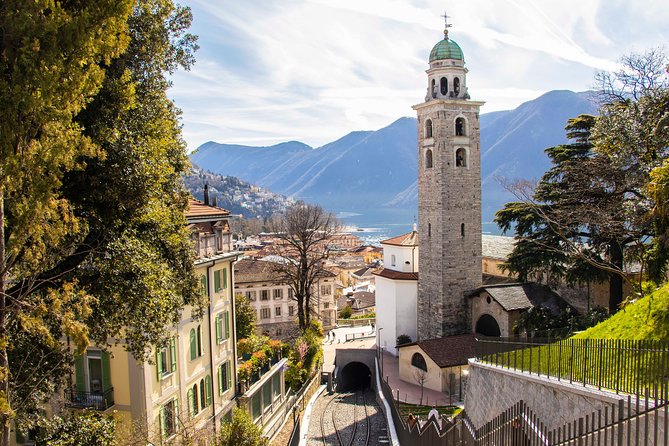
Lugano is a city where the skyline can look modern, but the layers under your feet are older. This tour is interesting because it doesn’t treat art like something you only see in a museum. Instead, you walk through parks, historic buildings, and streets where design choices and cultural stories sit in plain sight.
What you get is a guided sense of priorities. Your guide connects dots between the Italian influence in the architecture, the Swiss preservation of historic spots, and the way Lugano’s lakefront mood shapes daily life. And because the group stays small, you are not one more face in a crowd.
There is also a practical side. In the best moments, guides like Tej and Florane share how to travel around the city efficiently, not just what to look at. One person even said their guide helped them map public transport onward so they could reach a big viewpoint after the walk, which is the kind of bonus that makes a short tour pay off.
A few more Lugano days worth comparing
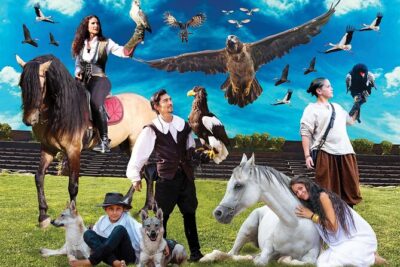
- Skip the Line: Falconeria Locarno Ticket
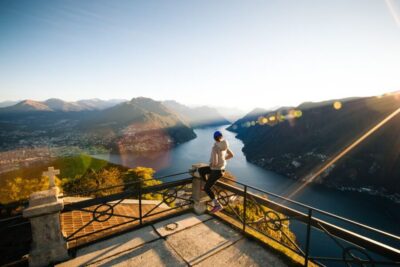
★ 4.5 · 155 reviews - Lugano: 4.5-Hour Monte Bré Visit w/ Funicular Ride
★ 4.6 · 114 reviews - Lugano: 3-Hour Monte San Salvatore Tour with Funicular Ride
★ 4.6 · 77 reviews
Meeting at Hotel Pestalozzi, Finishing at LAC
You start at Hotel Pestalozzi, Piazza Dell Indipendenza 9. It’s a clear landmark, and it puts you in a walkable position right away. Expect a short introduction, then you head out on a route designed to cover several cultural zones without long transfers.
The tour ends at LAC Lugano Arte e Cultura, Piazza Bernardino Luini 6. That matters because LAC is not just a stop on a map. It’s an arts space where you can keep going after the tour, and it’s also surrounded by places to grab lunch. Ending there means you avoid the frustrating “now what?” moment.
The tour also runs with a mobile ticket, and it is offered in English. With maximum 8 travelers, you tend to get more personal attention, especially if you pause to ask questions.
Parco Ciani and Villa Ciani: Where Sculpture Meets a Park Walk
Your first stop is Parco Ciani, Lugano’s cultural oasis. This is where the tour earns its title. Instead of starting with a building and moving on, you start with an open-air mix of century-old trees, statues, and the elegant presence of Villa Ciani.
I like this approach because it sets the tone. You get a visual rhythm right away, art embedded into nature rather than separated from it. If you’ve ever felt museum fatigue, this park start is a smart reset.
What to watch for here:
- Look for the way statues and landscape features guide your route
- Notice how Villa Ciani feels more like part of the park experience than a distant attraction
- Take a moment to read the surroundings, since the tour is designed around small discoveries
A downside to note: if it’s hot or raining, a park start means you’ll feel the weather. Bring a layer or plan accordingly, but do not skip this section. The park stop is one of the easiest ways to understand Lugano’s character quickly.
Central Post Office (1912): Theodor Gohl’s Architecture as Storytelling
Next you step into the 1912 Central Post Office, a building linked to architect Theodor Gohl. This is one of those stops where the exterior is only the beginning. Inside, you focus on the blend of architecture, art, and Swiss history.
This stop is valuable even if you are not an architecture nerd. Why? Because it gives you a concrete example of how Switzerland treated public buildings as cultural statements. In other words, this is not just a place that once served mail. It’s a designed space that reflects a broader attitude toward art in everyday life.
How to enjoy it:
- Slow down and look for how the building’s design feels planned, not accidental
- Pay attention to details that connect style choices with historical context
- Let your guide point out the specific features tied to the region’s identity
If you tend to fly through stops, this is where you’ll probably want to slow down. The tour is short, but the Post Office section helps you feel why Lugano’s preservation matters.
A different kind of day out of Lugano:
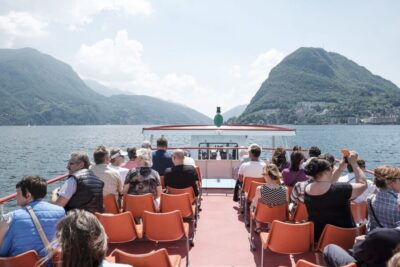
- From Lugano: Lake Lugano Cruise to Morcote & Sightseeing
★ 4.5 · 64 reviews - Monte Brè Tour from Lugano by funicular
★ 4.5 · 61 reviews - Lugano: Guided Walking Tour to Gandria with Boat Cruise
★ 4.5 · 35 reviews - Lugano Region Guided Excursion from Lugano to Monte San Salvatore by funicular
★ 4.5 · 30 reviews
Italian-Inspired Facades, Frescoes, and the Payoff Views
The tour then feeds art and history lovers with what sounds like a best-of mix: Italian-inspired facades, intricate frescoes, and panoramic views. Even if you do not catch every art detail, you’ll feel the effect. Lugano’s street and building styles help you understand why the city feels like an intersection between cultures.
Here’s what I think you should do during this stretch:
- Treat the facades like a map. Your guide is likely using them as clues to point out themes across the route.
- Save your phone time for the moments that actually show the view. Panoramas are where photos make sense.
- Listen for how the guide explains frescoes, since your eyes may notice color and figures before you realize what you are looking at.
Potential drawback: panoramic viewpoints depend on lighting and weather. If it is overcast, you might not get the crispest sightlines, but you’ll still understand the layout and the city’s relationship with the lake.
Via Pessina: Tradition Meets Chic, With Market Life in Between
After the more formal art stops, the tour turns to streets where daily life sets the tempo. You stroll down Via Pessina, a mix of tradition and modern chic.
This part of the walk is especially good for people who like cultural context, not just cultural objects. You see how shopping, seasonal produce, and local routines shape the vibe. The tour mentions local market shopping and boutiques, which means this isn’t only a window-shopping loop. It’s a chance to understand what people actually do here.
What you can do on your own in this area:
- If you like snacks, you’ll likely find something easy to eat while you keep walking
- If you like photos, the street energy often gives you better street-level shots than a single viewpoint
The small caution is that shopping streets can tempt you to stop constantly. The tour is timed, so try not to blow your attention budget before the art-focused stops later in the route.
The Square With Seasonal Events: Your Shortcut to the City’s Rhythm
You also pass a busy square that hosts seasonal events and works as a gateway to the city’s artistic landmarks. This stop functions like a reset button. You go from crafted buildings to a public space where the city’s calendar shows up.
Why it matters:
- Squares are where people gather, so you quickly learn how Lugano “moves” day to day
- Seasonal events can add color and meaning, even if you only catch the setup rather than the full program
- It’s an easy place for your guide to explain how different parts of the city connect
If you’re the type who gets impatient with open space, think of this as the pause where your guide helps you understand what comes next. You’ll usually leave this square with clearer mental geography.
Via Nassa Along the Lake: Jewelry, Antiques, and a Walk That Feels Like a Timeline
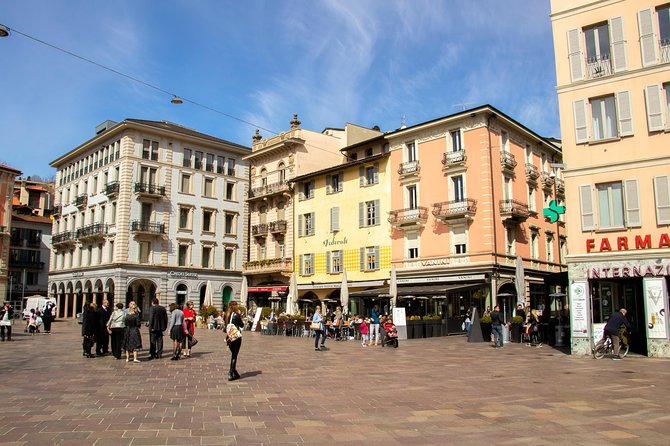
Then comes one of Lugano’s most fun stretches: Via Nassa, a long walkway by the lake. The route is filled with shops for jewelry, clothing, food, and antiques, which makes it ideal if you like browsing while you learn.
I like lake-walk sections because they add breathing room. Your eyes can move between shopfront details and the waterline, and your guide can point out city identity in a way that feels less formal than inside a building.
What to watch for:
- Shop displays can be a clue to local taste. Your guide may point out patterns in what’s sold and what that says about the area.
- Antiques shops are often where you can spot how Lugano’s cultural influences show up visually.
- Keep an eye out for the moment your guide frames the street as a progression, like time walking alongside you.
If rain hits, a lakeside route can be less comfortable. Still, it’s a strong segment for feeling the city’s pace, even if you cut your browsing short to stay warm.
Renaissance Fresco Stop: Bernardino Luini’s Passion and Crucifixion
One of the most art-specific moments is a Renaissance stop described as a hidden gem for those who love art history. Here you see Bernardino Luini’s lively fresco of Passion and Crucifixion.
This is the kind of stop that makes you glad you booked a guided experience. A fresco can be easy to overlook if you do not know where to look. With a guide, you get the context that turns color and figures into meaning.
How to get the most from it:
- Look for where your guide directs your attention on the painting
- Notice how the fresco fits into the space, meaning the artwork is not floating on its own
- Ask questions if something feels confusing, because your guide is there to translate the story into something you can see
Possible drawback: if art frescoes are not your priority, this portion may feel slower than the shopping streets. But even then, it’s one of the most memorable stops on the route because it’s specific and tied to a real artist and work.
LAC Lugano Arte e Cultura: What You Can Do Right After the Walk Ends
The tour ends at LAC Lugano Arte e Cultura, which is described as a cultural hub offering dance, prose, and music. That ending point is smart because you can keep the cultural momentum going while the city is still fresh in your mind.
Even if you do not have tickets to a specific performance, being near LAC is useful. You can walk around and choose lunch nearby, then decide whether you want to explore more art spaces on your own.
If you like a plan, consider this approach:
- Use the tour to learn the key neighborhoods and artistic landmarks
- Use LAC as your “anchor” for what to do next, since it gives you options right where you finish
Price and Value for a 1.5-Hour Small Group Walk
The price is $144.87 per person, and the tour runs about 1 hour 30 minutes. On paper, that might sound like a lot for a walking experience. In practice, the value comes from three things you do not get from self-guiding.
First, you have a local who wants to show you the city, and the best guides in this style focus on connections, not just facts. Second, the group size cap of 8 travelers means fewer rushed explanations and more room for questions. Third, the itinerary is built around variety, from park art and historic architecture to shopping streets and a specific Renaissance fresco.
What’s not included helps you budget: private transportation is not included, and coffee and/or tea is not included. If you want a drink break, plan to buy one on your own during a natural pause.
Overall, if you only have limited time in Lugano and you want a structured route that still feels human and local, this price can make sense. If you already know the city well or love wandering without guidance, you might feel like you could do it independently cheaper. But if you want the art and context delivered fast, this tour is built for that.
Who This Tour Fits Best (and Who Might Skip It)
This is a strong fit if you:
- Want a fast way to understand Lugano’s art and culture without a car
- Like street-level history, not only ticketed attractions
- Prefer small groups and clearer explanations
- Enjoy learning what to do next, since guides may share practical city-navigation tips
It may be less ideal if you:
- Want long museum-style stops where you can sit and read for hours
- Are strictly focused on one category, like only painting or only architecture
- Plan to do lots of shopping during the walk, since the route includes multiple fixed stops
The best part is that the walking route is short enough that you can still shape your afternoon afterward, especially with LAC as your end point.
Should You Book This Lugano Art and Culture Walking Tour?
I’d book it if you want a guided overview that feels grounded in real places, not just a checklist. The combination of Parco Ciani, the 1912 Central Post Office, Via Nassa by the lake, and the Luini fresco gives you a balanced slice of Lugano’s culture in a short time.
Skip it or consider alternatives if you already have a tight plan where you only need one neighborhood or one type of attraction. Otherwise, this tour is one of the better ways to get oriented and appreciate what makes Lugano feel distinct, especially when the guide brings stories and practical tips that help you keep exploring after the walk ends.
FAQ
How long is the Lugano Art and Culture with a Local tour?
It lasts about 1 hour 30 minutes.
How much does the tour cost?
The price is $144.87 per person.
Is the tour offered in English?
Yes, it is offered in English.
What is the maximum group size?
The tour has a maximum of 8 travelers.
Where does the tour start?
The meeting point is Hotel Pestalozzi, Piazza Dell Indipendenza 9, 6900 Lugano.
Where does the tour end?
The tour ends at LAC Lugano Arte e Cultura, Piazza Bernardino Luini 6, 6900 Lugano.
What is included in the price?
The tour includes a local guide who wants to show you his city.
What is not included?
Private transportation is not included, and coffee and/or tea are not included.
Do I receive a ticket on my phone?
Yes, the tour uses a mobile ticket.
Can I bring a service animal?
Yes, service animals are allowed.
Recently reviewed around Lugano
- Instagram and Photo tour of Lugano with a professional photographer.★ 5.0 · 7 reviews
- Guided Half-Day Excursion to Morcote with Panoramic Cruise★ 4.0 · 8 reviews
- Lugano History & Culture 2 hours Walking Tour – Small Group★ 5.0 · 9 reviews
- Guided Walk from Lugano to Gandria promoted by Lugano Region – return by boat★ 4.5 · 15 reviews
- Lugano Fox Trail Galileo★ 3.5 · 18 reviews
- Lugano & Morcote, Lake Lugano, private guided tour, from Lugano★ 4.5 · 21 reviews
- Explore Lugano in 60 minutes with a Local★ 5.0 · 27 reviews
- Lugano Mountains, tour from Milan, Lugano, lake Como.★ 5.0 · 27 reviews
Lugano Tours, compared.
3-Hour Monte San Salvatore Tour with Funicular Ride
Read our review →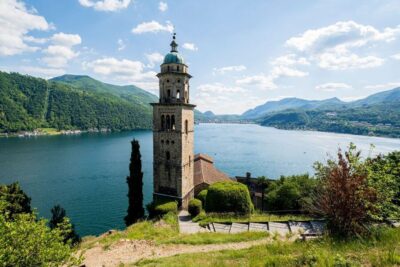
Lugano Region Guided Excursion from Lugano to Monte San Salvatore by funicular
Read our review →
Lugano Mountains, tour from Milan, Lugano, lake Como.
Read our review →Browse the lists this tour appears in