
Reviewed · WALKING TOURS
Zurich: Old Town Walking Tour
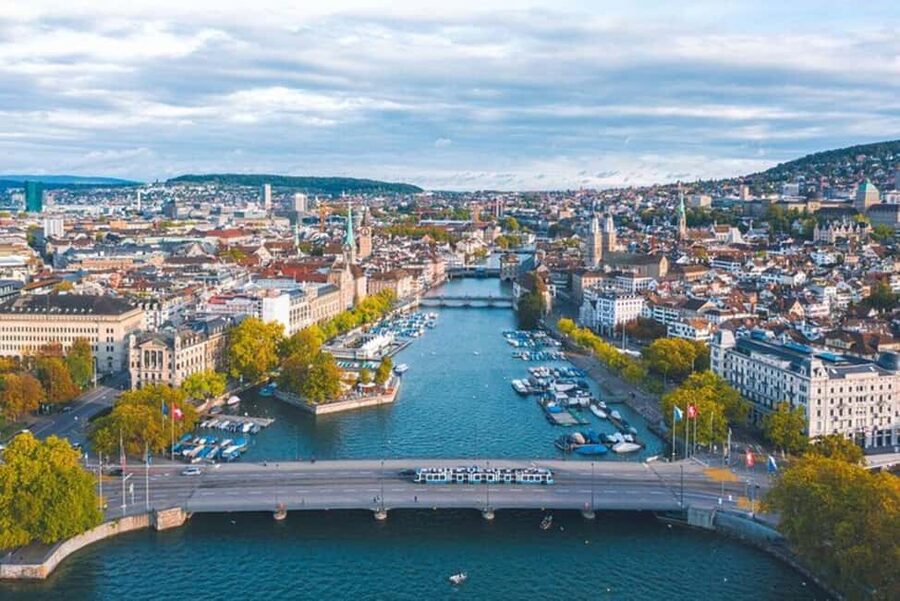
This tour is interesting because it strings together Zurich’s landmarks with the stories that make them stick. I like how you get big viewpoints early at Polybahn and Polyterrasse, then slow down for places like Fraumünster and Wasserkirche that explain why Zurich matters. I also like the small-history moments, like learning why Spiegelgasse is famous for Lenin’s time in Zurich. One drawback to consider is that quality depends heavily on the guide, and a few people found the pacing too light on history.
In practice, this is a compact, 2-hour walk through the old town’s most recognizable stops. You’ll start near Hotel Scheuble, then move from cozy squares into cathedral stops, underground-ruin territory, and the views from Lindenhof Hill. The good news is that it runs in multiple languages (Spanish, Italian, English, German) and can be wheelchair accessible, but you’ll want to arrive ready to ask questions if anything feels too quiet.
Key highlights you will feel fast
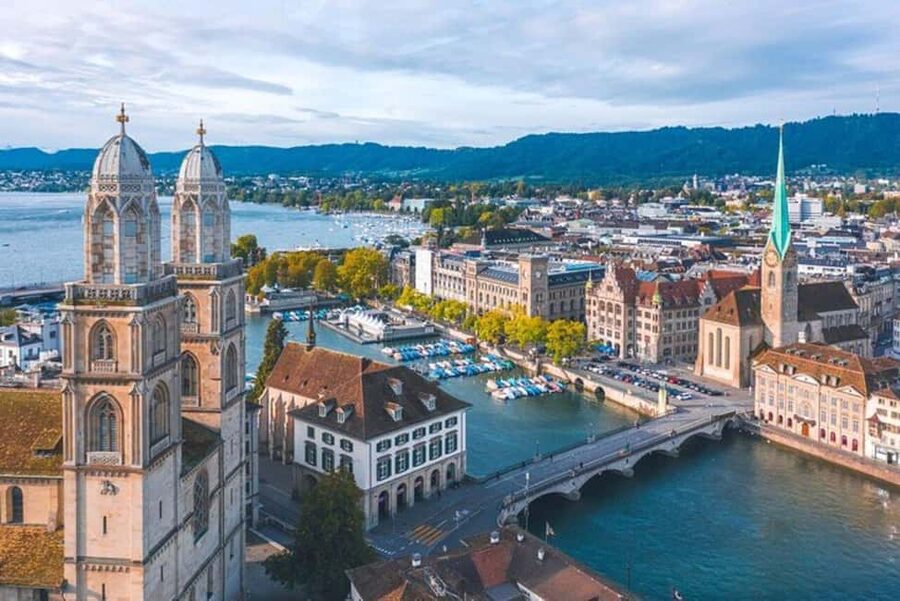
Hirschenplatz for old-town atmosphere, then right into the city’s view-making spots**
Polybahn funicular and Polyterrasse ETH viewpoints for quick, skyline-level payoff
Fraumünster’s Chagall stained-glass windows for art that’s easier to appreciate in person
Brunngasse and Spiegelgasse for picture-perfect lanes plus the Lenin connection
Wasserkirche underground ruins tied to the story of Felix and Regula
Lindenhof Hill for a strong finish with historical ruins and perspective over the river bend
Why Zurich’s old town walk makes sense in 2 hours
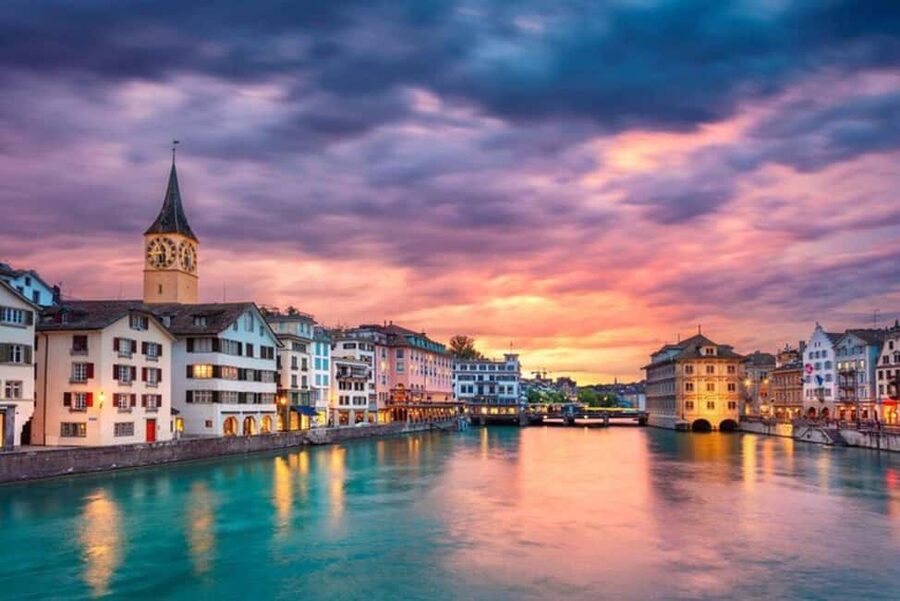
Zurich can feel expensive and polished, but its old town is where you see the city’s real personality: layers of medieval life, religious power, and trade routes that shaped everything from street layout to civic pride.
This walking tour is designed to move you through that “layer cake” quickly. You get a classic old-town route, but it’s not just a sightseeing checklist. Stops like Fraumünster and Wasserkirche come with the kind of context that helps you understand what you are looking at, why it stayed, and what it replaced. That matters in Zurich because lots of buildings look impressive at first glance, yet you miss the point if nobody tells you the why.
Also, the timing works. Two hours is short enough to stay fun even if it rains a little, and long enough that you do not just zip past sights. You finish back where you started, so you avoid the common “end up somewhere inconvenient” problem.
More Walking Tours in Zurich
- Zurich Old Town Walking Tour: 2-Hours
★ 4.6 · 1,008 reviews - Zurich Walking Tour With Cruise and Aerial Cable Car
★ 5.0 · 669 reviews - Zurich Old Town Walking Tour
★ 4.5 · 479 reviews
Starting near Hotel Scheuble, then into Hirschenplatz
You meet your guide near Hotel Scheuble, and the tour’s starting area lines up with Mühlegasse 17. If you want this to feel smooth, arrive a few minutes early. Several guided walks go better when you start without stress, and one of the rougher experiences tied to timing issues happened when the group wasn’t ready at the advertised moment.
From there, the first anchor is Hirschenplatz. This square is useful as a starting point because it lets you orient immediately. You see old buildings, you notice the mix of old-world streets with modern daily life, and you get a sense of how Zurich built community around compact public spaces.
I like starting in a place like Hirschenplatz because your brain starts mapping quickly. After that, the rest of the walk feels less like random wandering and more like following a thread.
Polybahn and Polyterrasse ETH: where the city suddenly looks bigger
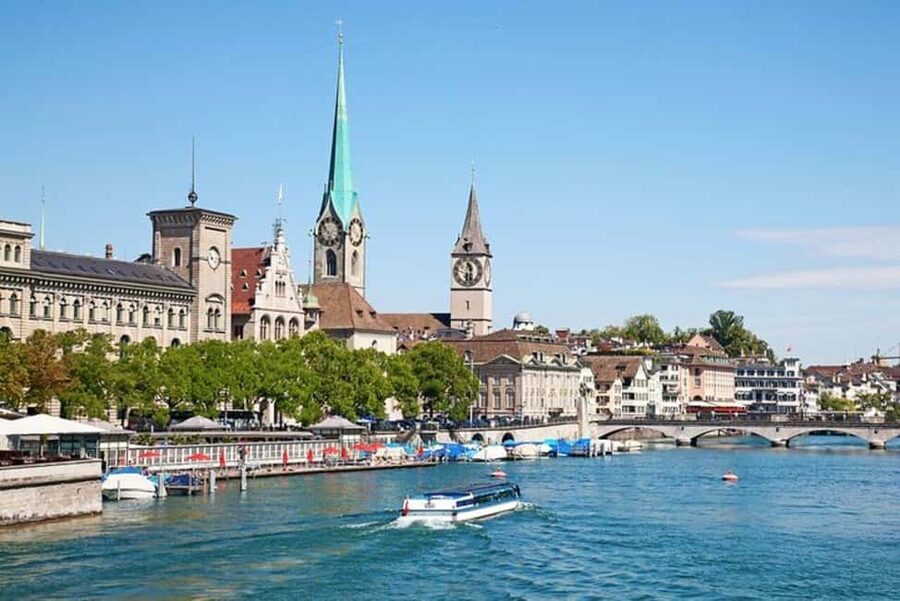
One of the strongest parts of this tour is the viewpoint sequence. You head to Central Polybahn, then continue to Polyterrasse ETH.
This is where Zurich stops being “pretty street photos” and becomes real geography. From up high, you understand how the city is arranged around water and elevation, and you get the kind of context that makes later stops easier to visualize.
The Polybahn stop also keeps energy up early. You are walking, but you are not just pacing along sidewalks. You get that short jolt of height, then you come back down with a fresh sense of direction.
Practical tip: if you’re traveling on a tight schedule, plan to take photos quickly here. It’s the kind of spot you can spend 30 minutes at, but your two-hour clock is also doing something for you later.
Zentralbibliothek and the old city wall feel
Next you visit Zentralbibliothek Zürich. The value here is that you are not only seeing an impressive building facade. You also get parts of old city wall and fortifications into the story of Zurich’s growth.
This is the kind of stop that rewards paying attention, even if you are not a “history person.” City walls are the physical reason some streets bend the way they do and why the old town grew in particular pockets. Without that context, you might treat the fortifications like decoration. With context, they become a map of how Zurich protected itself and controlled movement.
If your guide is talkative, this is often where their knowledge shines. In the best versions of this experience, guides add small explanations that make you look at stone and think about the people who carried out the daily work.
A different kind of day out of Zurich:
- Lindt Home of Chocolate Museum Entry Ticket
★ 4.7 · 9,329 reviews - Zurich: Grindelwald, Interlaken & Lauterbrunnen Day Trip
★ 4.6 · 7,123 reviews - Zurich: City Tour, Cruise, and Lindt Home of Chocolate Visit
★ 4.5 · 4,624 reviews - From Zurich: Bus Day Trip to Heidiland and Liechtenstein
★ 4.5 · 2,531 reviews
Brunngasse and Spiegelgasse: lanes you can actually walk through
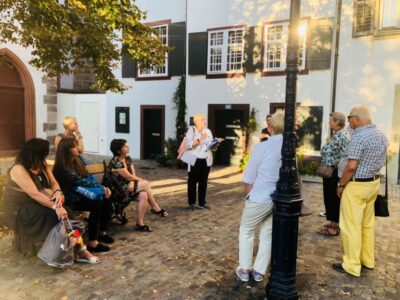
Then the tour moves into the softer, postcard lanes: Brunngasse and Spiegelgasse.
Brunngasse is one of those streets where you can slow down because the buildings and shopfronts feel close and human-scaled. It’s also the kind of street where guided context helps. You do not just admire the street, you start to understand why it reads as old town instead of tourist set.
Spiegelgasse is the star for a very specific reason: it’s tied to Lenin living in Zurich during his time there. Even if you are only casually aware of Lenin historically, this stop adds a surprising layer. Zurich is often associated with finance and neutrality. Seeing a street connected to revolutionary politics adds contrast and makes your Zurich feel more than one-note.
Photo tip: if it’s bright out, take a step into the shade of the buildings for street texture shots. It brings out stone, wood, and window frames better than direct sun.
Grossmünster area: stepping into the church story
You then reach the Grossmünsterplatz area and visit Grossmünster.
Grossmünster has that instant-recognizable Zurich energy, but the real value on a guided walk is what is not obvious from far away. You are told about a hidden cloister and a chapel that includes a medieval baptismal font.
This kind of detail is why I think a guide is worth it here. Without it, you might mostly notice architecture. With it, you understand how the church connected religious practice to civic identity.
If you are the type who enjoys church interiors and symbolic details, you will likely feel satisfied here. If you are not, ask one question early, something like what role this church played in Zurich’s development. A good guide will turn that into a full, coherent answer.
Fraumünster and the Chagall windows, plus why they matter
The tour visits Fraumünster, known for the Chagall stained-glass windows.
This is one of those sights where a guide can change your experience from pretty to meaningful. Chagall’s work is famous, but it’s easier to appreciate on the spot when someone explains what you’re looking at and how the windows function as part of the church space, not just as standalone art.
From a value perspective, Fraumünster is also the stop that helps justify the walking-tour price. Many cities charge extra to see a standout highlight. Here, the biggest cultural draw is folded into the walking route, which is exactly how you get good value in a city where individual museum tickets can stack up quickly.
Go at your pace inside. If you rush, you miss layers of color. If you linger too long, you may feel time pressure later at Wasserkirche and Lindenhof. In a good tour rhythm, your guide helps you balance both.
Wasserkirche: underground ruins and the Felix and Regula story
Next is Wasserkirche, which is known for underground ruins and for being the site of the execution of Felix and Regula.
This is the stop that tends to make people sit up. It’s not only a church. It’s a site where the city’s religious legends connect to real places beneath your feet. That underground element is what makes Wasserkirche memorable on a walk, because you can sense the layers of time without needing a long museum ticketing process.
Historically, Felix and Regula are key figures in Zurich’s tradition, and learning their story gives the ruins meaning. Even if your interest in medieval legend is casual, the guided explanation turns the site into a story you can hold, not just a location you pass.
Timing note: if your guide is strong, this is often the moment you appreciate the pacing most. You need a calm couple of minutes to absorb it, and a rushed guide can flatten the experience.
Lindenhof Hill finish: ruins underfoot and city perspective
Your last major stop is Lindenhof, Zurich, where you ascend Lindenhof Hill to see historical ruins underground.
This is the perfect ending for a walking tour because it gives you perspective after you’ve learned the city’s specifics. After street-level details and church interiors, a hilltop viewpoint makes your mental map click into place. You’re able to see how Zurich sits and how old power and river life influenced the settlement pattern.
It also serves as a gentle emotional landing. Ending at a viewpoint and ruins feels like you completed something. You do not feel like you were cut off mid-story.
Then you head back to the meeting area near Mühlegasse 17.
The price question: is $59 good value, or can it feel off?
At $59 per person for 2 hours, this walk can be a good deal if you want a curated old-town route with real interpretation. You are getting a lot of Zurich “anchor” stops in a short time frame: Hirschenplatz, Poly views, Zentralbibliothek, two historic lanes, two major church stops, Wasserkirche, and Lindenhof.
But here’s the honest catch: walking-tour value depends on guide delivery.
Some experiences associated with this type of tour have been great, with guides who bring city knowledge and good conversation. Other experiences have felt more like supervised walking, with too little history, awkward pacing, or confusion at a tram connection near the end of the day. In one case, a group felt the guide was late and pushed ticket purchasing despite expecting a walking format. In another, a guide left participants at a transit stop without checking that service matched expectations.
So, if you are paying the standard price, you can be optimistic. If you book a private option, double-check that the cost matches the actual level of guidance you want. A cheaper, well-led group tour can beat a pricier, thinly guided private experience.
What the best guides do differently (and who you might get)
Guide quality is not a small detail on this route. The stops are famous, but you only get the “why” if your guide explains it.
On the positive side, guides named Laura, Alexander, Celine, and Gustavo have been linked to strong impressions for different reasons. Laura stood out for being very knowledgeable and enjoyable company. Alexander was praised for being accommodating even with rain and for sharing insights about how Switzerland works, not only how Zurich looks. Celine was described as full of knowledge and also very pleasant. Even when a guide was friendly but information felt limited, that contrast is useful for you: it shows exactly what to look for when choosing how long to listen and when to ask questions.
If you want to hedge against a weaker guide day, do this:
- Ask one question in the first 15 minutes, something like what people misunderstand about Zurich’s old town.
- If the answers stay vague, switch to asking targeted questions tied to what you are seeing: Chagall windows, Felix and Regula, or why Spiegelgasse has that Lenin connection.
- If your guide suggests buying transit tickets or making a detour, clarify on the spot if it’s required and what it’s for.
Your goal is simple: turn the walk from just movement into understanding.
Who this tour fits best, and who might want something else
This is a great match if you want:
- A high-density old-town route without juggling transit
- A guided explanation of key sights like Chagall windows and Wasserkirche ruins
- A walk that includes viewpoints, not only churches and lanes
It might be less ideal if you:
- Prefer long museum-style time at one or two places
- Hate walking in short, frequent jumps between highlights
- Expect an extremely talkative lecture style from minute one
For most people, though, it hits the sweet spot. Zurich can be surprisingly efficient, and this tour uses that efficiency to help you see the essentials while still moving at a human pace.
Should you book this Zurich Old Town walking tour?
Book it if you want a compact, guided route that connects Zurich’s top old-town sights to real stories, and you are comfortable walking for about 2 hours while learning as you go. The combination of Polybahn viewpoints, Fraumünster’s Chagall windows, and Wasserkirche’s underground ruins gives you multiple types of Zurich in one sweep.
Consider a different option if you know you need nonstop history narration, or you are worried about guide consistency. If you do book, arrive on time, ask questions early, and make sure you are clear on how the day flows so you do not get stuck dealing with transit surprises later.
If you want Zurich in one guided shot, this is a solid way to get your bearings fast.
FAQ
Where does the tour start?
You meet near Hotel Scheuble, and the route is tied to Mühlegasse 17 as the starting and ending point.
How long is the Zurich Old Town walking tour?
The tour lasts 2 hours.
How much does it cost?
The price is $59 per person.
What languages are the guides available in?
Tours are offered in Spanish, Italian, English, and German.
Is the tour wheelchair accessible?
Yes, it is listed as wheelchair accessible.
Is there a private group option?
Yes, a private group option is available.
Can I cancel and get a full refund?
Free cancellation is available up to 24 hours in advance for a full refund.
Recently reviewed around Zurich
- Zurich: Private tour to Interlaken, Grindelwald & Jungfrau★ 5.0 · 3 reviews
- Zurich’s Enchanted Christmas: A Festive Journey★ 4.5 · 3 reviews
- Zurich Pub Crawl – Dionysos Zurich Pub Crawl★ 5.0 · 3 reviews
- Zurich – Old Town Private Walking Tour★ 4.3 · 3 reviews
- Private Luzern and Mount Titlis Experience in Swiss Splendor★ 5.0 · 3 reviews
- Private transfer from Zurich City to Basel Airport★ 5.0 · 3 reviews
- Private transfer from Zurich to Lucerne, English-speaking driver★ 4.5 · 3 reviews
- Private Guided Adventure Trip to Grindelwald First★ 5.0 · 3 reviews
Walking Tours, compared.
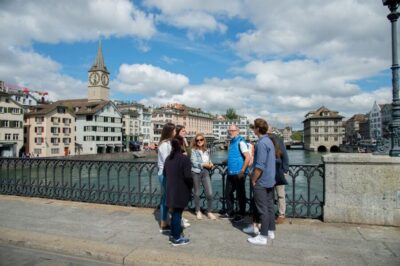

Zurich Walking Tour With Cruise and Aerial Cable Car
Read our review →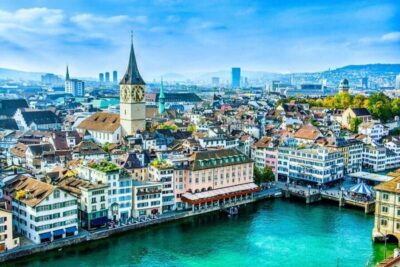

Lucerne Walking & Boat Tour: The Best Swiss Experience
Read our review →
3 in 1: Zurich Walking Tour – Cruise on the Lake – Cable Car Ride to Felsenegg
Read our review →Browse the lists this tour appears in