Zurich is a great city for two things at once: big sights with instant impact, and small corners you would never notice on your own. This past-and-present walk pairs the famous skyline of the Grossmünster with calmer stops like Lindenhof, so you get both drama and breathing room in just 1.5 hours.
I like that the pace is built for questions and details, and that the guide, often Alicia, shares context about Swiss everyday life while you’re actually standing in the streets. You will also appreciate the little extras, like chocolate treats along the way. One drawback to plan for: it is not for people with mobility impairments, and you should expect a steady walk with comfortable shoes as a must.
Key things I’d prioritize before you go
- Small group of up to 10 means you are not lost in a crowd, and it is easier to ask questions.
- Grossmünster start gives you instant orientation with the twin towers you will see again in photos.
- Two brief secret stops let you catch short views of tucked-away courtyards and narrow passageways.
- Lindenhof pause (15 minutes) is your planned viewpoint break, not just a photo stop.
- Niederdorf time (30 minutes) focuses on the lanes where art and everyday life mix.
- Finish at Zurich HB makes it easy to continue your day right after the tour.
Why this past-and-present Zurich walk feels different from a standard landmark loop
Most Zurich tours hit the postcards and move on. What makes this one work is the balance. You start with the obvious landmark, then you shift into smaller streets and quieter outlooks, so the city feels layered instead of repeat-and-rush.
You also get a guide who connects what you see to how people live. In a few accounts, Alicia explains Swiss culture in a way that makes the city feel more understandable, not just scenic. That matters in Zurich, where it is easy to admire buildings without realizing what shapes daily rhythm, from public spaces to how people use neighborhoods.
The format also fits real schedules. At $32 for 1.5 hours, you are paying for time with a live guide plus a route that compresses multiple key atmospheres into one walk.
A few more Zurich days worth comparing
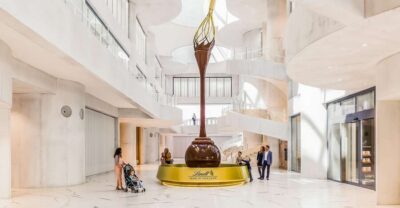
- Lindt Home of Chocolate Museum Entry Ticket
★ 4.7 · 9,329 reviews - Zurich: Grindelwald, Interlaken & Lauterbrunnen Day Trip
★ 4.6 · 7,123 reviews - Zurich: City Tour, Cruise, and Lindt Home of Chocolate Visit
★ 4.5 · 4,624 reviews
Meeting at Grossmünsterplatz, then getting oriented the quick way
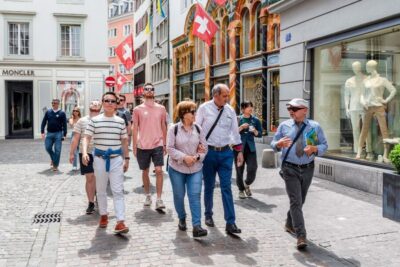
You meet at Grossmünsterplatz 2. The meeting point is tied to the tram stop area at Helm House, and the instructions matter: take the stairs to the platform above the tram stop. Your guide will be holding a Swiss flag, so you can spot them fast.
Why this helps: Zurich can feel orderly, but signage and platforms can still slow you down when you are arriving for the first time. Starting right at Grossmünsterplatz means you are already in the Old Town core, and you can orient your bearings before your feet start moving.
Also, since the tour is English-language with a live guide, you can ask short questions as you go. That makes the meeting moment more than logistics, it is the start of the story.
Grossmünster to those first short stops: how the route sets expectations
The route begins with the most recognizable symbol on the skyline: the Grossmünster with its twin towers. You do not just pass it. You use it as a reference point, so later viewpoints and street details make more sense.
After that opening, you move into two quick stops, each around 5 minutes. They are described as secret stops, which is exactly the point. These are the places where you notice the architecture changes, the street narrows, and suddenly you are in a different mood than the main thoroughfares.
What to do with those minutes:
- Keep your eyes up for transitions in building style and street layout.
- Take a quick photo, but also look away from the camera for a few seconds. The guide’s context is what turns the scene into a story.
If you are the type who likes to explore independently, this is a smart compromise. You get guided direction early, then you carry the observations forward into the later streets.
Lindenhof Hill: your planned calm and best city views without the hassle
Next comes Lindenhof, a hilltop park stop for about 15 minutes. This is where the tour slows down on purpose.
From Lindenhof, you get panoramic views over the city, and the key benefit is timing. If you hit viewpoints later in the day, you often arrive tired or distracted. Here, the route builds in a breather right after you have already seen the landmark anchor.
What I like about this part is that it is not only about snapping pictures. It is a small reset. You get a chance to look across rooftops and waterways and understand how the Old Town and modern Zurich sit side by side.
Practical tip: if the weather is clear, this stop is your moment to linger for one more look. If clouds roll in, the viewpoint still does the job because the street-level storytelling you just heard adds meaning to what you see.
A different kind of day out of Zurich:
- From Zurich: Bus Day Trip to Heidiland and Liechtenstein
★ 4.5 · 2,531 reviews - Zurich: City Highlights Tour by Bus, Cable Car, and Ferry
★ 4.4 · 2,366 reviews - From Zurich: Stein am Rhein and Rhine Falls
★ 4.6 · 2,206 reviews - Mount Titlis and Lucerne Day Trip from Zurich
★ 4.5 · 1,960 reviews
Niederdorf: narrow lanes, artistic corners, and local coffee-and-culture rhythm
The longest stop is Niederdorf, about 30 minutes. This neighborhood is all about walking slowly and noticing what is tucked into plain sight.
This is where the tour focuses on the atmosphere you cannot get from a single photo of a famous building. You are guided through medieval alleyways and lively squares, then pointed toward the quieter spaces that feel more like everyday Zurich than tourist Zurich.
From the tour description and guide style, you can expect themes like:
- Hidden art and tucked-away courtyards that break up the straight lines of major streets
- Cozy cafes as part of the neighborhood culture, not as a commercial detour
- Local context about how people use public space and how Swiss culture shows up in daily life
One practical consideration: Niederdorf is a walk-heavy area. You will be standing, turning corners, and moving through tight lanes. Comfortable shoes are not optional. The good news is the pace is short-time manageable at the neighborhood level, so you are not stuck with one long stretch.
If you want to keep exploring after the tour, this is the stop that gives you the most “where to go next” energy. Even if you do not memorize every detail, the neighborhood layout and street vibe start to register in your head.
Zurich HB finish: leaving with momentum instead of ending in the middle of nowhere
The tour ends at Zurich HB, the main station. Ending there is smart value for your day.
Most city walking tours either:
1) finish somewhere scenic but inconvenient, or
2) return to the exact starting point.
Here, you get a direct handoff. When you finish at Zurich HB, you can connect quickly to trains, trams, or onward plans without backtracking.
It is also psychologically helpful. After 1.5 hours of noticing details, you are ready to move. A station finish means you are not stuck wondering how to get your bearings again.
Price and value: what $32 pays for in a small group
At $32 per person for 1.5 hours, you are paying for three things that add up quickly:
- a live English guide
- a route that includes more than just skyline highlights
- a small-group format capped at 10 participants
The small group piece is not a luxury detail. It changes how a tour feels. You can hear explanations without straining, and you have a better chance to get your questions answered before the group moves on. That is how you turn a walking route into something you can actually remember.
The guide touches also add small value that is easy to overlook. In at least one account, Michelle mentions chocolate treats along the way. Tiny, yes, but it signals the kind of tone this tour uses: friendly, human, and not only fact-dumping.
And if you enjoy food culture as part of context, the way the tour blends history and local life matters. Even when you are not doing a formal meal stop, you are learning how Zurich neighborhood culture shows up in everyday routines.
Timing, comfort, and who should book (and who should skip)
This is a walking tour, about 1.5 hours, and the route includes multiple stops plus short transitions. Plan for the fact you will be on your feet the whole time, with brief standing time for explanations and viewing.
What to bring:
- Comfortable shoes
- Comfortable clothes suited to walking weather
Who it suits best:
- First-timers who want a sense of Zurich beyond one big landmark
- People who like a balance of viewpoints and neighborhood texture
- Travelers who enjoy practical context about Swiss life, not just dates and architecture
Who should skip or be cautious:
- People with mobility impairments, since the tour is not suitable for that need
- Anyone who wants a fully seated, low-step experience
If you are traveling with a tight schedule, this is one of the easier ways to get a “past and present” feel without eating up your whole morning or afternoon.
A note on the guide vibe, based on what shows up again and again
A big reason people rate this tour highly is the way the guide teaches. Alicia is named in multiple accounts, and her style seems to land well: friendly, detailed, and willing to answer questions that go beyond the immediate sights.
One fun, useful detail: Alicia may share pointers related to other Swiss places as you talk travel, including Lucerne. That can help you connect your Zurich day to the rest of your itinerary, especially if you are deciding where to go next.
You do not need to be a history expert. If you enjoy street-level storytelling, this tour delivers it in a way that feels natural.
Should you book this Zurich past-and-present tour?
Yes, if you want a smart first walk that mixes major sights with quieter neighborhood scenes, and you prefer small-group guiding over a mass-tour shuffle. This is especially good for travelers who like to understand how a city works, not just what it looks like.
I would hesitate only if you cannot do a walking route, or if you already know Zurich Old Town well and you are chasing very specific destinations not covered by a landmark, a viewpoint, and Niederdorf.
If you are trying to get value fast, this tour is a good bet. It ends at Zurich HB, gives you a feel for both Old Town texture and modern context, and it does it in a tight, manageable 1.5-hour window.
FAQ
How long is the Zurich past-and-present walking tour?
It lasts 1.5 hours.
What does the tour cost?
The price is $32 per person.
Where do I meet the guide?
Meet at Grossmünster, at the Tram Stop Helm House. Take the stairs to the platform above the tram stop, and look for your guide with a Swiss flag.
Is the tour offered in English?
Yes, it has a live tour guide in English.
How many people are in the group?
The group is kept small, limited to 10 participants.
Is the tour suitable for people with mobility impairments?
No. It is not suitable for people with mobility impairments.
Recently reviewed around Zurich
- Zurich: Private tour to Interlaken, Grindelwald & Jungfrau★ 5.0 · 3 reviews
- Zurich Pub Crawl – Dionysos Zurich Pub Crawl★ 5.0 · 3 reviews
- Zurich’s Enchanted Christmas: A Festive Journey★ 4.5 · 3 reviews
- Zurich – Old Town Private Walking Tour★ 4.3 · 3 reviews
- Private Luzern and Mount Titlis Experience in Swiss Splendor★ 5.0 · 3 reviews
- Private Guided Adventure Trip to Grindelwald First★ 5.0 · 3 reviews
- Private transfer from Zurich City to Basel Airport★ 5.0 · 3 reviews
- Private transfer from Zurich to Lucerne, English-speaking driver★ 4.5 · 3 reviews
Zurich Tours, compared.
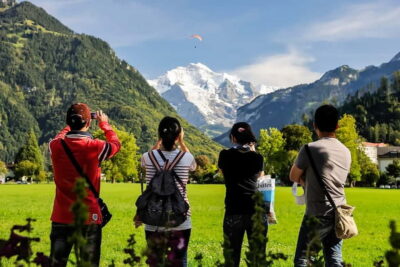
Grindelwald, Interlaken & Lauterbrunnen Day Trip
Read our review →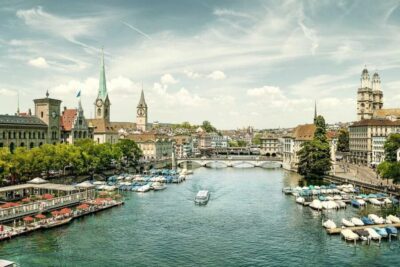
City Tour, Cruise, and Lindt Home of Chocolate Visit
Read our review →
City Highlights Tour by Bus, Cable Car, and Ferry
Read our review →
Mount Titlis and Lucerne Day Trip from Zurich
Read our review →