
Reviewed · LAUSANNE TOURS
Discover Lausanne’s most Photogenic Spots with a Local
Lausanne looks great on camera, but what makes this walk different is that you also learn why the city changed, layer by layer, into what you see today. It is a small-group route built around classic photo stops and tight explanations you can use right away.
Two things I like a lot are the architecture-first approach and the fact that your local guide keeps the pace human. In past groups, guides such as Martine, Ana, Cristian, and Stefano have been especially good at answering questions and adjusting the stops to your interests.
One thing to consider: this is a walking tour with steep streets and steps, including a winding stair, so it is not recommended if you have impaired mobility. Weather can also affect which side streets you see most clearly.
Key photo stops you will actually understand
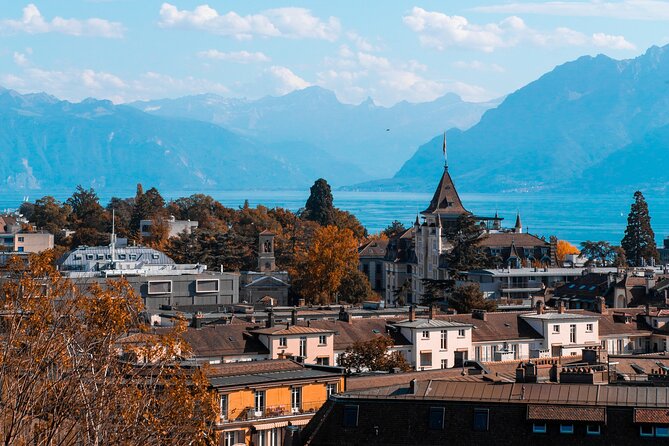
- Lausanne Cathedral details you can spot on the spot, including stories behind stained glass and painted remnants on statues
- A classic stair and bell tower approach, with cafes and boutiques lining the steep cobbles
- Place de Palud and its fountain, plus a chance to see market energy if your timing matches
- Casino de Montbenon and Palais de Justice viewpoints, combining park calm with major-city architecture
- Platforme 10 as an arts cluster, where fine art, photography, and design sit close together
- Denantou Park’s Thai Pavilion, a surprising gift from Thailand with serene river views
A small-group photo and architecture tour that moves at street speed
This is an English-language walking tour in Lausanne that runs about 1 hour 30 minutes, with a maximum group size of up to 8 people. That small cap matters. You are not fighting a crowd for sightlines, and your guide can slow down when someone wants a closer look at façades, doors, stonework, or the little visual cues that tell a building’s story.
The focus is practical and architectural. You will learn how Lausanne became modern without losing its historic bones, and you will get photo stops that are not just scenic, but explainable. You also get personalised recommendations, which is useful at the end of the walk when you want a dinner plan or a quick way to connect to the rest of your day.
One more detail that affects your experience: stops may vary with weather, so the route has some flexibility. Also, public transit is near the meeting area, but any transport tickets or monument and museum entry fees are not included. That is normal for a walking tour, but it is worth keeping in mind if you plan to add museum time later.
A few more Lausanne days worth comparing
- The Olympic Museum Entrance Ticket in Lausanne
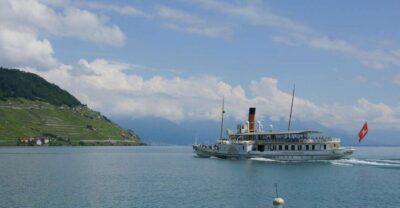
★ 4.5 · 211 reviews - Lausanne: 3-Hour Riviera and Lavaux Region Cruise
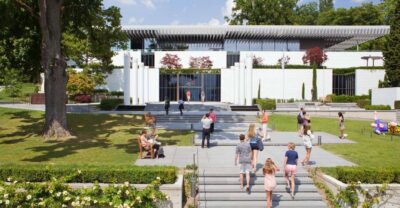
★ 4.2 · 185 reviews - Lausanne: The Olympic Museum Entry Ticket
★ 4.7 · 123 reviews
Rue de la Barre to the 15th-century castle viewpoint
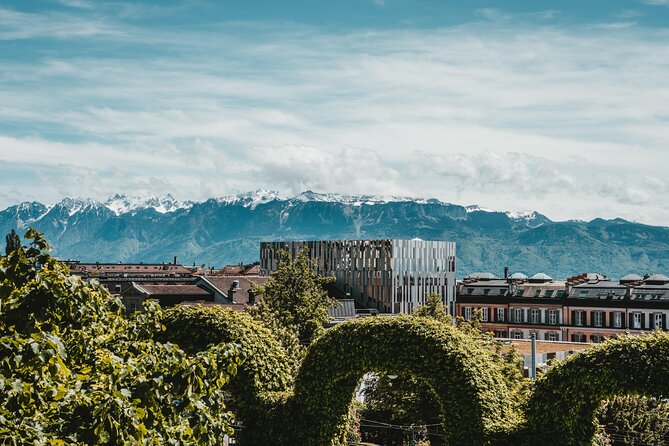
Your tour starts at Rue de la Barre 1, 1005 Lausanne. From there, the early energy is about orientation. You will begin with a 15th-century castle that tells you immediately how Lausanne used to protect itself. The standout here is defensive architecture, not just postcard walls.
This stop is also your first lesson in how the city mixes influences. The castle is described as having Italian design elements, which helps you understand why Lausanne can feel both Swiss and Mediterranean in its look and details. When you photograph this area, pay attention to the edges and angles. Defensive buildings tend to reward low, side-on shots because you can see shape changes in stone and where openings were meant for protection.
Lausanne Cathedral: the spiritual heart plus the photo angles people miss
The tour centers heavily on Lausanne Cathedral, a key landmark tied to the city’s spiritual life. You are not just walking past big stone. Your guide helps you interpret what you are seeing, including how the cathedral connects to both Catholic and Protestant chapters of Lausanne’s past.
If you like architectural photography, this is a strong stop because the cathedral rewards different viewpoints. You will learn what to look for in details such as stained glass stories. In some guides’ explanations, you may also hear about paint remnants on statues, which is a fascinating way to think about time. It turns the cathedral from a single “big building” into a layered artifact where you can almost imagine earlier colors and worship scenes.
After you’ve spent time around the main cathedral area, the route becomes more dynamic. You move from the cathedral context to the streets that lead the eye up.
Winding stair, steep cobbled street, cafes, boutiques, then the bell tower
This part is one of the most visually satisfying stretches of the whole walk. You will experience a winding wooden stair that climbs up from a steep cobbled street. Along the way, the street is lined with cafes and boutiques, so your photos can include both architecture and everyday life.
Then you reach a dramatic payoff: the cathedral bell tower viewpoint. This is where your camera and your feet both get a little workout. The cobbles are uneven, the incline is real, and that is exactly why it looks so atmospheric in photos. Go slow and plan for a few seconds of steady footwork while you frame your shot.
Practical tip: if you are bringing a phone, clean the lens before you start up, and keep an eye on your footing. The best angle often requires you to stop and look upward, which is harder if you are rushing.
A different kind of day out of Lausanne:
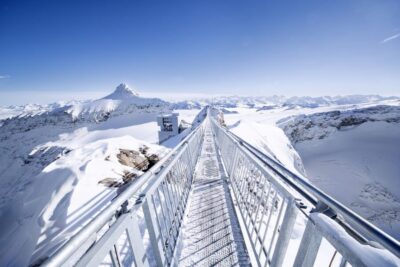
- From Lausanne: Glacier 3000 Experience Tour
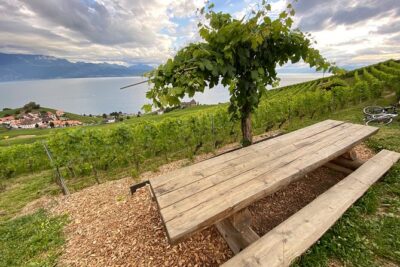
★ 4.6 · 96 reviews - Vine Stories: Lavaux & Lutry wine walk
★ 5.0 · 67 reviews - From Lausanne: Gruyères Tour with Train, Chocolate & Cheese
★ 4.9 · 46 reviews - From Lausanne: Montreux, Chaplin, and Chillon Castle Tour
★ 4.7 · 43 reviews
Place de Palud: Fontaine de la Justice and the market streets
Next comes the heart of Lausanne at Place de Palud. This is where the tour shifts from monuments to everyday rhythm. You will admire the Fontaine de la Justice, a focal point that helps anchor what you are seeing across the city center.
Your guide also steers you toward the market areas around the square. Depending on timing, you may be able to catch the country market and a craft market atmosphere. Even if you are not shopping, markets are great for photos because they add texture, color, and movement, and they make the city feel lived-in rather than purely historic.
If your schedule is tight, treat this stop like a reset. Use it to check your photos, drink some water, and ask your guide what to do next based on your interests.
Montbenon views, a romantic fountain, and the Palais de Justice
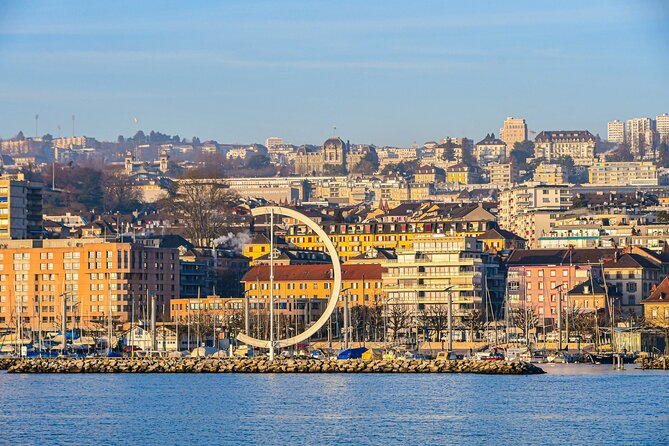
After the city center, you get a change of pace at an oasis-like park area. The experience here is described as views plus a romantic fountain, with lush park space and majestic buildings around you.
Two big architectural names you will recognize are the Swiss Film Archive’s Casino de Montbenon and the Palais de Justice, noted for its Renaissance-style feel. That combination is useful: you get culture and law in the same frame, and it helps you understand how Lausanne organizes important institutions.
This is also a nice segment for photos with depth. Park edges give you a natural foreground, and the buildings beyond give you the vertical lines. If you like composition, you can get both wide city context shots and close-ups of sculptural details without moving too far.
Platforme 10: when art, design, and photography share the same space
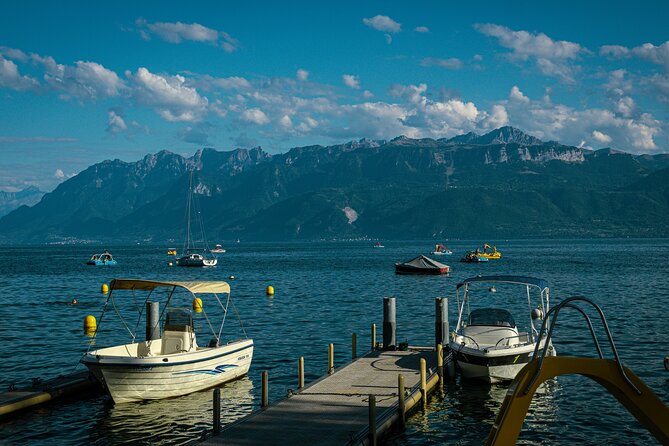
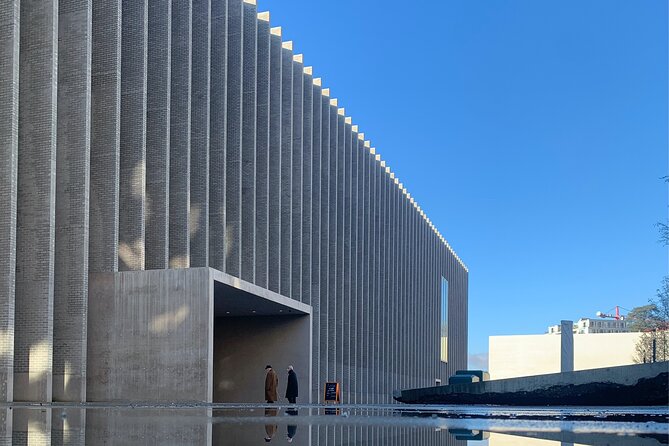
One of the more modern-feeling stops is Platforme 10, presented as Lausanne’s new arts district. This is a compact cultural cluster where fine art, photography, and design come together, so you can keep your momentum while still getting something fresh and contemporary.
What makes this stop valuable for visitors is that it is a “one place, many interests” moment. If your group includes different tastes, Platforme 10 can keep everyone satisfied without splitting up. For photos, it is a good break too because indoor or semi-covered areas often help when weather turns.
Keep your time here practical. Do not try to absorb everything in one go. Instead, pick a few themes, like portraits in photography, strong geometric lines in design displays, or one or two art pieces that you can photograph from the best angle your guide suggests.
Ouchy and the lake walk: Belle Epoque feel plus sculptures
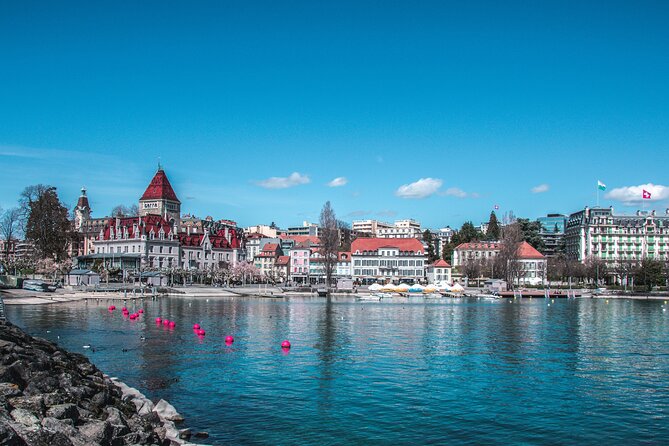
From there, you move into Ouchy, Lausanne’s lakeside district. This section leans into gardens, elegant Belle Epoque dwellings, and a lakeside walk filled with sculptures.
Even if you are not a full-time “lake person,” the Ouchy route makes sense because it is a visual palate cleanser. After stone stairs and cathedral angles, the lake air gives you breathing room. Sculptures add points of interest at eye level, so your photos do not rely only on wide skyline views.
This is also where your guide’s context pays off. You will typically get quick explanations tied to what you are seeing along the lake and around distant landmarks. The result is that you take home more than images. You take home a mental map of how Lausanne sits next to Lake Geneva and why this area matters.
Denantou Park Thai Pavilion: an exotic detour with river serenity
The final highlight is Denantou Park and its Thai Pavilion, which is described as a gift from Thailand to Lausanne. This is a memorable contrast stop because it changes the mood from Swiss monuments to something more ceremonial and exotic.
The pavilion setting also includes a serene river backdrop, which helps your photos look calm even when you are walking. For the best results, take a few moments before you shoot. Look for reflections or gentle light. Then capture the pavilion itself from a stable angle so you do not end up with shaky lines from moving too quickly.
This end stretch also works as a “last big photo” moment because you have a clear subject plus a soothing background. It gives the walk a satisfying finish instead of sending you straight into transit chaos.
How to get the best experience in 90 minutes
This tour is short enough that details matter. You want to show up ready.
- Wear grippy shoes. There are steep cobbles and stairs, including that winding stair section.
- Bring a charged phone or camera, and wipe the lens once you start.
- Expect walking. This is not a sit-down history talk. It is built around movement and sightlines.
- Plan for weather. Stops can shift if conditions change, so keep your jacket handy.
- Ask your guide early what you care about. Good guides adjust the route and pace based on your interests. That personal angle is part of the value.
Service animals are allowed, and the tour is near public transportation, which helps if you want to connect onward after the walk. Just remember: transport tickets and any museum or monument entry fees are not included, so if you want to add indoor stops later, budget for that separately.
Price and value: is $144.88 worth it?
At $144.88 per person, this is not a budget-only walking tour. But you are paying for three things that add up in Lausanne: a local guide, a tight itinerary that hits major visual anchors, and a small group size.
The small group matters most. In a city like Lausanne, good photos often come from getting closer without blocking someone else’s shot. Up to 8 people keeps the pace and attention personal, which helps if you want explanations while you walk.
Then there is the content. The route blends cathedral architecture, market-life context at Place de Palud, civic buildings around Montbenon and Palais de Justice, a contemporary arts cluster at Platforme 10, then the lake district at Ouchy and the surprise Thai Pavilion at Denantou Park. In 1 hour 30 minutes, that is a lot of thematic ground, and the guide ties it together so it does not feel random.
If you like structure, photography, and architecture explanations you can apply immediately, the price starts to make sense. If you want a long, museum-heavy day, you might prefer a longer format with fewer stops.
Should you book this Lausanne photo tour?
Book it if:
- You want a guided architecture walk that mixes old and new Lausanne.
- You care about Lausanne Cathedral details and want context for what you see.
- You want both historic streets and lakeside scenery, with one surprising cultural stop at the Thai Pavilion.
Skip it if:
- You cannot handle steep streets and steps. This route is not recommended for impaired mobility.
- You need a fully flexible schedule with indoor time and no walking. Weather can shift stops, and the whole experience is designed around moving.
FAQ
How long is the Lausanne photo and architecture tour?
It runs for about 1 hour 30 minutes.
What is the price per person?
The price is $144.88 per person.
How big is the group?
The tour has a maximum of 8 travelers.
Where does the tour start and end?
It starts at Rue de la Barre 1, 1005 Lausanne, Switzerland, and ends in the Denantou Park area near Parc du Denantou (1006 Lausanne).
Is public transportation or museum entry included?
No. Entry tickets for public transportation, museums, and monuments are not included.
Is the tour suitable for guests with impaired mobility?
It is not recommended for guests with impaired mobility.
Recently reviewed around Lausanne
- Guided Walking Tour in Lausanne★ 5.0 · 3 reviews
- Historic Lausanne: Exclusive Private Tour with a Local Expert★ 4.0 · 5 reviews
- Chillon Castle & Chaplin’s world Tour with cruise from Lausanne★ 4.5 · 6 reviews
- Lausanne Foxtrail Citi★ 4.5 · 7 reviews
- Day Tour to Zermatt Matterhorn and Glacier Paradise from Lausanne★ 4.5 · 8 reviews
- Explore Lausanne in 60 minutes with a Local★ 3.0 · 8 reviews
- (KTL364) – Small group tour Jungfrau and Interlaken from Lausanne★ 4.5 · 9 reviews
- (KTL361) – Interlaken day trip by bus from Lausanne★ 4.5 · 9 reviews
Lausanne Tours, compared.
Day Tour to Zermatt, Matterhorn & Glacier Paradise
Read our review →Browse the lists this tour appears in