
Reviewed · CITY TOURS
Revealing Lucerne: Self-Guided Reading City Tour
Lucerne can feel like postcard perfection, but this self-guided reading tour turns it into a storybook city. You start at the Jesuit Church and follow a clear route packed with photo-guided instructions, so you always know where to go next. I also love that it goes beyond the usual big stops by adding 20+ frescoed houses with unusual characters and tense, human-scale stories.
In plain terms, it’s a walk you can shape to your day. I like the calm pace, because reading takes time and you can pause, look, and continue when you’re ready. One thing to consider up front, you need a charged smartphone with internet, and there is no live guide to ask questions on the spot.
If you enjoy walking old-town streets with a little curiosity turned on, this is a solid way to understand Lucerne’s faces, not just its famous views.
Key things to know before you start
- Starts at the Jesuit Church in Lucerne, where your directions begin
- Photo and route guidance keeps you oriented without a live guide
- Main landmarks plus 20+ frescoed houses, including strange and memorable scenes
- More than celebration, it also points you toward the city’s harder past
- Works in 1.5 to 2 hours, and you can naturally stretch it longer at your pace
- English and Russian reading guide included, accessed via a link after booking
How This Self-Guided Reading Tour Works in Lucerne
This tour is built for one thing: independent exploring with structure. You will not meet a guide in person. Instead, after you book, you get an internet link to a high-quality reading guide. The guide includes a route explanation, photos, and detailed directions, so you can treat it like a choose-your-own-walk plan rather than a rushed checklist.
The best part for me is the balance between freedom and direction. A self-guided tour only works when you can reliably find your next stop. Here, the directions are the backbone, and the reading is what makes the streets feel alive instead of just pretty.
You are also paying for something specific. At $6 per person, you are not buying a bus ticket or an entrance ticket. You are buying the “thinking layer,” the curated stories and the practical path. For many people, that is exactly what turns a tourist wander into a meaningful walk.
More City Tours in Lucerne
- Lucerne: eTukTuk City Tour
★ 4.9 · 268 reviews - City Tour Plus Lucerne by Etuktuk
★ 5.0 · 120 reviews - Tony`s private city tour with picnic & chocolate degustation
★ 5.0 · 80 reviews
Starting at the Jesuit Church: Get Your Bearings Fast
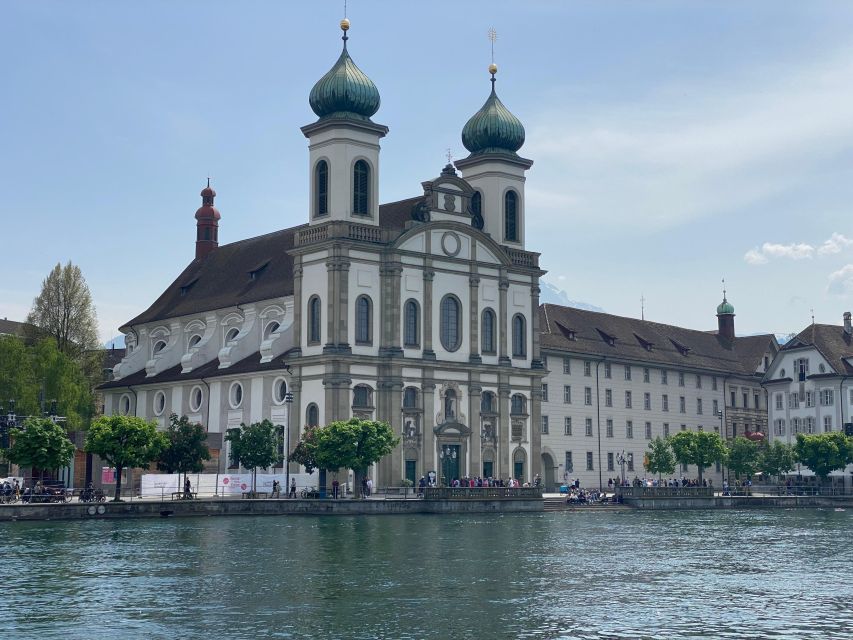
Your route begins at the Jesuit Church in Lucerne. Think of this as your anchor point, because you are about to connect a web of buildings that make Lucerne feel cohesive, not random.
From here, you will move through the old town in a way that matches what you are actually seeing. You will read about places that most visitors skim past, then you will get back to the bigger landmarks that everyone recognizes. Starting at a church is smart too. Churches cluster history, and Lucerne’s town center grows outward from that sort of center of gravity.
If you want to make the guide work well, do one simple thing at the beginning: check your phone battery before you set off. This tour depends on internet access, and you do not want to be the person standing in front of a beautiful façade with a dying battery and no map.
The Big Lucerne Hits: Lion Monument, Water Tower, and City Hall
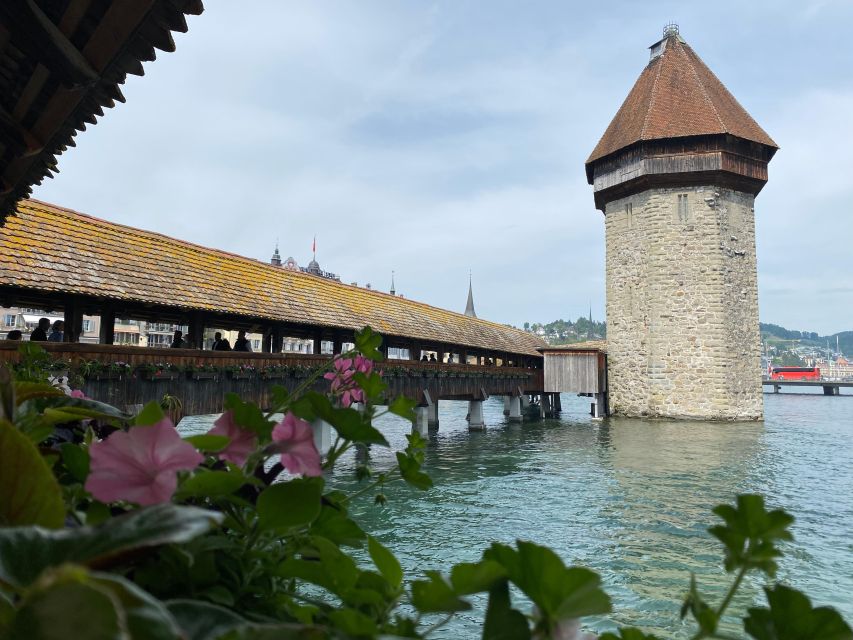
After your start, the guide brings you to the classic Lucerne icons. You will see the Lion Monument, which is hard to forget even if you are only looking at it briefly. Then you will connect to the Water Tower, a smaller stop that rewards a slower glance.
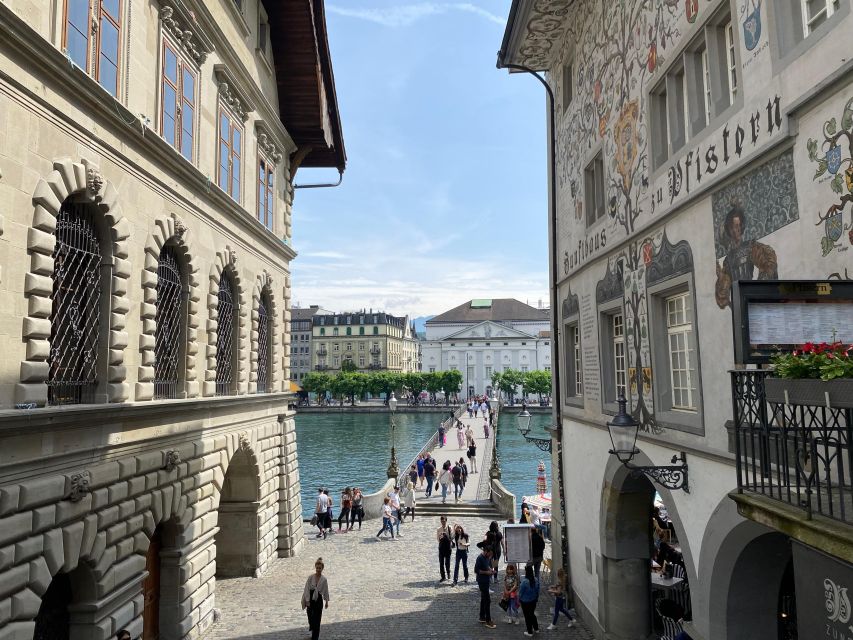
From there, you will hit the civic heart of the old town. The guide includes stops such as City Hall plus the main bridge and chapel area. This matters because it gives you two types of context at once. Landmarks show you what people photographed, while reading helps you understand why those places mattered to former residents.
City Hall is a great example of how this tour can change your perception. Without a story, you might treat it like an attractive building. With the guide, it becomes part of the political and social world that shaped daily life, including wealth, competition, and power games the city used to run on.
Chapel Bridges and Spreuer Bridge: Art That Becomes a Point of View
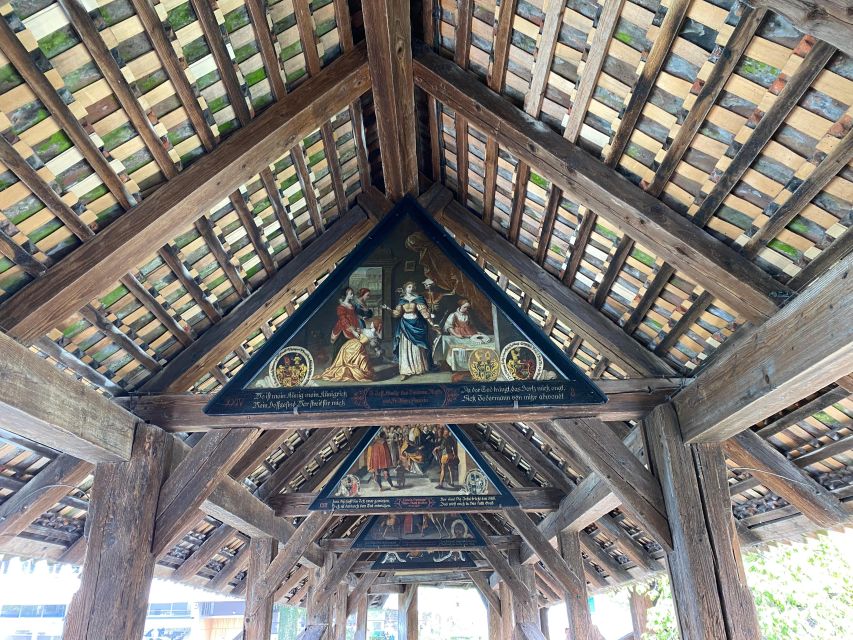
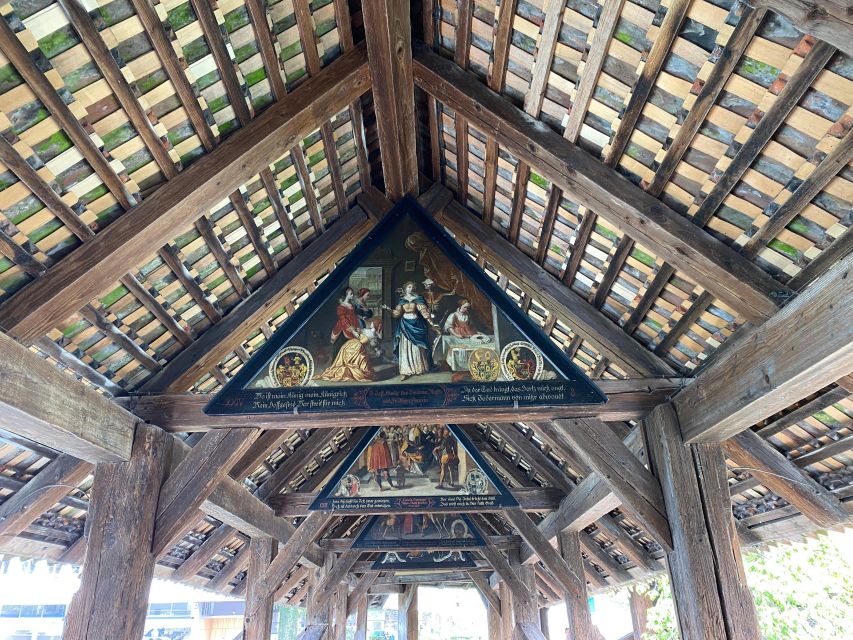
Lucerne’s bridge area is one of those places where crowds tend to move quickly. This tour helps you do it differently. You will visit Chapel Bridges and Spreuer Bridge, and the reading guide is there to help you look for details rather than just photograph the scene.
The fresco storytelling component makes the bridges feel less like an isolated tourist sight. Instead, you start seeing Lucerne as a city where art and everyday life were tightly linked. The bridge area becomes your visual anchor, and then the guide pushes you to notice how the same storytelling instinct shows up in smaller streets and buildings too.
A practical note: if you are the type who likes to stop, read, then re-check the view for what you missed, you’ll fit this tour perfectly. If you only want a fast snapshot-and-go route, you might feel the reading portion is more time than you expected. But that is also where the value is hiding.
More Self-Guided Tours in Lucerne
- Mt. Rigi Self-Guided Tour: Lake Lucerne Cruise and Mountain Spa
★ 4.5 · 83 reviews - Revealing Lucerne: Self-Guided Audio City Tour
★ 4.0 · 20 reviews - Revealing Lucerne: Self-Guided Audio City Tour
★ 3.8 · 18 reviews - Lucerne Scavenger Hunt and Sights Self-Guided Tour
★ 4.5 · 14 reviews
Ritterscher Palace and St. Peter’s Chapel: Where the Details Matter
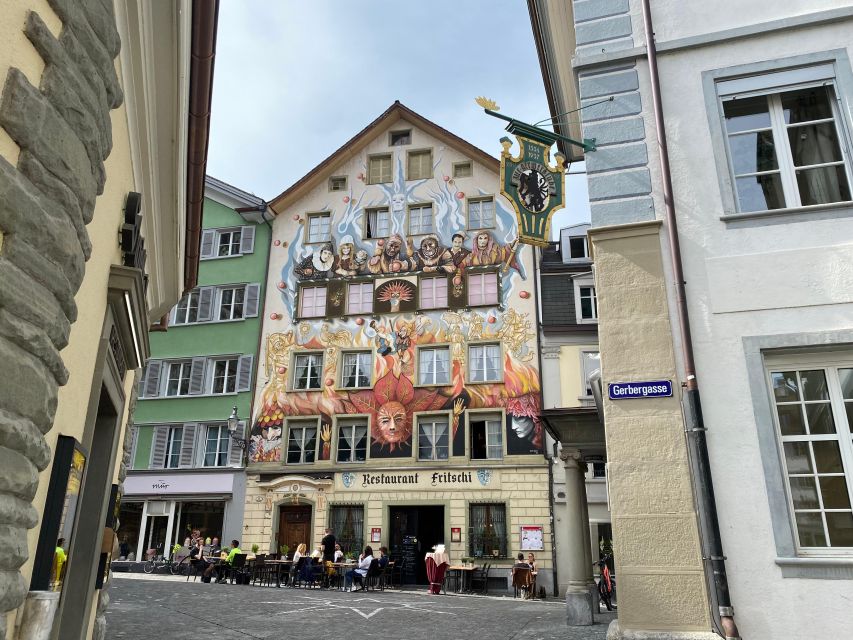
Next up, you will see more architectural “support players” that often get less attention than the postcard icons. The route includes Ritterscher Palace and St. Peter’s Chapel.
Why these matter: they broaden your sense of Lucerne beyond bridges and monuments. You start noticing how different institutions and buildings reflect different kinds of influence, from religious life to governance and social status.
This is a good section for people who enjoy architecture in a practical way. You do not have to be an expert. The guide’s explanations and direction cues help you look at what you are actually standing in front of.
Weinmarkt and Hirschenplatz: Market Squares With a Different Kind of Energy
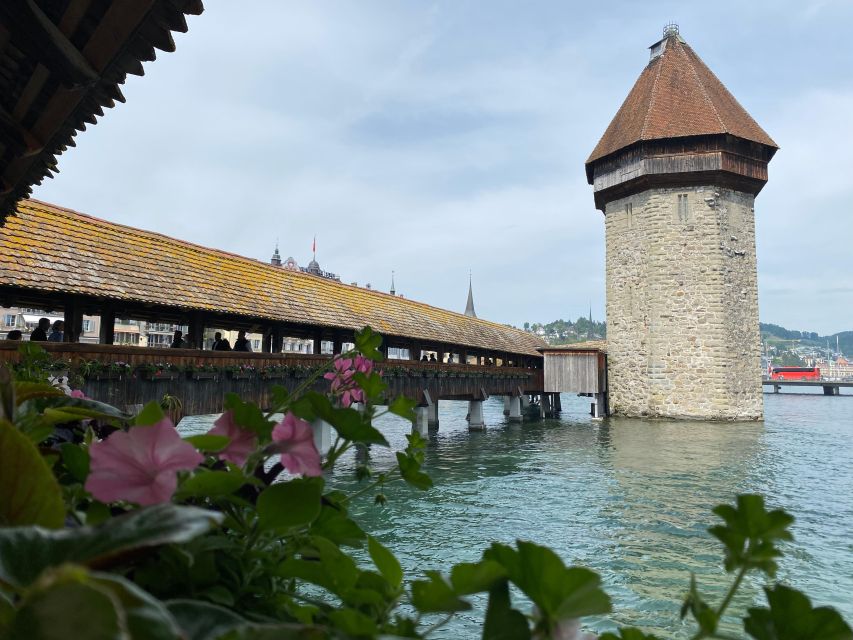
Lucerne’s town center contains small squares that feel lived-in even when the crowds thin out. Your guide takes you to places like Weinmarkt and Hirschenplatz.
These stops are valuable because they shift the focus from “major monuments” to public space. Market areas are where people met, bought, traded, argued, and celebrated. When you read while you walk through a square, it makes the geometry of the space feel purposeful, not just scenic.
If you like taking breaks, these squares are ideal. You can read one segment, step back to watch street life for a minute, then continue. That pacing also makes it easier to stretch the experience longer than the stated 1.5 to 2 hours, if you feel like lingering.
Fritschi Fountain and Fritschi House: Local Characters in Stone and Story
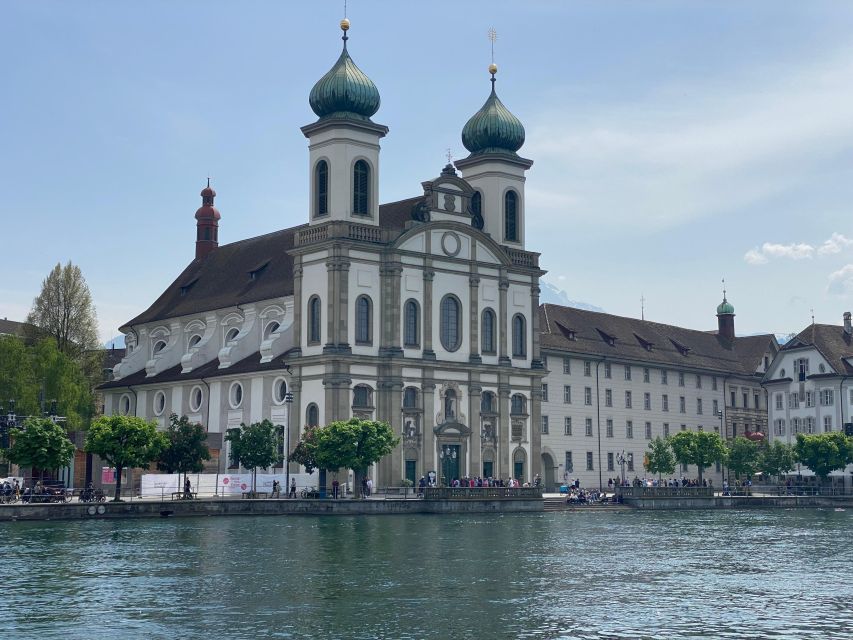
One of the more memorable parts of the route is the set of stops tied to Fritschi, including Fritschi Fountain and Fritschi House.
These are the kinds of landmarks that make a city feel human. Instead of only commemorating big events, they also preserve the quirks and personalities people associated with the place. In Lucerne, that means you get more than medieval-looking walls. You get local identity.
The reading guide’s role here is key. A fountain or house decoration can look like a “cool thing to photograph” in isolation. With context, it becomes part of the city’s internal humor and traditions, the sort of cultural memory that survives because it’s built into the everyday.
Nölli Tower and the Churches of Lucerne
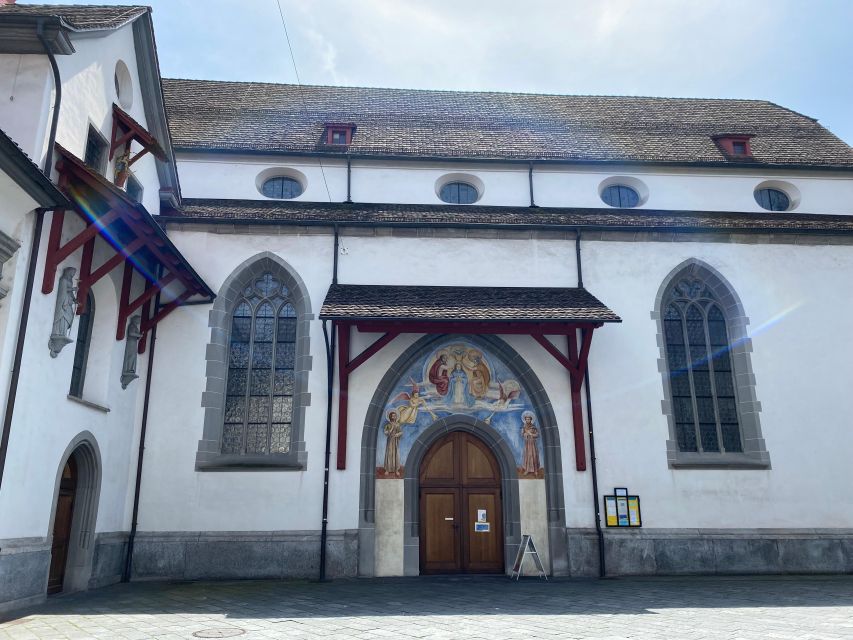
The route includes Nölli Tower and also brings you to churches such as the Jesuit Church again in the story arc, plus St. Leodegar Church and the Franciscan Church.
I like this cluster because it gives you a clearer sense of how the city’s spiritual and community life shaped the layout. When churches appear in multiple places in the route, it suggests they were not just distant monuments. They were reference points for people, and they influenced how the city organized itself.
And since this tour is a reading format, the churches work well for text-based learning. You can pause without feeling like you are blocking a tour group or needing to catch up. Take your time, read what you need, and then move on.
Frescoed Houses: The Part That Turns the Walk Into a Real Experience
Here’s the highlight that most people end up talking about. The route includes over twenty frescoed houses, and the guide explains what you are seeing and why it matters.
This is where Lucerne gets weird in the best way. One described fresco is a monochromatic scene of a dwarf clysterizing the devil, presented with the kind of odd humor that tells you carnival and feast traditions were part of the city’s visual language.
You do not need to be into art theory to enjoy this. Frescoes like these work because they are readable even from street level, and the guide gives you the missing layer that turns “pretty wall” into “story with a point.”
What I find especially valuable is that you are not only looking at frescoes as decoration. You are reading about how former residents experienced life, including themes like competition, politics, entertainment, and charity. When you combine that with the visuals, Lucerne becomes more than a picturesque place where time stopped.
A gentle caution: frescos can be easier to miss in bright midday glare or at the wrong angle. If you can, take a few steps left or right to change your viewing perspective before you move on. The tour’s direction cues help, but your eyes still need that tiny adjustment.
The Dark Corners: Orphanage, Prison, and the Executioner’s House
Most sightseeing routes tilt toward the pretty side. This one does the opposite in a controlled, meaningful way. The tour includes stops tied to former places such as an orphanage, a prison, and an executioner’s house.
This is valuable because it keeps the city honest. Lucerne was not only feasts, bridges, and art. It also had harsh systems. When you read while you walk past these locations, you understand that the city’s beauty was built alongside real suffering and real power.
If this topic makes you uncomfortable, you still might want to see it, just for balance. But keep your comfort level in mind. This is not designed as a scare tactic. It’s designed as context, so you can see the full human picture of the city instead of only the postcard version.
Time on Your Feet: 1.5 to 2 Hours, Plus the Natural Long-Walk Option
The stated walking time is 1.5 to 2 hours. That’s enough to cover the main tourist sites and a good run of frescoed house stops, assuming you read at a steady pace.
Here’s how you can think about timing. The route is compact enough to do in an afternoon, but the reading sections naturally slow you down. If you enjoy stopping to look closely and re-reading while you stand in place, you may finish closer to the upper end, or even a bit longer. One of the practical benefits of a self-guided text tour is that you can pause without feeling like you are breaking a group schedule.
To keep it smooth:
- Plan to start with a charged phone and internet ready
- Expect to slow down at frescoed houses and church stops
- Take short breaks at market squares like Weinmarkt and Hirschenplatz
If you only have a tight window, you can still do it. Just read the essentials first, then come back later for the extra detail if you have time.
Price and Value: Why $6 Makes Sense Here
At $6 per person, the price is low enough that it is easy to justify as a low-risk addition to your Lucerne day. But the value comes from what you actually receive.
You get a high-quality reading guide (available in English and Russian) with:
- route explanation
- photos
- detailed directions
So you are not just paying for entertainment. You are paying for orientation plus stories. In a place like Lucerne, where a lot of sights are within walking distance, orientation is what often determines whether a self-guided plan feels easy or frustrating.
This tour also avoids a common trap. Some cheap audio tours are generic. Here, the reading is compiled by an experienced guide, and it includes both the famous names and the lesser-known locations tied to former orphanage, prison, and executioner’s house. That mix is exactly what makes the walk feel worth your time.
Who Should Book This Lucerne Reading Tour (And Who Might Skip It)
You should book if you:
- enjoy reading while you walk, even briefly
- like structure without having to follow a live group
- want the famous Lucerne sights plus the extra layer of frescoes
- appreciate stories that include both celebration and tougher topics
You might skip it if you:
- want a live guide or a Q and A on the spot
- need wheelchair-friendly routes, since it is listed as not suitable for wheelchair users
- are traveling with children under 16, since it is not suitable for them
Most importantly, be honest about your phone situation. This tour depends on internet access and a charged smartphone, so if your device is unreliable, pick a different format.
Should You Book This Tour?
I think this is a great choice if you want Lucerne to feel like a place with personalities, not just landmarks. The combination of photo-backed directions, the 20+ frescoed houses, and the willingness to address darker local history gives you a fuller picture for a small price.
If your ideal day is slow, curious, and text-friendly, book it. If you want a quick hit with no reading dependence, you might find the format less satisfying.
FAQ
Where does the self-guided tour start?
The tour begins at the Jesuit Church in Lucerne.
Is there a live guide during the walk?
No. It is self-guided, and you explore using the internet link provided after booking.
How long does the tour take?
Plan on about 1.5 to 2 hours.
How much does it cost?
It costs $6 per person.
What do I need to bring?
You need a charged smartphone and internet access.
What languages is the reading guide in?
The reading guide is available in English and Russian.
Is this tour suitable for children?
It is not suitable for children under 16.
Is it suitable for wheelchair users?
No, it is not suitable for wheelchair users.
Recently reviewed around Lucerne
- Walking Tour – Around the Old Town Lucerne★ 3.5 · 3 reviews
- Lucerne Scavenger Hunt and Highlights Self Guided Audio Tour★ 4.5 · 3 reviews
- Lake Interlaken, Day Pass Lake Brienz, 2nd class★ 2.5 · 3 reviews
- Private city tour in lucerne★ 5.0 · 4 reviews
- Historic Lucerne: Exclusive Private Tour with a Local★ 5.0 · 4 reviews
- Beginners Ski Day Trip to Jungfrau Ski Region from Lucerne★ 3.5 · 4 reviews
- Ultimate Lucerne Experience: City Tour and Lake Cruise★ 5.0 · 4 reviews
- Private Jungfrau & Bernese Alps Tour-Customizable Scenic Day Trip★ 5.0 · 4 reviews
City Tours, compared.
City Tour, Cruise, and Lindt Home of Chocolate Visit
Read our review →
City Highlights Tour by Bus, Cable Car, and Ferry
Read our review →
City Bus Tour with Audio Guide and Lake Cruise
Read our review →
City Tour with Lake Cruise + Optional FIFA Museum
Read our review →
Best of Geneva City Tour: International Area and Old Town
Read our review →
Best of Geneva City Tour with optional boat cruise
Read our review →
Browse the lists this tour appears in