
Reviewed · SELF-GUIDED TOURS IN GENEVA
Self-Guided Audio Tour to the Many Faces of Geneva
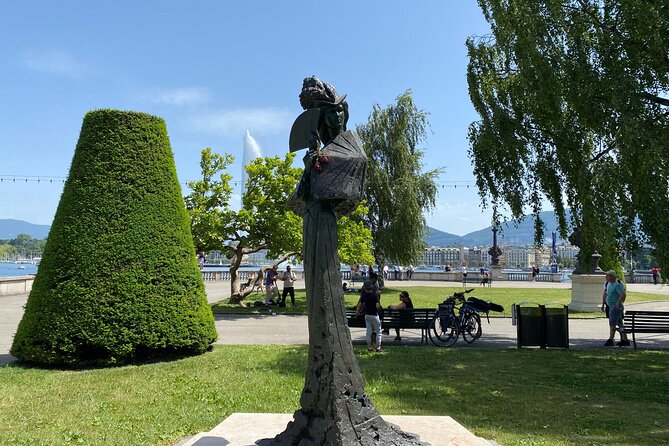
Geneva can feel like a polished postcard, but this audio tour makes it more human. It links famous stops to big moral themes, from pride and mercy to anger and courage, as you work your way across the center. You start by the Empress Sissi monument and end at the Fontaine de l’Escalade, with each stop pushing you to look past the surface.
I really like two things about this experience: the clear, photo-based route directions and the short audio segments that help you move at your own pace. The stops are timed to keep you from wandering too long, yet they’re long enough to explain what you’re seeing and why it mattered to Geneva. That blend makes it a strong way to get oriented fast.
One thing to plan for is the technology. This is phone-and-internet dependent, so if your mobile data is spotty, you may run into slow loading or interruptions that break the flow of the tour.
Key highlights to know before you go
- A moral lens for well-known landmarks, connecting monuments and churches to virtues and vices
- Photo-based directions that make it easier to follow the route on foot
- Admission is free at every stop, so your cost is mostly the audio experience
- A short, flexible walk that fits into about 1 to 2 hours
- Private for your group, so you’re not synced up to other people
- Internet and a headset are required, which matters for where you start and where you walk
A Geneva audio tour that links monuments to virtues and vices

This self-guided audio route turns a typical sightseeing walk into something more reflective. Instead of just giving you the who, when, and where, the audio focuses on the why behind the symbolism you see in public spaces. You’ll hear stories that connect major Geneva landmarks to human behavior, like pride, anger, envy, mercy, and the harder side of justice.
That approach can be fun if you like a point of view. Geneva has a long tradition of civic thought and religious debate, and this tour leans into that. You end up noticing details you might otherwise skip, like moral symbolism on statues, the purpose of public monuments, or the way a church and courthouse area relate to ideas like salvation and mercy.
It also helps you remember what you saw. When a stop is tied to a theme, you’re less likely to blur it into the next photo opportunity. In other words, it’s not just a walk to collect images, it’s a walk that helps you connect the dots.
More Self-Guided Tours in Geneva
- The Many Faces of Geneva: Self-Guided Audio City Tour
★ 3.9 · 44 reviews - Self-Guided Chamonix with Aiguille du Midi or Mer de Glace
★ 3.5 · 35 reviews - Chamonix Self-guided Sightseeing Tour from Geneva
★ 4.0 · 34 reviews
Price and value: what you’re really paying for at $13.29
At $13.29 per person, this is priced like a budget-friendly “guided by audio” experience. You’re not paying for entry tickets, because every listed stop is free. You’re paying for the structure: the curated route, the professional audio, and the step-by-step navigation that tells you where to go next.
The value is strongest if you want orientation without committing to a full live guide. Geneva can be easy to walk around, but it’s also easy to get turned around when you’re bouncing between plaques, statues, and church fronts. The audio tour’s photo directions and clear stop sequencing are what justify the cost.
You do give up one thing: live human adaptability. If you run into a closed gate or construction, you can’t ask a person for help. So your best bargain is when the route is accessible and your phone cooperates.
Route basics: start at Sissi, finish at the Escalade fountain
This tour is private for your group and runs about 1 to 2 hours. That time range is realistic if you walk steadily, listen to each stop, and take a minute or two to look around. On a hot day, you can slow down, take breaks, and still finish without feeling rushed.
You’ll want your own mobile phone with an internet connection and your own headset. The tour is delivered through a link after booking, so you can’t rely on audio that’s already stored on the device. Plan for that if you’ll be spending time where mobile data is weak.
The route also works well for public-transport users because the starting point is near transit. You can arrive, start at the Monument to Empress Sissi on Quai du Mont-Blanc, and then end near the Fontaine de l’Escalade on Rue de la Confédération.
Stop-by-stop: how the story plays out across central Geneva
More self-guided walks in Geneva:
- Geneva Virus Run: Stop the Infection Exploration Game
★ 4.0 · 17 reviews - Unusual Audio Tour of Geneva
★ 5.0 · 8 reviews - A Self-Guided Audio Tour of Geneva’s Old Town
★ 4.5 · 7 reviews - Geneva Scavenger Hunt and Highlights Self Guided Audio Tour
★ 5.0 · 5 reviews
1) Monument to Empress Sissi, Quai du Mont-Blanc
Your walk begins near the statue honoring Empress Sissi, tied to a tragic event carried out by an anarchist. The audio doesn’t just name the moment, it focuses on the how and especially the why. That sets the tone: Geneva’s public art is not only pretty, it carries lessons and tensions.
Take a moment here to read the surrounding context. Even if you only catch the basics, the tour’s theme immediately makes you look for meaning rather than just decoration.
Practical tip: stand back far enough to see how the monument fits into the street setting, not just up close at the base.
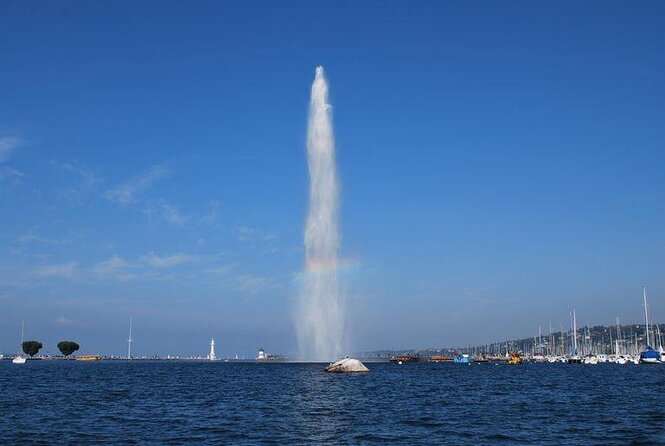
2) Jet d’Eau, the big fountain that forces a pause
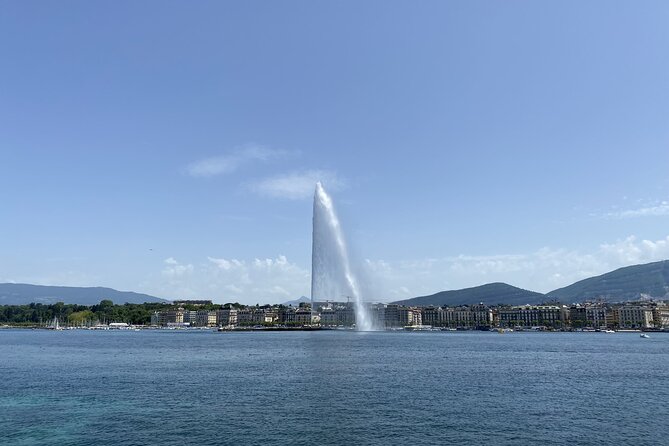
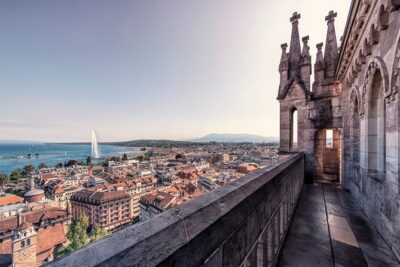
Next comes Jet d’Eau, one of the world’s largest fountains. The audio has you reflect on its role in making the city and its atmosphere better. It’s a quick stop, but it’s a classic Geneva “stop and breathe” moment.
Even if you’ve seen photos, being there changes your sense of scale. The height and sound make it feel more urgent than a postcard would.
3) Brunswick Monument and the language of virtues
Then you move to the Brunswick Monument, dedicated by a generous benefactor. The audio explains the significance of the donation and points out images of virtues on the structure.
This is where the tour’s concept becomes clearer. Geneva’s monuments often work like public storytelling, and you’ll start noticing that the details are meant to persuade you about character and values.
4) Statue of Jean-Jacques Rousseau, confession and consequence
You’ll encounter the statue of Jean-Jacques Rousseau, with the audio zeroing in on the sins he openly confessed. This is not an attempt to reframe him as simply good or bad. Instead, it treats confession as a human action that carries consequences, both personal and social.
If you tend to skip statues, this one is worth slowing down for. The theme is about accountability, and the audio gives you enough framing to understand why a statue would highlight it.
5) Monument National and the contest story
At the Monument National, you get the story behind its triumphant selection in a competition for erection. It’s a short stop, but it’s a useful reminder that monuments are chosen, debated, and designed through public process.
That fact matters in Geneva, where civic identity is tied to institutions and decisions, not just random commemoration.
6) The Flower Clock, pride and timing
The tour then treats the Flower Clock as more than an adorable photo spot. You’re guided to see its ties to the concept of pride. It’s a clever pivot, moving from heavy political memory to a symbolic civic display.
Take a couple of minutes to notice how the clock functions as a piece of public theater. Even if you don’t obsess over flowers, the idea that time and display can express attitude is the real lesson.
7) Evangelical Lutheran Church of Geneva and the salvation debate
Next is the Evangelical Lutheran Church of Geneva. The audio explores different religious perspectives on how sins and good deeds relate to salvation. Right next to it, you’ll hear about the Palace of Justice and the connection to mercy.
This stop is for you if you like your sightseeing with ideas. The tour asks you to think about systems of judgment, not just places of worship.
Practical tip: churches can have quiet interiors. Keep your volume moderate so you’re respectful, especially if services or visitors are present.
8) Place Bourg du Four and justice, plus a look at the past
At Place Bourg du Four, the audio focuses on a monument representing a Genevan champion for justice. It also brings in the history of past red-light districts, which adds a surprising edge to an otherwise pleasant square.
This is a good example of how the tour’s themes can create context that a quick glance would miss. You start asking what the city chose to honor, and what it chose to hide.
9) Cathedrale Saint Pierre, temperance, Jeremiah, and the judges’ bench
St. Pierre Cathedral is the longest stop, and it combines several layers. You’ll get the association with the virtue of temperance, and you’ll also hear about the statue of the Prophet Jeremiah, often described as the weeping prophet.
Then you progress toward the Town Hall building, where the audio points you to the stone bench linked to death sentences pronounced by Geneva’s judges. That’s a heavy moment in the route, and the audio framing makes it feel like more than a grim trivia stop. It’s about how justice was practiced, not just how it was imagined.
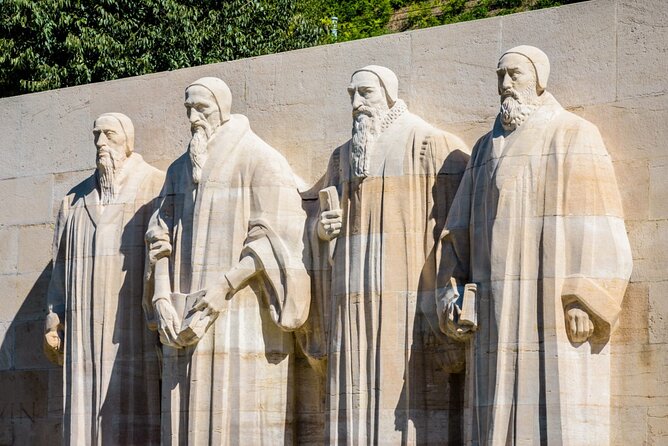
10) Reformation Wall and the cost of rigid thinking
The next stop is the Reformation Wall, where the audio discusses theologians criticized for inflexibility, mercilessness, and heartlessness. This is another place where the theme is sharper than many standard city walks.
If you like religious history but hate long lectures, this still gives you structure. You get the core idea without drowning in details.
Practical tip: if you’re visiting in strong sun, bring water. This is an outdoor walking route, and the length can feel longer if you’re overheated.
11) Statue of General Guillaume-Henri Dufour, courage against evil
You then spot the statue of General Guillaume-Henri Dufour, with the audio focused on his struggle against evil. It’s a short stop, but it fits the tour’s rhythm: after ideas and judgment, you get courage, action, and moral resolve.
12) Bust of Henri Dunant and the Red Cross founder
Next is the bust of Henri Dunant, founder of the Red Cross. The audio explores his life and includes surprising parallels with Leo Tolstoy.
Even if you know the basics of humanitarian work, this stop can change how you think about it. It frames humanitarian action as the outcome of moral reasoning, not just charity.
13) Fontaine de l’Escalade and Genevan courage
The final stop brings you to the Fontaine de l’Escalade. The audio closes with the fountain as a testament to the courage of the Genevans.
It’s a satisfying ending because the route began with tragedy and moves through justice, mercy, confession, and courage. Ending at a fountain keeps the tone civic and public, not private or museum-like.
What makes the audio and directions work in real life
The audio is designed around brief moments, about 5 to 20 minutes per stop. That’s useful in Geneva because you often have multiple sights close together. If one stop doesn’t hold your attention, you don’t get stuck listening through a long chapter.
The route guidance also matters. The experience provides clear explanations of the route with photos and detailed directions. That combination is what makes this tour feel easy to follow, especially if you’re new to the city.
One real-world factor: you’ll need data coverage. If your connection drops, you could experience slow loading or interruptions. If you’re the type who hates tech surprises, download your maps ahead of time, keep your phone charged, and aim to start when signal is decent along your first stretch.
Who this walk is for, and who should skip it

This tour fits best if you want:
- an easy walking plan through central Geneva
- an English audio guide tied to interpretation, not just dates
- free sights with admission handled on your end (you’re only paying for the audio)
It can be less satisfying if you want a traditional history tour that focuses strictly on timelines and politics. Some people prefer more straight facts and less moral philosophy. The good news is that the stops are varied, and you’ll still learn a lot about the monuments themselves.
If you enjoy architecture and statues, and you like being guided to notice details, you’ll probably find the tour rewarding. If you just want to race through highlights, it might feel too themed.
Small planning tips that make it smoother
- Bring a headset and make sure your phone audio volume works before you start.
- Use comfortable shoes. The route is mostly on foot, and Geneva’s center rewards slow looking, but your feet still do the work.
- If it’s hot, use the built-in stop timing to take breaks rather than forcing it.
- Keep an eye on your phone battery. You’re using audio plus navigation.
So should you book the self-guided Many Faces of Geneva tour?
Book it if you want a structured, free-sight walking route with professional English audio that explains what you see and why it connects to values like pride, justice, courage, and mercy. The photo-based directions are a big plus, especially when you’re trying to orient quickly after arriving.
Think twice if you know your phone data is unreliable in the areas you’ll be walking, because the tour depends on internet access. Also, if you strongly prefer history-only narratives with minimal philosophy or religion, this tour’s thematic angle may not match your style.
If you fall in the first camp, this is a smart way to experience Geneva beyond the usual postcard loop, with a route that tells you how to look, not just where to stand.
FAQ
Where does the tour start?
The tour starts at the Monument to Empress Sissi, Quai du Mont-Blanc 10, 1201 Genève, Switzerland.
Where does the tour end?
The tour ends at the Fontaine de l’Escalade, Rue de la Confédération 4, 1204 Genève, Switzerland.
How long is the self-guided audio tour?
It takes about 1 to 2 hours, depending on how long you spend at each stop.
What language is the audio guide in?
The audio guide is offered in English.
Do I need to bring anything?
Yes. You need your own mobile phone with internet and your own headset.
Is there a live guide?
No. There is no live guide. You explore using the link provided after booking.
How much does it cost?
The price is $13.29 per person.
Are the stops free to enter?
The tour info lists admission ticket free for the featured stops.
Is this tour private for my group?
Yes. It’s private, so only your group will participate.
Is it okay to bring a service animal?
Service animals are allowed.
Can I cancel for a refund?
Free cancellation is available if you cancel up to 24 hours in advance of the experience start time for a full refund.
More Audio Tours in Geneva
- Zurich: City Bus Tour with Audio Guide and Lake Cruise
★ 4.3 · 1,195 reviews - Basel: Sightseeing Bus Tour with Audio Guide
★ 4.1 · 377 reviews - Zurich City Tour with Audio Commentary
★ 4.0 · 372 reviews - Zurich: City Top Attractions Tour by Bus with Audio Guide
★ 4.3 · 282 reviews
Recently reviewed around Geneva
- Geneva to Chamonix Private Transfer★ 5.0 · 7 reviews
- Geneva to Morzine Avoriaz or Les Gets Private Transfer★ 5.0 · 11 reviews
- Private Trip from Geneva to Yvoire and Évian-Les-Bains in France★ 5.0 · 3 reviews
- Geneva: Sightseeing of top Places Tour Electric TukTuk 1H15 tour★ 5.0 · 107 reviews
- Swiss Vineyard Wine Tasting Tour in Vaud★ 5.0 · 5 reviews
- (KTG302) – Day Trip to Montreux & Château de Chillon from Geneva★ 4.5 · 31 reviews
- Vevey, Montreux, Chillon Day Trip from Geneva★ 4.5 · 44 reviews
- Old Town Geneva Private Walking Tour★ 4.5 · 4 reviews
Self-Guided Tours in Geneva, compared.
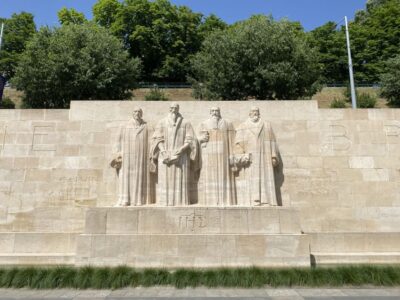
The Many Faces of Geneva: Self-Guided Audio City Tour
Read our review →
Self-Guided Chamonix with Aiguille du Midi or Mer de Glace
Read our review →
Chamonix Self-guided Sightseeing Tour from Geneva
Read our review →
Geneva Virus Run: Stop the Infection Exploration Game
Read our review →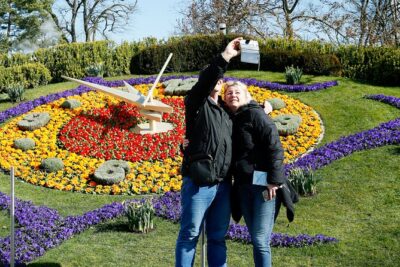
Geneva Scavenger Hunt and Highlights Self Guided Audio Tour
Read our review →Browse the lists this tour appears in