
Reviewed · WALKING TOURS
St. Moritz: Private Guided Town Highlights Walking Tour
St. Moritz can look like all polished marble and luxury shops, but this private walking tour takes you through the town’s older bones. I really like how the guide connects architecture to real people and real events, and I like the private pace so you can ask questions and linger when something grabs your eye. One drawback to plan for: it is a short, about-two-hour walk, so you will want comfortable shoes, and the art-house museum stop is not included.
This kind of tour shines because it is truly built around your group. In one guided experience I had, the guide Susi was professional and tuned in, with a clear love for St. Moritz and a route that made the center feel understandable fast. You get a guided “now I get it” moment, without racing.
Key highlights worth your attention
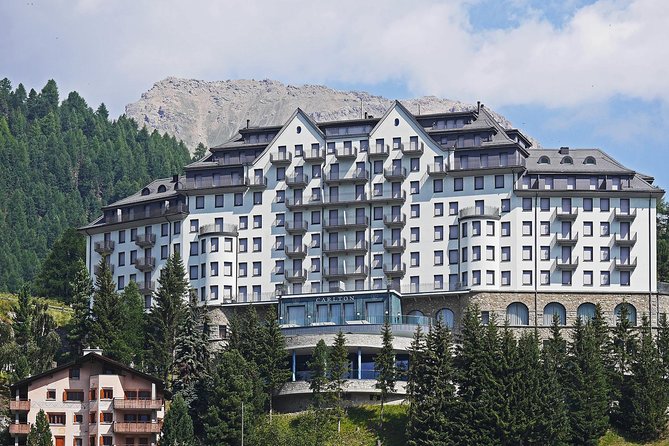
- Hotel-start convenience: departure from your hotel location saves you time and decision fatigue.
- Local guide attention: a private tour means you are not squeezed into someone else’s pace.
- Lean-ing Tower backstory: a 12th-century church remnant tied to the 1893 destruction of St. Mauritius.
- Two memorial fountains, two eras: Cresta Run tragedy and an ancient Roman Legion legend.
- Neo-Gothic church stop: Kirche St. Moritz Dorf built 1785 to 1787 gives you a different look at Swiss religious architecture.
- Optional culture at Mili Weber Haus: an artists house at the east side of Lake St. Moritz, with paintings and art works (ticket extra).
St. Moritz at street level: why this walk feels different
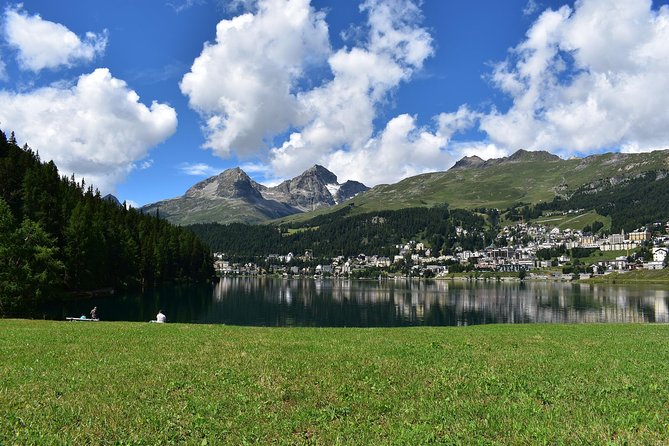
I love when a place famous for one thing surprises me in small, specific ways. St. Moritz is often sold as a luxury winter resort, but at street level you can still read the town’s story in fountains, church remnants, and repurposed buildings. This tour is built for that. Instead of a checklist, you get a narrative route that helps you understand what you are looking at.
You also get a time-saving win. The center is walkable, but it is not always obvious what matters. A guide turns the “nice building” feeling into a “oh, that means something” moment. Expect your attention to shift from views to details: dates, dedications, and what survived when other structures did not.
If you want a quick first-visit orientation with room for questions, this is a smart way to spend your time. It is not a long museum day. It is a guided walk with a cultural payoff.
More walking tours in St Moritz:
- St. Moritz: Express Walk with a Local in 60 minutes
★ 4.8 · 9 reviews - St. Moritz: Private Guided Town Highlights Walking Tour
★ 5.0 · 4 reviews - Walking Tour through Basel Old Town
★ 4.7 · 1,040 reviews
Private start, private pace: how the tour works in real life
This is a private tour for your group, up to 15 people. That matters more than you might think. In a smaller group, the guide can slow down for your questions, explain what to notice, and adjust the itinerary to your interests. If you care most about architecture, the focus can tilt that way. If you prefer history and human stories, the route can lean into that.
The tour duration is about two hours. That is short enough to do without wiping out your whole day, especially if you have hiking plans, lake time, or shopping in the afternoon. It is also long enough for a meaningful circuit through key landmarks.
You will get a mobile ticket, which is convenient. You do not need to chase paperwork. And since the tour is near public transportation, it is easy to fit into your day even if you are not starting from a car.
One practical note: the tour ends at the Mili Weber museum area. If you want to make the most of that, you can plan your next stop nearby, rather than scrambling across town.
Stop 1: Municipal Hall of St. Moritz and the idea of reuse
Your walk begins at the Municipal Hall of St. Moritz, which is the municipal administration office. What makes this start interesting is the building’s origin. It is on the same premises where a hotel used to exist, later converted into the current municipal hall.
That small fact is a great theme for the whole tour. St. Moritz may look like a resort built for the present, but the town has a habit of adapting what it already has. The guide uses this kind of detail to make the center feel alive instead of frozen in postcards.
If you arrive early or on a time-crunched day, this first stop also sets the pace. You get a structured start, and then you move into landmark territory without feeling like you are wandering.
Stop 2: The Leaning Tower, a 12th-century remnant tied to 1893
One of the most memorable moments is the Leaning Tower. It dates back to the 12th century and is a remnant of the old Church of St. Mauritius. That church was destroyed in 1893, but the tower survived, leaving you with a physical fragment of medieval St. Moritz.
This is the kind of sight I always enjoy because it is not just a photo object. The leaning shape makes the past feel tangible. The guide’s role here is to help you see the tower as part of a bigger story: what the church used to represent, why it disappeared, and how the town carried forward a piece of it.
If you like walking tours that teach you how to read a town’s physical clues, this stop does the job. If you only want scenic viewpoints, it may feel a bit more architectural than showy. Still, the backstory adds weight.
A few more St Moritz days worth comparing
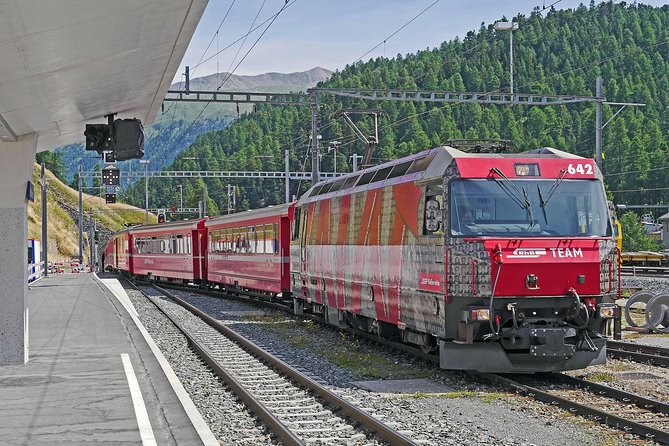
- Milan to St. Moritz: Scenic Bernina Train Tour with Guide
★ 4.4 · 1,840 reviews - From Milan: St. Moritz and Panoramic Bernina Express Tour
★ 4.0 · 215 reviews - From Saint Moritz: Bernina Red Train with Winery Tasting
★ 3.7 · 5 reviews - Explore St. Moritz in 60 minutes with a Local
★ 4.0 · 4 reviews
Stop 3: Bylandt Brunnen and Jules Bylandt’s Cresta Run legacy

Next you pass the Memorial Fountain, the Bylandt Brunnen. It was built as a memorial to Jules Bylandt, who died in 1908 during the Cresta Run.
This is where St. Moritz’s sports history shows up in public art. The Cresta Run is part of the town’s identity, and seeing the memorial in fountain form makes the story more human. It also helps explain why St. Moritz takes its tradition seriously even as styles and seasons change.
Practical tip: fountains and monuments work best when you pause. Give yourself a few seconds to read the dedication, and let the guide place it in context. In a private setting, you can do that without feeling like you are falling behind a group.
Stop 4: St. Mauritius Fountain, Roman Legion legend from 300 AD
Right in front of the town hall area, you see the St. Mauritius Fountain. Built in 1910, it memorializes a leader of a Roman Legion from around 300 AD.
Roman-legion references can sound like a history lecture, but here it becomes a way of understanding what St. Moritz chooses to commemorate. Instead of only celebrating modern arrivals and sports winners, the town also points to deeper time.
This stop also gives you an easy visual contrast. A 1910 fountain honoring something tied to 300 AD makes you notice how towns build their own meaning layers. The guide helps you connect those layers so you do not just see stones and water.
Stop 5: Kirche St. Moritz Dorf, Protestant neo-Gothic 1785 to 1787
Then you head to the Protestant Kirche St. Moritz Dorf in the center of St. Moritz Dorf. The church was built in a neo-Gothic style between 1785 and 1787.
I like neo-Gothic churches because they show how older styles were reimagined. This is not medieval architecture you can mistake for original roots, but rather a later revival style. The guide’s explanations help you spot what belongs to the period and what gives it that neo-Gothic look.
This stop also balances the earlier ones. Before this, you are dealing with remnants, memorial fountains, and ancient claims. The church adds a different category: lived religion and a defined place in the town.
One consideration: churches can be quiet and rules can vary. If the space is open for visits, be ready to behave accordingly and keep your movements respectful.
Stop 6: Museum Mili Weber House at Lake St. Moritz, art in an artist’s home
The final cultural swing is Museum Mili Weber Haus. It is an artists house on the eastern side of Lake St. Moritz, and it holds a collection of Mili Weber’s paintings and art works. The house was built by her father, and that personal origin is part of the appeal.
This is where the tour can feel extra satisfying, especially if your St. Moritz expectations leaned too heavily toward skiing or shopping. An artists house changes the mood. Suddenly you are thinking about why people stayed here, what they made, and how the town supported creativity.
Important note: admission to Mili Weber Haus is not included. That means you should decide in advance if you want to pay for the museum time. If you do, you will likely appreciate the art more because you end with context and not random entry.
From a logistics point of view, finishing near the museum also makes sense. It is an easy transition if you want to explore the lake area afterward.
The guide touch: local stories that make landmarks click
A good tour does not just point. It translates. This one leans hard into that translation, and the private format makes it work.
For example, in one guided experience I heard about sparkling water tied to local history, and the guide also talked about bobsledding. That same guide even referenced the long escalator in Europe, using it as a doorway into how St. Moritz builds everyday drama into ordinary movement. It is the kind of detail that sounds small until you realize it is part of the town’s identity.
If you want your St. Moritz to feel like you are living inside it, not just taking photos outside it, these side stories help. They also break up the walking rhythm, so you are not stuck in “read dates, move on” mode.
Since this is personalized, you might get more or less of these fun asides depending on your interests and the guide’s style. Either way, the core route gives you enough structure to feel you got something real.
Timing and expectations: what two hours gives you, and what it does not
Two hours is a practical sweet spot. You cover core center landmarks, including a church and a museum option. You also get history points delivered at walking speed, so you are not stuck inside a single block of time.
But you should also be honest with yourself about the limits. This is not a full museum crawl. Entrance fees are not included, so you are paying separately if you choose to go inside Mili Weber Haus. Also, it is walking. Even if the route is manageable, you will want comfortable shoes for uneven stone and likely curb crossings.
If you have a tight itinerary, you can still make this work. The tour is short, and it starts from your hotel area, which helps you avoid dead time.
The best way to approach it is to treat it as your orientation plus culture primer. Then you can decide what to go back to on your own, based on what mattered most to you during the walk.
Price and value: is $534.51 per group worth it?
The price is $534.51 per group, up to 15 people, for about two hours, with an official guide. That sounds steep at first, but you have to price it like a group experience, not like a per-person museum ticket.
If you are traveling as a couple or a small group, you are effectively paying for guaranteed time and attention. In that situation, you should think of it as buying back your time. A guide prevents wasted wandering and speeds up your understanding of what you are seeing, especially in a place where landmark stories can be hidden in plain sight.
If you have a larger group spread across multiple families or friends, the per-group price can feel much more reasonable because you are sharing the cost.
Also, consider the included value. You are paying for a private, guided, mobile-ticketed walking tour with an official tour guide. Not included: entrance fees. If you plan to add the Mili Weber House visit, build that extra cost into your budget so you do not get surprised.
In plain terms: this is best value when you want personalization and you appreciate history and architecture. If you only need a quick route map and do not care about stories, a self-guided stroll might suit you better.
What kind of traveler this fits best
This is a strong match for:
- First-time visitors who want to understand St. Moritz beyond the luxury surface
- People who enjoy architecture, fountains, and the meaning behind buildings
- Small groups or families who prefer private attention and flexible pacing
- Anyone who likes a mix of history and “how to look at this” guidance
It may be less ideal for:
- People who want a long, fully ticketed museum experience
- Anyone who struggles with walking or needs long indoor breaks
- Travelers on a tight budget who are already comfortable reading landmarks on their own
If you are unsure, remember the big advantage here is the guide and the route design. That is what makes St. Moritz feel clear, not just pretty.
Should you book this St. Moritz walking tour?
If you want an efficient way to understand the center of St. Moritz, I think you should book it. The lineup of stops makes sense: a repurposed municipal building, the Leaning Tower tied to the St. Mauritius church story, memorial fountains connected to Cresta Run tragedy and Roman legend, and a neo-Gothic Protestant church. Add the option of Mili Weber Haus if you are craving art beyond the resort vibe.
I would only skip it if you are the type who prefers total freedom and you do not care about the meaning behind landmarks, or if you know you will not pay for the museum entry at the end. Otherwise, this is the sort of private tour that helps you feel oriented quickly, with a guide who can make the town click.
FAQ
How long is the St. Moritz private guided town highlights walking tour?
It is about 2 hours.
Is this tour private?
Yes. It is a private tour, and only your group participates.
What is the meeting point and where does the tour end?
The start is St. Moritz 7500 St Moritz, Switzerland. The tour ends at Mili Weber Museum, Via Dimlej 35, 7500 St. Moritz, Switzerland.
What is included in the price?
The included item is an official tour guide.
Are entrance fees included?
No. Entrance fees are not included.
Does the tour use a mobile ticket?
Yes, it includes a mobile ticket.
Will the tour start from my hotel?
The tour includes departure directly from your hotel location.
Can I get a refund if I cancel?
No. The experience is non-refundable and cannot be changed for any reason.
Recently reviewed around St Moritz
- St Moritz Private Guided Panorama Hike★ 5.0 · 3 reviews
- Explore St. Moritz in 60 minutes with a Local★ 4.0 · 4 reviews
- From Milan: St. Moritz and Panoramic Bernina Express Tour★ 4.0 · 215 reviews
- St. Moritz: Private Guided Town Highlights Walking Tour★ 5.0 · 4 reviews
- St. Moritz: Express Walk with a Local in 60 minutes★ 4.8 · 9 reviews
- From Saint Moritz: Bernina Red Train with Winery Tasting★ 3.7 · 5 reviews
- Milan to St. Moritz: Scenic Bernina Train Tour with Guide★ 4.4 · 1,840 reviews
Walking Tours, compared.
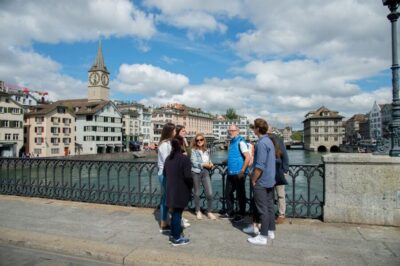

Zurich Walking Tour With Cruise and Aerial Cable Car
Read our review →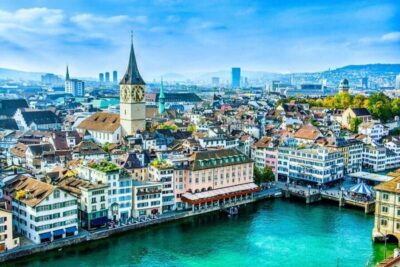

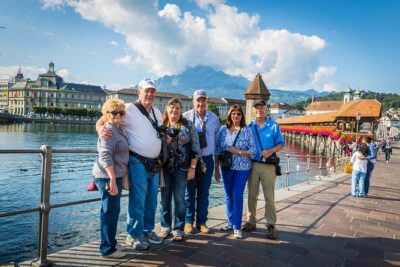
Lucerne Walking & Boat Tour: The Best Swiss Experience
Read our review →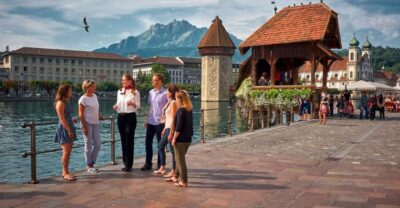
3 in 1: Zurich Walking Tour – Cruise on the Lake – Cable Car Ride to Felsenegg
Read our review →Browse the lists this tour appears in