
Reviewed · LIECHTENSTEIN DAY TRIPS
Vaduz Private Guided Walking Tour
Vaduz is one of those places that can seem tiny on a map, until a local shows you how the whole town fits together. I really like the private format for a small group, and I especially like that you can get specific inside-style access to the government buildings, including the Parliament building.
The only real drawback is simple: Vaduz is small, and the tour is 90 minutes. If you want long, pay-to-enter stops, entrance fees are not included, so you will likely pay a bit more if you add anything beyond the walk.
Key things you will notice on this Vaduz tour
- A guide who stays with your group the whole time, in English, and can tailor the pace on the spot
- Städtle as your first “orientation win”, Vaduz’s main pedestrian area and the heart of town life
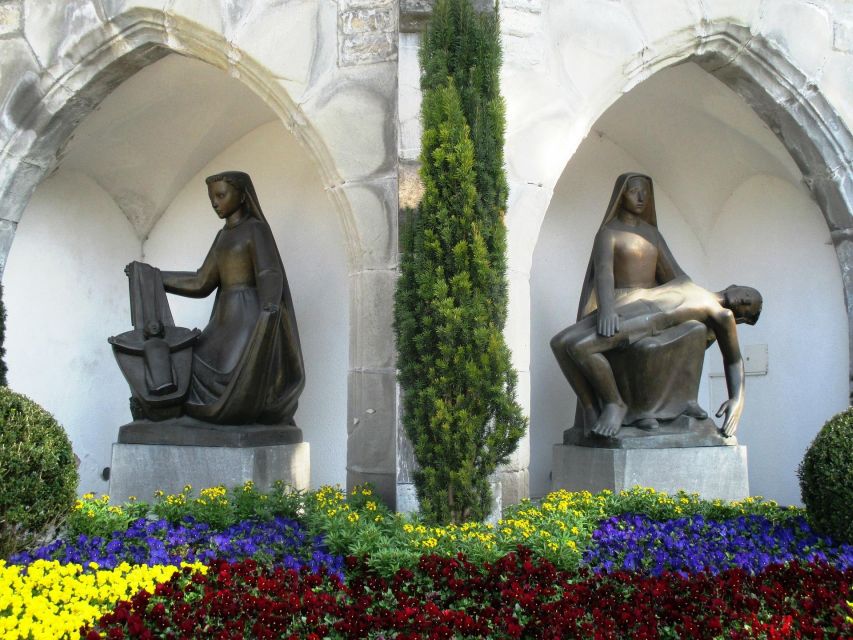
- Public sculptures by international artists, scattered through the center so art becomes part of wayfinding
- A clear medieval storyline, from the name Faduzes to the Rhine trade routes and the Holy Roman Empire
- Political history that explains the present, including the Swabian War and the Schellenberg-Vaduz acquisition
- Government architecture in focus, with the Parliament building and the neo-Gothic cathedral that became a cathedral in 1997
Vaduz on foot in 90 minutes, what makes it worth your time
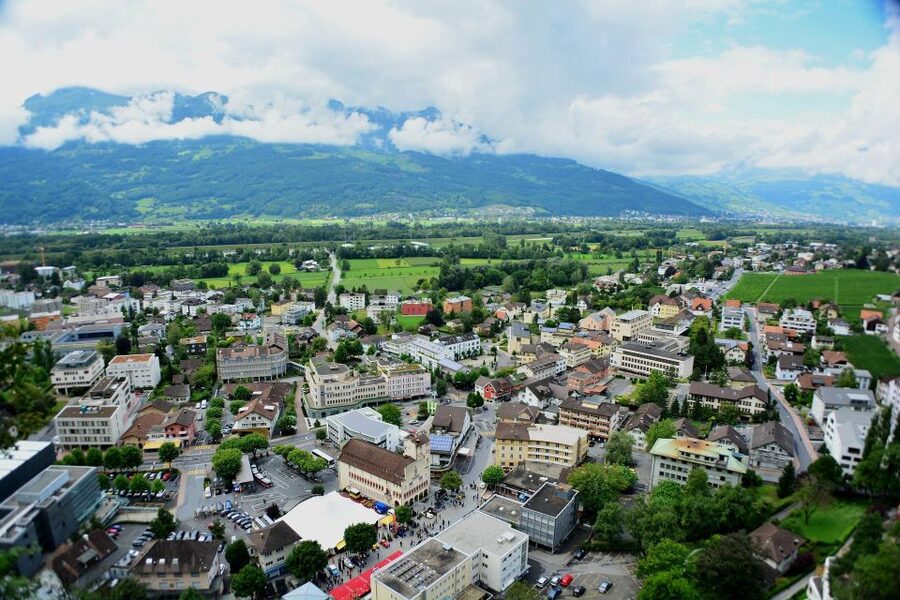
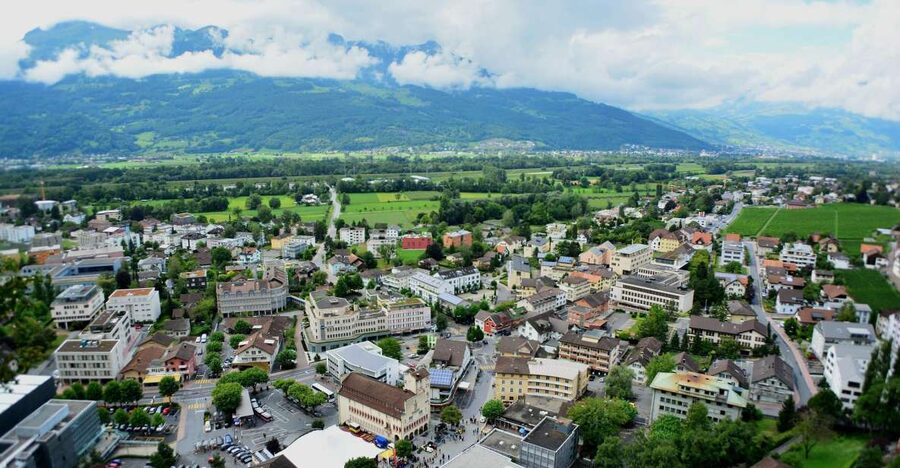
Vaduz is the capital of Liechtenstein, sitting along the Rhine with fewer than 6,000 residents. That size can make you think you will “see it all” quickly anyway. The point of this tour is different: you get a guided walkthrough that turns the town into a timeline you can actually follow, with the major sites connected by story, not random stops.
This is a private guided walking tour that lasts 90 minutes. The guide stays with your group only, so you can ask questions and move at a comfortable speed. If you are traveling with family or friends and want a focused experience instead of a big-group scramble, this format is a strong fit.
As for value, the price is $324 per group up to 15. That can work out well if you book with multiple people. Even if you do not fill all spots, you are paying for a guide, a route, and a compact “Vaduz cheat sheet,” not just time outdoors.
Meeting at Liechtenstein Center and getting your bearings in Städtle
You meet in front of the tourist office, Liechtenstein Center, Städtle 39 in Vaduz. From there, you start in the center where the walk does the heavy lifting. You will go straight into das Städtle, the main pedestrian-exclusive area that functions like the town’s living room.
This is where you quickly learn what makes Vaduz feel distinct. You will also spot sculptures by international artists around the center. The trick is that the guide does not treat art like decoration. You get context for where it sits and how it fits into the everyday flow of the city.
Then you shift from “what you see” to “why it matters,” as the government buildings come into view. Seeing Vaduz’s institutions in the middle of a small town helps you understand how closely daily life and power structures are intertwined here.
Practical tip: bring a light layer. Even in decent weather, you are walking in compact streets, and the pace can pick up when the guide is explaining the connections between sites.
Faduzes, the Rhine, and the medieval name you can still feel today
Liechtenstein’s story is often told as a modern-country fact sheet. This tour is better because it gives you the medieval roots you can point to while you walk.
You will hear how Vaduz was originally known as Faduzes, a name that points back to Latin roots connected to the idea of an aqueduct, aquaeductus. That kind of name detail sounds small, but it helps you grasp that this town was never an isolated “only rich people live here” bubble. It sat in the flow of older networks, shaped by water, routes, and control.
The guide also places Vaduz in its wider historical setting as a mountain enclave between trade routes. You will connect that geographic position to why this territory mattered for centuries. The tour frames Liechtenstein as the last remainder of the Holy Roman Empire, and the result is that the modern borders feel less random. They feel like the end of a long chain.
You will also learn how the mountain setting and the strategic position helped create the town’s identity. When you understand that, the architecture and the layout stop looking like background and start looking like decisions.
Swabian War and Schellenberg to Vaduz, how politics shaped the town
History can become a blur when it is told in a lecture. What I like about this tour approach is that the Swabian War and the acquisition story are presented as cause-and-effect. You learn what changed, and then you look around to see why the town would develop the way it did.
You will hear about the medieval period and the High Middle Ages, then you get the impact of the Swabian War. After that, the tour moves toward the Liechtenstein family’s legacy and the acquisition by Schellenberg and Vaduz. In other words, you are not just collecting dates. You are building a clear chain from conflict and control to the institutions that still influence Vaduz today.
This is the part that helps most first-timers. Vaduz can feel “administrative” at a glance, because the government presence is so visible in the center. With this context, you understand that government buildings are not just modern landmarks. They represent a long continuity of rulership and constitutional life.
If you like history that explains what you are standing in front of, this section is where the tour earns its keep.
The Princely Family, the castle on the hill, and what a hereditary monarchy means in practice
Liechtenstein is a constitutional hereditary monarchy, and the guide explains what that means for how the country works day-to-day. That matters because it is easy to label the country and miss the practical differences.
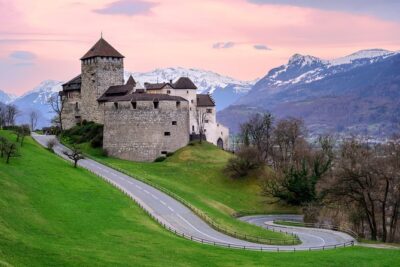
You will also hear about the Princely Family and their longstanding role. The story leads naturally toward the castle situation: a secluded mountainside castle built at the height of the Middle Ages, rising above the city as the main residence of the prince and the remaining ruling family.
Even if you are not spending a huge chunk of time at the castle itself, the walk gives you the key idea. This is a place where power is still physically represented in the geography. You are not just hearing about a system. You are watching a system shaped into the skyline.
This is also a good moment to ask questions. If you are curious about how tradition and modern governance coexist, your guide can clarify what you will see and what you might not.
Dome Cathedral and Parliament building, small size, big meaning
Vaduz’s neo-Gothic cathedral is small, but it carries outsized importance. The guide points you toward the details and also clarifies a key timeline fact: it has been considered a cathedral since 1997. That kind of specific upgrade to status helps you avoid the vague tourist version of the story.
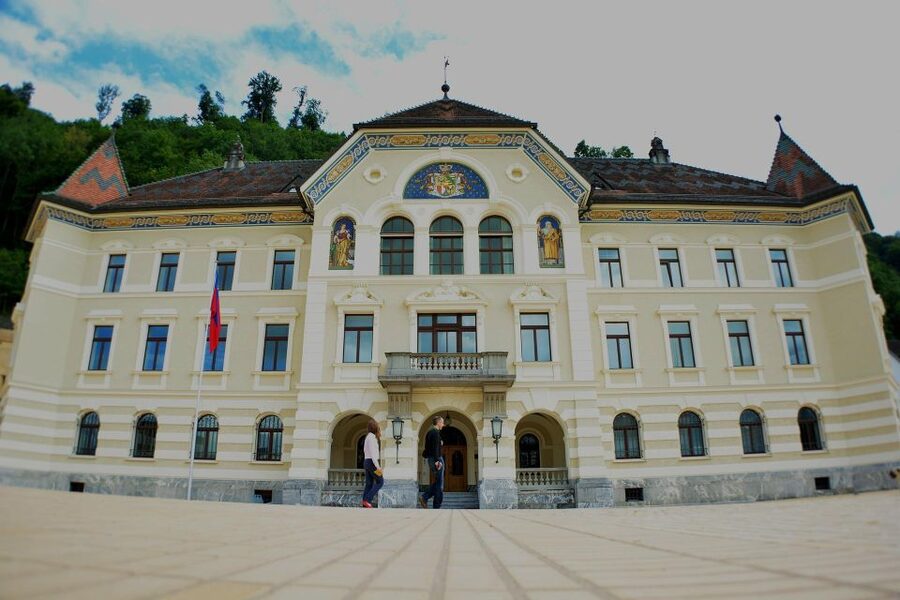
From there, the focus turns to government buildings. One of the most praised parts of this tour is the chance to get inside key civic spaces. In particular, a guide named Lenard has taken people inside the Parliament building during the walking tour. That is a big deal because it changes the experience from “look at buildings” to “see how buildings function.”
Even when you do not get an extended interior visit, you will get a guided way to read the exterior. The tour connects the Parliament building next to the government buildings to the broader constitutional framework. That makes your photos more meaningful too. You are photographing a system, not just stone.
If you want your time to feel efficient and memorable, this “cathedral plus Parliament” pairing is the section to pay attention to. It compresses what is usually spread across multiple stops into one guided flow.
Price, entrance fees, and getting real value from a private group
Let’s talk money in practical terms. The tour costs $324 per group up to 15 for 90 minutes, with an English live guide who stays with your group only. That is not the cheapest sightseeing option in Europe. But it can be good value because it is private and time-efficient, and the guide can answer your questions while you walk.
Two value boosters you should know:
- Customization is possible on the spot. Your guide can adjust what you focus on while you are there.
- The tour includes the key “Vaduz essentials,” from Städtle and sculptures to government buildings and the cathedral context.
The main add-on cost is that entrance fees are not included. If you plan to pay for any ticketed entry during or beyond the walk, budget for that separately. Also note: the tour’s structure is built around what you can see and discuss in 90 minutes, so if you want a slow museum-style day, this is not that.
Who benefits most? People who want a smart introduction, plus a local perspective that ties history to places you can point at.
Should you book the Vaduz Private Guided Walking Tour?
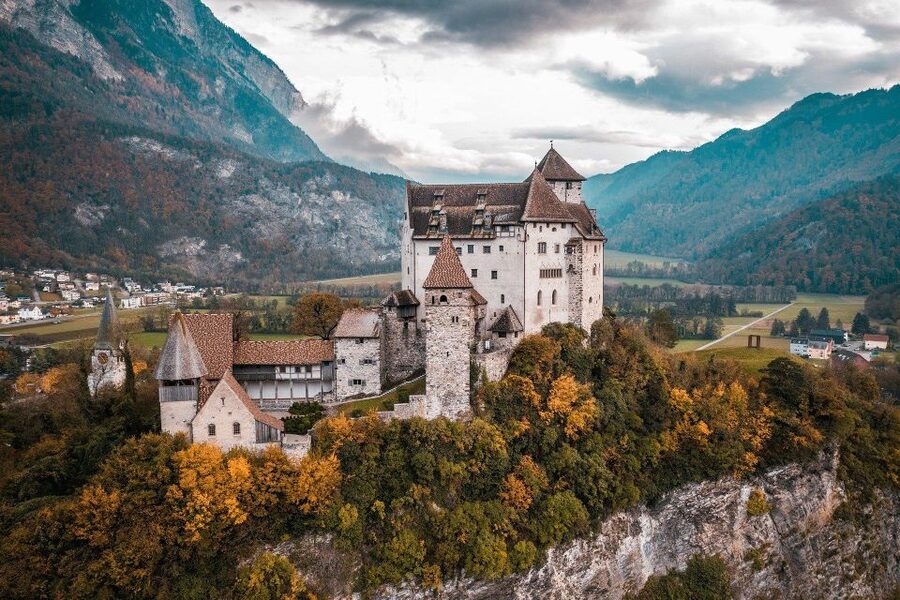
Book it if you want to understand Vaduz instead of just passing through it. This tour works especially well if you have heard the “it’s too small to be worth it” argument and you want a straightforward way to prove it wrong with actual context, key landmarks, and real government architecture in the center.
Skip it if you already know Liechtenstein well and you are mainly looking for lots of ticketed attractions or a longer schedule. Also, if you hate walking or prefer self-guided wandering with zero structured time, you may find 90 minutes a bit tight for your style.
If your goal is a compact, high-clarity first look at the capital of Liechtenstein, this is a strong option. With a guide like Lenard, you get both story and a chance at interior government access, which is rare for a short walking tour.
FAQ
Where is the meeting point for the Vaduz private guided walking tour?
You meet in front of the tourist office, Liechtenstein Center, Städtle 39, 9490 Vaduz, Liechtenstein.
How long is the tour?
The tour is 90 minutes.
Is this tour private?
Yes. It is a private group tour, and your local professional guide will be with your group only.
What language is the guide?
The live tour guide is in English.
What is the price and group size?
The price is $324 per group, up to 15.
What is included in the tour cost?
A local professional guide is included. Your guide can also customize the tour on the spot.
Are entrance fees included?
No. Entrance fees are not included.
Can I cancel for a refund?
Yes. You can cancel up to 24 hours in advance for a full refund.
Can I reserve without paying right away?
Yes. The offer includes Reserve now & pay later, so you can book your spot and pay nothing today.
More Walking Tours in Vaduz
- Walking Tour through Basel Old Town
★ 4.7 · 1,040 reviews - Zurich Old Town Walking Tour: 2-Hours
★ 4.6 · 1,008 reviews - Zurich Walking Tour With Cruise and Aerial Cable Car
★ 5.0 · 669 reviews - Zurich Old Town Walking Tour
★ 4.5 · 479 reviews
More Day Trips Across to Liechtenstein
- From Zurich: Bus Day Trip to Heidiland and Liechtenstein
★ 4.5 · 2,531 reviews - Heidiland and Liechtenstein Tour from Zurich
★ 4.0 · 1,745 reviews - Trip to 4 Countries: Liechtenstein, Austria, Germany, Switzerland
★ 5.0 · 80 reviews - Zurich: Private Liechtenstein, Austria, and Germany Day Trip
★ 4.7 · 39 reviews
Liechtenstein Day Trips, compared.
Heidiland and Liechtenstein Tour from Zurich
Read our review →
Trip to 4 Countries: Liechtenstein, Austria, Germany, Switzerland
Read our review →
Private Liechtenstein, Austria, and Germany Day Trip
Read our review →
Explore 4 Countries in a Day: Liechtenstein,Austria,Swiss&Germany
Read our review →
Private Trip from Zurich to Vaduz in Liechtenstein & Swiss Heidiland
Read our review →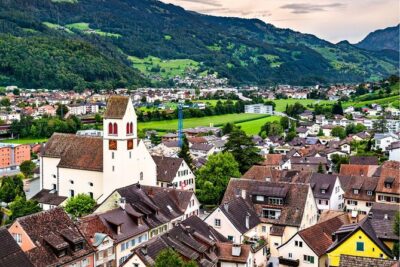
Private Daytrip by Car to Liechtenstein, Germany, Austria & Swiss
Read our review →Browse the lists this tour appears in