
Reviewed · WALKING TOURS
St. Moritz: Private Guided Town Highlights Walking Tour
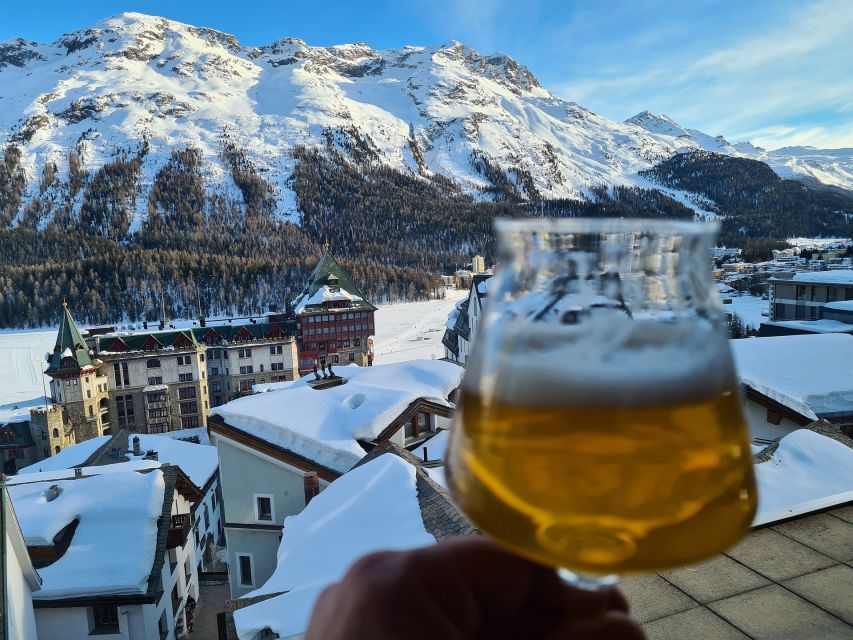
St. Moritz is the kind of Swiss town where the past feels close and the views feel high stakes, thanks to its alpine setting and its Olympic-sized reputation. This private walking tour works well if you want your bearings fast, with a guide who can shape the pace around what you care about.
I like the way you cover classic town landmarks in just two hours, without turning it into a sprint. I also like that you can get answers to real questions, and guides such as Sebastian often go out of their way to help with details, even if you are doing research.
One drawback to consider is simple: this is a walking tour with no transportation included, so you will want to be ready to meet at the start and cover the sights on foot.
Key highlights you should care about
- Private, custom pacing so you can spend more time where your interests lie
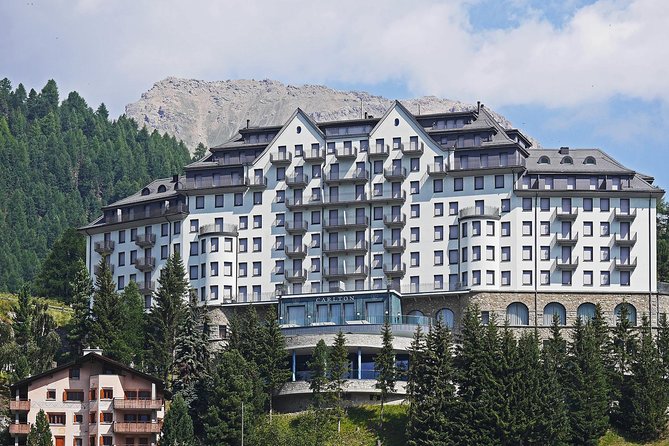
- St. Moritz landmarks in a tight loop, from the Municipal Hall area to Lake St. Moritz
- Olympic context at altitude, with the town’s winter legacy woven into the stops
- Historic curiosities, including the Leaning Tower and memorial fountains tied to local stories
- Art and culture, with a visit to the Mili Weber House on the lake side
First steps in St. Moritz Dorf, and why the starting point matters
You meet in front of the St. Moritz Tourist Information Dorf. That matters more than it sounds, because St. Moritz can feel spread out, and this is one of the easiest ways to get oriented without guesswork. From there, the tour follows the town core and key public sites you can actually connect later when you explore on your own.
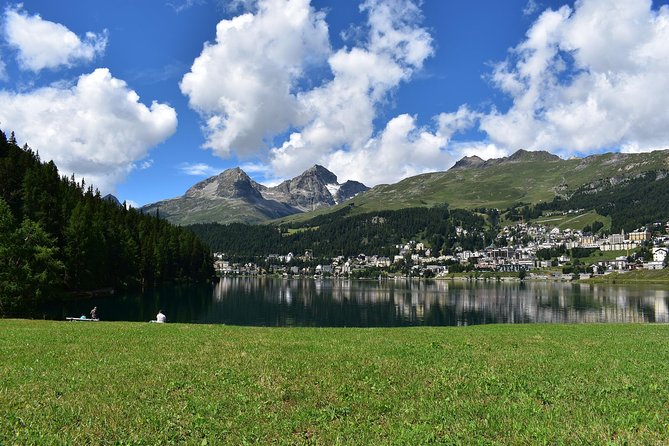
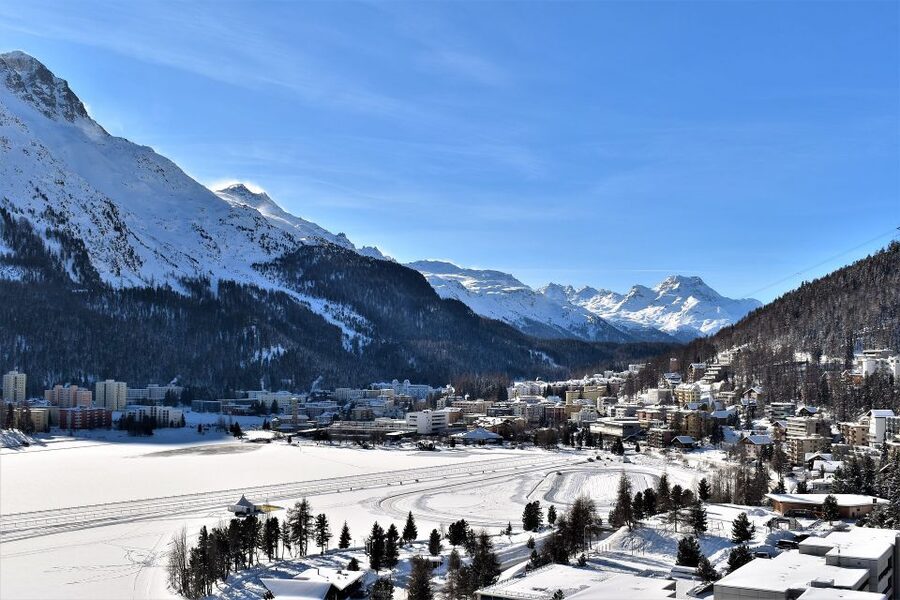
St. Moritz sits about 1,800 meters above sea level. It is known as a luxury winter resort, but it is also a town with a long winters-and-sport identity, including hosting the 1928 and 1948 Winter Olympics. Your guide uses those facts to connect why certain buildings look the way they do, and why particular memorials exist in the town fabric.
Because it is a private group, you are not locked into a rigid script. That is a big deal if you hate standing around while other people catch up, or if you want to pause for a better view, photos, or extra explanation at one stop.
More walking tours in St Moritz:
- St. Moritz: Express Walk with a Local in 60 minutes
★ 4.8 · 9 reviews - St. Moritz: Private Guided Town Highlights Walking Tour
★ 4.0 · 4 reviews - Walking Tour through Basel Old Town
★ 4.7 · 1,040 reviews
The Municipal Hall area, where St. Moritz’s modern story meets the old site
The tour begins at the Municipal hall of St. Moritz, which is the municipal administration office. The interesting part is the site itself. It is on premises where a hotel once stood, and that older building was converted into the Municipal hall before the Winter Olympics of 1948.
So you are not just seeing a name on a facade. You are seeing how St. Moritz prepared for a major global moment by reworking the built environment. In a town shaped by winter arrivals, that conversion story helps you understand why the center feels both formal and practical.
If you are the kind of traveler who likes context rather than trivia, this first stop sets the tone. You get an anchor point for the rest of the walk, including the nearby sites that connect to earlier church history, local athletes, and Roman-era memorials.
Leaning Tower of St. Moritz, a medieval remnant worth slowing down for

Next up is the Leaning Tower, dating back to the 12th century. This is a remnant of the old Church of St. Mauritius, which was destroyed in 1893. It is famous precisely because it did not behave like a normal tower, and because it stayed when much of the original church life did not.
This is one of those stops where your guide can make a small sight feel meaningful. The Leaning Tower gives you a visible thread from medieval St. Moritz to the town you see today. Even if you do not normally chase oddities, you will probably find yourself pausing here longer than you planned, because the tower is easy to spot and it feels slightly mysterious just because of how it looks.
Practical note: this is not an indoor museum moment. You are out in the open, so go when you are ready to stand and look, not when you only want quick pinpoints.
Memorial Fountain to Jules Bylandt, a Cresta Run story in stone
Then you pass the Memorial Fountain dedicated to Jules Bylandt, built as a memorial to him after he died in 1908 during the Cresta Run. The Cresta Run is a famous element of St. Moritz’s skating and winter sports culture, and Bylandt’s name shows how deeply individual people are woven into that identity.
Why this stop works: memorials like this do not just mark tragedy. They show you what locals valued and what kinds of risks were part of the sport world here. Your guide’s explanation turns the fountain from background scenery into a local story you can actually tell later.
If you care about sports history, you will likely enjoy how this aligns with the broader Olympic theme you heard earlier. Even if you do not, fountains and memorials can still be a smart way to understand a town without paying museum fees for every hour.
A few more St Moritz days worth comparing
- Milan to St. Moritz: Scenic Bernina Train Tour with Guide
★ 4.4 · 1,840 reviews - From Milan: St. Moritz and Panoramic Bernina Express Tour
★ 4.0 · 215 reviews - From Saint Moritz: Bernina Red Train with Winery Tasting
★ 3.7 · 5 reviews - Explore St. Moritz in 60 minutes with a Local
★ 4.0 · 4 reviews
St. Mauritius Fountain by the town hall, Roman roots in a modern setting
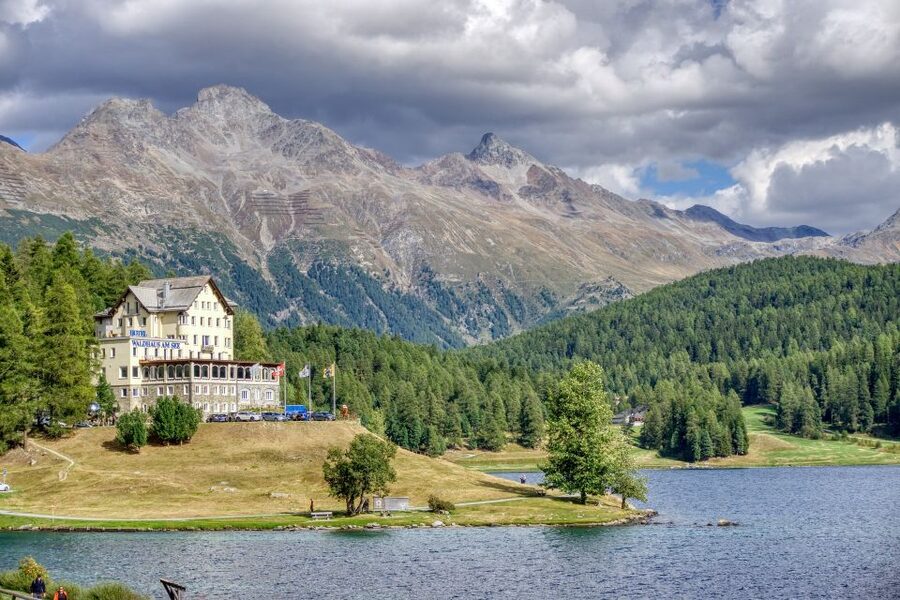
Outside the town hall area, you see the St. Mauritius Fountain, built in 1910. It is a memorial of a leader of a Roman Legion from 300 AD. That is a wild jump in time, and St. Moritz pulls it off by placing that Roman reference into the center of everyday walking life.
This is the kind of stop that helps you see St. Moritz as more than a ski-brand. The fountain acts like a bridge between eras, showing how the town’s identity keeps tapping into older symbols and names.
If you like architecture and civic spaces, you will appreciate how these monuments sit in public flow. You are not circling a single highlight like a theme-park. You are walking through the same space people walk through, with a guide translating what you are seeing.
St. Moritz Church in St. Moritz Dorf, Protestant Neo-gothic with a clear timeline
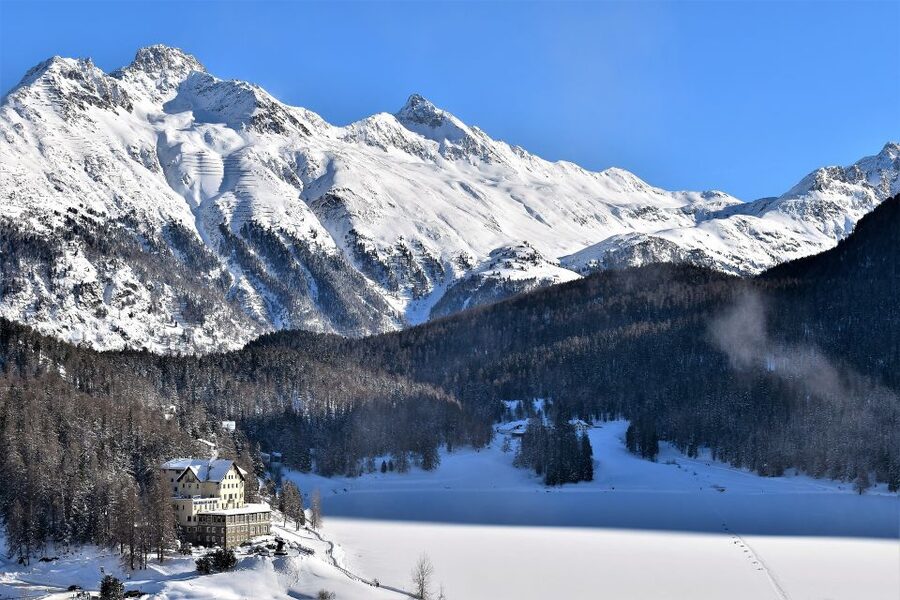
In the center of St. Moritz Dorf, you visit St. Moritz Church. It is a Protestant church built in Neo-gothic style between 1785 and 1787. That narrow construction window makes it feel specific and intentional, rather than vague or centuries-in-progress.
Neo-gothic churches often look like they belong to one moment in time even when they are placed in older towns. Here, the date range gives you a simple way to picture the town’s development and changing religious or civic priorities.
One reason this stop is valuable on a walking highlight tour is that it is not just a photo stop. Your guide’s interpretation helps you see why the center churches and monuments fit together, and how the town’s names and dedications keep resurfacing.
Tip for photos: the church area is easiest to read when you stand back for the overall view first, then move closer for details. Your guide can usually help you find the best angles based on foot traffic and sightlines.
Mili Weber House by Lake St. Moritz, art plus place
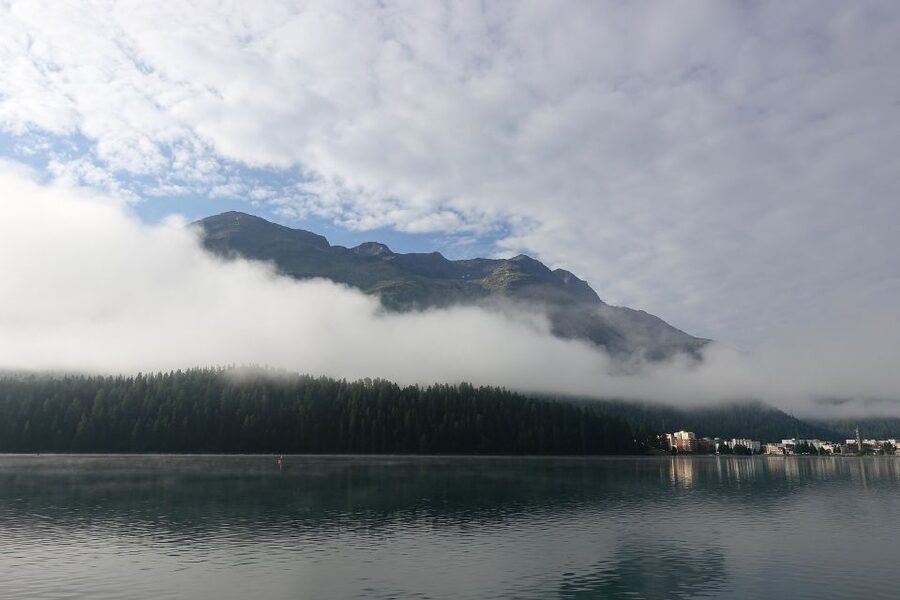
The tour then heads toward the eastern side of Lake St. Moritz to an artists house: the Mili Weber House. It houses a comprehensive collection of Mili Weber’s paintings and artworks. The house was built by her father and brother Emil, which adds a family dimension to the museum-like feel.
This stop is important because it broadens St. Moritz beyond sport, glamour, and memorial stone. You are meeting the town through a creative lens. Art houses often work best on short tours because they change the tempo. One minute you are walking through civic history, and the next you are looking at work that reflects how someone experienced this place.
If you care about cultural travel, this is one of the best uses of your time on a short guided format. Two hours is not long, and the choice to include a focused art stop gives the tour balance. If you only wanted skiing lore, you might find it limited. If you want variety, it is a strong mix.
Practical note: since it is tied to a specific location by the lake, give yourself a little mental buffer for how long it takes to move and look. This tour is designed to cover multiple major sites, so it stays efficient.
What makes it private, and how to get more value from the time
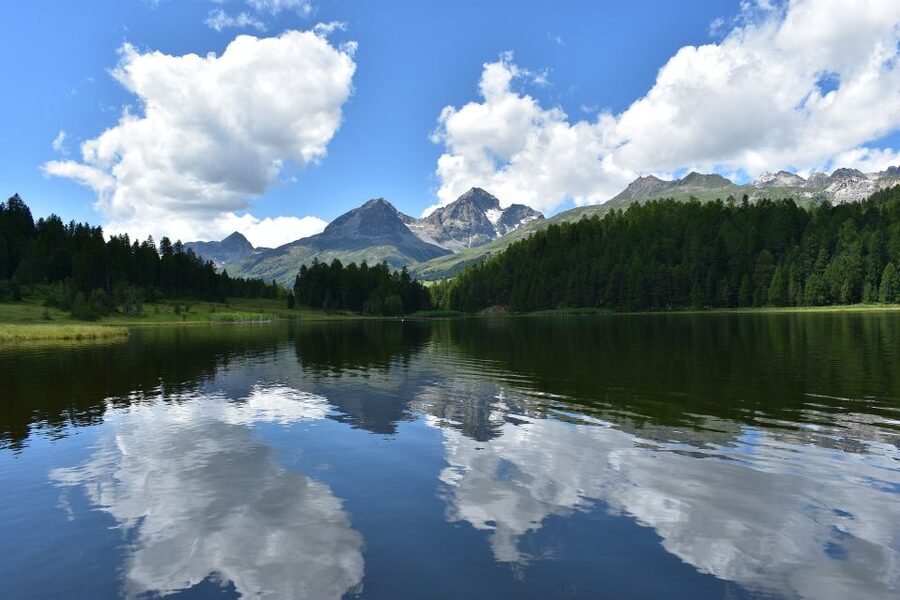
This is a private group tour, priced at $505 per group up to 20. Duration is 2 hours, and availability controls the start times. That price structure is worth thinking about, because it is not per person. If you travel as a small group, you will still pay the full group rate, so the cost per person depends on how many you are.
Here is how I see the value: you are paying for a guide who can explain, adjust the pace, and answer questions in real time. If you can pack your group and split the cost, it becomes much more attractive than pay-per-person tours.
Because it is private, you can also create your own custom itinerary within the tour’s overall framework. That is especially helpful in St. Moritz, where interests can vary wildly. One person may want the Olympic angle. Another may care most about the Leaning Tower and church history. A third may want the art stop and leave happy, even if they care less about the fountains.
Guides speak English, German, French, and Italian. If language matters to you, you can match your preferred option. A private format also makes it easier to ask follow-ups without feeling rushed.
Getting there: what transportation means for your planning
Pickup is included only at your hotel if it is centrally located. Transportation is not included, so you should plan to meet at the start point in front of the St. Moritz Tourist Information Dorf and return there at the end.
For me, that means you should treat this as a walking-first experience. If you are coming from farther out, you may need to arrange your own route to the meeting point. Once you are on foot with the guide, the tour is a neat loop back to where you started.
If you are planning a full day in St. Moritz, you can treat this as your orientation block. Use the 2-hour tour to learn where key sites sit, then explore the rest at your own speed later.
The guide factor: attentive, helpful, and ready for specifics
One of the strongest signals here is how attentive the guide experience seems in practice. People loved that the guide was very attentive, and one person highlighted that Sebastian went out of his way to help with research.
That tells me the tour format rewards travelers who want interaction, not just a list of sights. If you like asking questions, comparing what you see to what you read, or getting context that makes the town click, this is the kind of tour that can deliver that.
Even without going deep into details, a good guide makes the walking tour work better. You stop at the right moment, you learn why something matters, and you avoid feeling like you are collecting random landmarks.
Who this tour fits best
This St. Moritz private highlights walk is a strong match if you want:
- A short, high-quality orientation to St. Moritz Dorf and the town core
- A mix of civic history, church and memorial sites, and art through the Mili Weber House
- A guide who can explain the why behind small monuments like the Leaning Tower and memorial fountains
It may not be the best fit if you want a long, museum-style day. Two hours is meant for highlights, not deep dives into every building. But for most visitors trying to balance skiing logistics, lake time, and sightseeing, this format hits a sweet spot.
Should you book the St. Moritz private guided town highlights walk?
Yes, I think you should book this if you want your first St. Moritz experience to feel guided and coherent. The itinerary covers the town’s most telling anchors, from the Leaning Tower and memorial fountains (Jules Bylandt’s Cresta Run story and Roman references) to St. Moritz Church and the Mili Weber House.
It is also a good choice when you value flexibility. The private format and ability to create a custom itinerary inside the structure helps you tailor it to your interests, whether you are into winter sports heritage, architecture, or art.
If the group price feels high, plan smart. If you can fill your group and split the cost, the value rises fast. If you are solo, it may be better to compare it against other paid sightseeing options in the area. But for a small group that wants a clean, story-driven walk, this is a solid use of 2 hours in St. Moritz.
FAQ
How long is the St. Moritz private guided town highlights walking tour?
The tour duration is 2 hours.
What is the price for this tour?
It costs $505 per group, up to 20 people.
Where does the tour start?
The meeting point is in front of the St. Moritz Tourist Information Dorf.
Does the tour include transportation?
No. Transportation is not included.
Is pickup from a hotel included?
Pickup is included if your hotel is centrally located.
What is included in the tour?
An official tour guide is included.
Which languages are available?
The guide is available in English, German, French, and Italian.
Is this tour private?
Yes. It is a private group tour.
What are the cancellation rules?
Free cancellation is available up to 24 hours in advance for a full refund.
Recently reviewed around St Moritz
- Private Transfer from Sankt-Moritz to Zurich Airport★ 4.0 · 3 reviews
- St Moritz Private Guided Panorama Hike★ 5.0 · 3 reviews
- St. Moritz: Private Guided Town Highlights Walking Tour★ 4.0 · 4 reviews
- Explore St. Moritz in 60 minutes with a Local★ 4.0 · 4 reviews
- From Milan: St. Moritz and Panoramic Bernina Express Tour★ 4.0 · 215 reviews
- St. Moritz: Express Walk with a Local in 60 minutes★ 4.8 · 9 reviews
- From Saint Moritz: Bernina Red Train with Winery Tasting★ 3.7 · 5 reviews
- Milan to St. Moritz: Scenic Bernina Train Tour with Guide★ 4.4 · 1,840 reviews
Walking Tours, compared.
Zurich Walking Tour With Cruise and Aerial Cable Car
Read our review →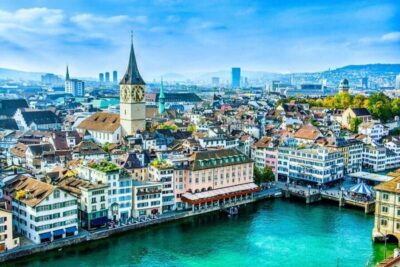
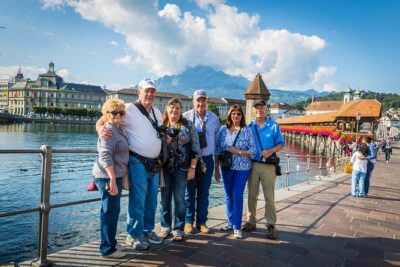
Lucerne Walking & Boat Tour: The Best Swiss Experience
Read our review →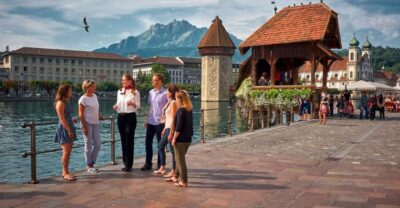
3 in 1: Zurich Walking Tour – Cruise on the Lake – Cable Car Ride to Felsenegg
Read our review →Browse the lists this tour appears in